









A few years into his first term, Donald Trump declared with pride, “There are those that say we have one of the finest Cabinets.” The president didn’t elaborate as to who, exactly, had made such an assessment, which was just as well since he appeared to be making up the praise out of whole cloth.
In fact, the Republican’s first-term cabinet was a mess. The public saw ill-equipped secretaries, many of whom struggled mightily in their roles, some of whom were caught up in ethics scandals, and a few of whom were even referred to the Justice Department for possible criminal prosecution. Trump even ended up publicly clashing with his own choices for his Cabinet, in some instances.
But a month into the sixth year of Trump’s presidency, it’s probably fair to say that his second-term Cabinet is worse. Politico reported on Saturday:
President Donald Trump is mired in the most difficult stretch of his presidency. His Cabinet is only making his life harder. As he prepares for a primetime address to the nation on Tuesday, storm clouds hang overhead. […]
At seemingly every turn, Trump’s increasingly off-message Cabinet is undermining his administration’s broader agenda.
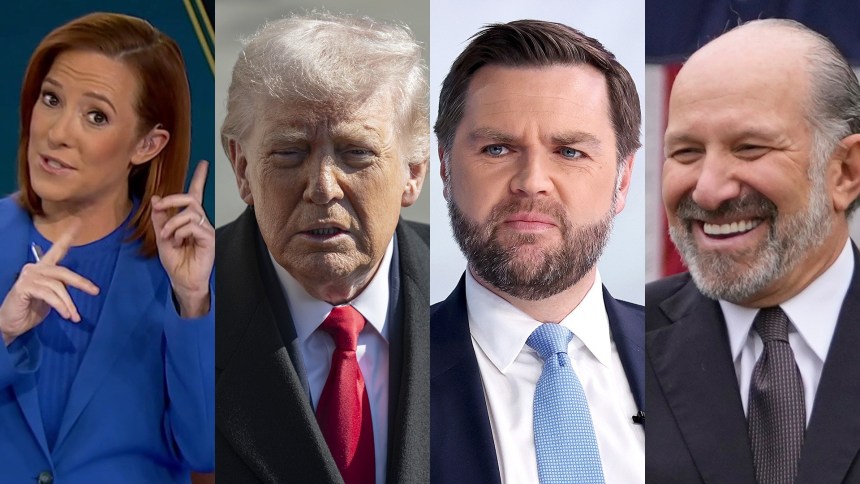
Last week, House Minority Leader Hakeem Jeffries sat down with MS NOW’s Jen Psaki, and the host mentioned plans to deploy Cabinet members as surrogates in competitive districts ahead of the midterm elections. The New York Democrat, who is not known for showing his emotions on his sleeve, couldn’t help but smile.
To be sure, the problem is not altogether new. The New York Times’ Frank Bruni wrote a hard-hitting column last year that read in part:
As President Trump’s crackerjack cabinet settles in and unsettles any sentient American, we are not beholding a series of discrete embarrassments and outrages. We are witnessing iterations of the same horror story. Trump chose people for senior administration positions not because they had demonstrated the skills and disposition that those jobs required, not because they had paid their dues, not because they had proved their mettle. He wanted provocateurs. He wanted sycophants. He wanted to test his supporters’ compliance and send his detractors into a tizzy.
Competence didn’t enter the equation, so competence isn’t among the results. He got exactly what he paid for, and now a nation is paying the price.
That was published in late March, nearly 11 months ago. The beleaguered White House Cabinet has managed only to reach new depths since then.
Where does one even start? Homeland Security Secretary Kristi Noem is at the center of a variety of ongoing controversies and faces bipartisan calls for her ouster. Attorney General Pam Bondi recently humiliated herself during a congressional hearing. Around the same time, Health Secretary Robert F. Kennedy Jr. talked about his past history of snorting cocaine off toilet seats against a backdrop of systemic problems at the federal department he ostensibly leads.
But that’s just the start. Labor Secretary Lori Chavez-DeRemer’s overlapping scandals continue to get worse. Director of National Intelligence Tulsi Gabbard is at the center of overlapping controversies of her own. Defense Secretary Pete Hegseth was a scandal-plagued nominee who became a scandal-plagued Pentagon chief. Russ Vought, who leads the Office of Management and Budget, has been at the center of a variety of messes, including a report two weeks ago that he helped gut funding for the U.S. Agency for International Development, only to use some of the freed-up funds to pay for a security detail for himself.
And did I mention Commerce Secretary Howard Lutnick? Because even some Republicans have raised concerns about his extensive ties to Jeffrey Epstein.
What’s more, this is just a sampling based on recent developments.
Around this time a year ago, an NBC News poll found that a 52% majority of Americans said they were disappointed with the people the president had appointed to posts in his administration — the highest number the network had found across the past four administrations.
It’s a safe bet that if that same question were included in a national survey now, the number would be even higher.
