







In a normal and healthy political environment, a president eyeing a controversial and risky military operation in a foreign country would take a series of steps. Indeed, it’s Political Science 101.
The president would take his or her case to the public, explaining how the mission would advance Americans’ interests and advance their security needs, in the hopes of shoring up support for the policy. He or she would coordinate with Congress to ensure broad institutional backing. The president in this little hypothetical would likely also rally support from allies abroad, if for no other reason than to bolster international credibility for the plan.
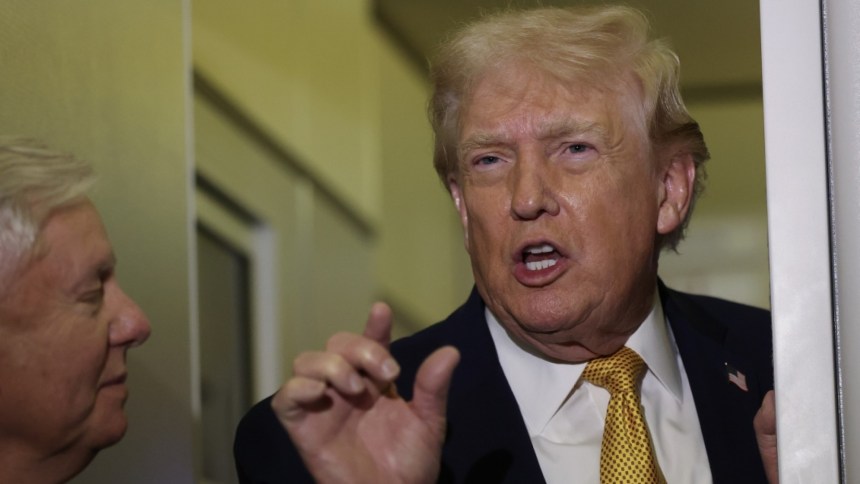
But before Donald Trump deployed U.S. forces to bomb Venezuela and capture Nicolás Maduro, the president didn’t do any of these things. Public buy-in wasn’t treated as a White House priority. Congress was deliberately left in the dark. The idea of bolstering international credibility never entered the Republican administration’s calculus.
In late November, a national CBS News poll found 76% of Americans said the administration hadn’t sufficiently explained its policy on Venezuela; only 13% saw Venezuela as a significant threat; and 70% said they were opposed to the United States taking military action in the South American country. A Quinnipiac University poll released in mid-December showed similar results.
Three weeks later, Trump ordered a military offensive anyway.
USA Today’s Rex Huppke wrote in his latest column:
I didn’t ask for this. I never heard anybody ask for this. In fact, I doubt many, if any, Americans voted for Trump because they wanted regime change in a country they’d struggle to locate on a map.
The president just up and did it, and still hasn’t provided a sound justification as to how it makes our lives better in a moment when millions of Americans are seeing their health care premiums skyrocket and food prices remain high. Based on Trump’s recent polling numbers, few are happy with the way he’s running OUR country. And now he thinks he can handle another one for a bit as well? Please.
Politico’s Ankush Khardori had a related piece, noting, “[W]e cannot lose sight of what has brought us here — to the surreal and yet somehow entirely foreseeable situation in which the Trump administration has illegally abducted the leader of Venezuela, a country that has engaged in no hostilities with the United States, without even the appearance of an effort to enlist the support of the American public or their elected representatives in Congress, and without even the semblance of a stated plan for how the country will be governed.”
The policy is clearly a legally dubious mess, which risks all kinds of potentially dangerous consequences. But it’s worth appreciating the indifference with which Trump pursued the policy: The Republican president shrugged his shoulders when confronted with questions about credibility, public support or legal limits. What he cared about was seeing Maduro in handcuffs, asserting hemispheric dominance and gaining access to Venezuelan oil reserves that he feels entitled to.
It’s a policy that Americans didn’t expect, didn’t want and didn’t vote for — though their president couldn’t be bothered to care.
