








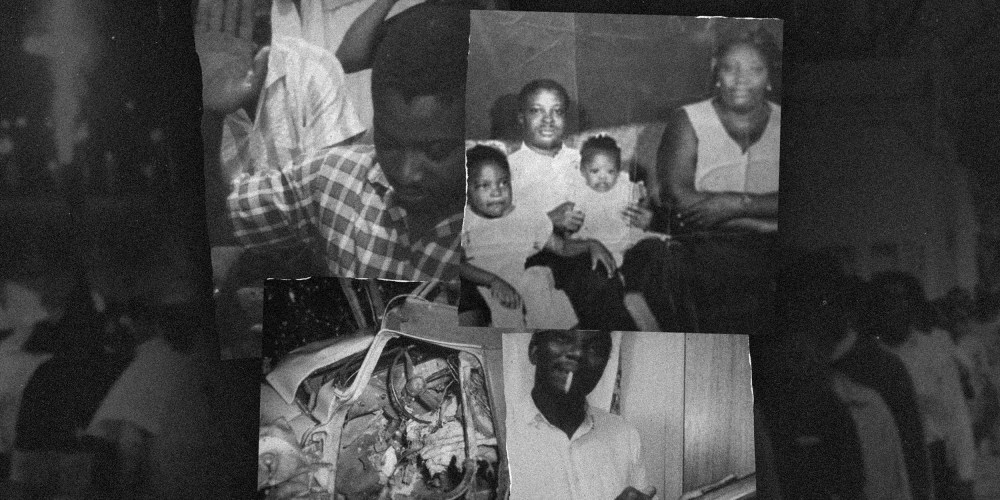
In August 1965, following a brutal attack on local NAACP President George Metcalf, Black residents in Natchez, Mississippi, decided to defend themselves. Several Black activists drove from Natchez to Bogalusa, Louisiana, to meet members of the Deacons for Defense and Justice, a civil rights group that emphasized armed self-protection against white supremacist violence. Those Natchez residents returned home not only loaded with guns from the Deacons, but also with a clear mission: to defend and protect their communities.
Soon, Wharlest Jackson Sr., a 36-year-old married father of five and the treasurer of the local NAACP, would join their ranks.
Armed resistance, contrary to popular belief, was a fundamental part of the civil rights movement.
Two years later, on Feb. 27, 1967, Wharlest was assassinated with a car bomb. No one has ever been arrested for his killing, and 55 years later, the Jackson family continues to search for answers — and justice. A powerful new PBS “Frontline” documentary, “American Reckoning,” directed and produced by Brad Lichtenstein and Yoruba Richen, focuses on Jackson’s assassination likely by white supremacists, explores a Black community’s fight for civil rights and grapples with the ongoing difficulties of prosecuting civil rights-related cases even after the 2008 Emmett Till Unsolved Civil Rights Crime Act.
While “American Reckoning” masterfully unveils the intricacies of the case of Jackson’s assassination and tells the story of Black residents of Natchez struggling for equal rights, it also offers a much-needed corrective to mainstream narratives that characterize the civil rights movement as only utilizing nonviolent tactics. Specifically, the film effectively addresses an underdiscussed topic: the significance of armed resistance that, contrary to popular belief, was a fundamental part of the civil rights movement.
“Armed resistance was critical to the efficiency of the Southern freedom struggle and the dismantling of segregation and Black disenfranchisement,” Akinyele Umoja, author of “We Will Shoot Back: Armed Resistance in the Mississippi Freedom Movement,” said. This was certainly the case in Natchez, where Black residents’ commitment to self-defense helped secure many of their political and legal gains.
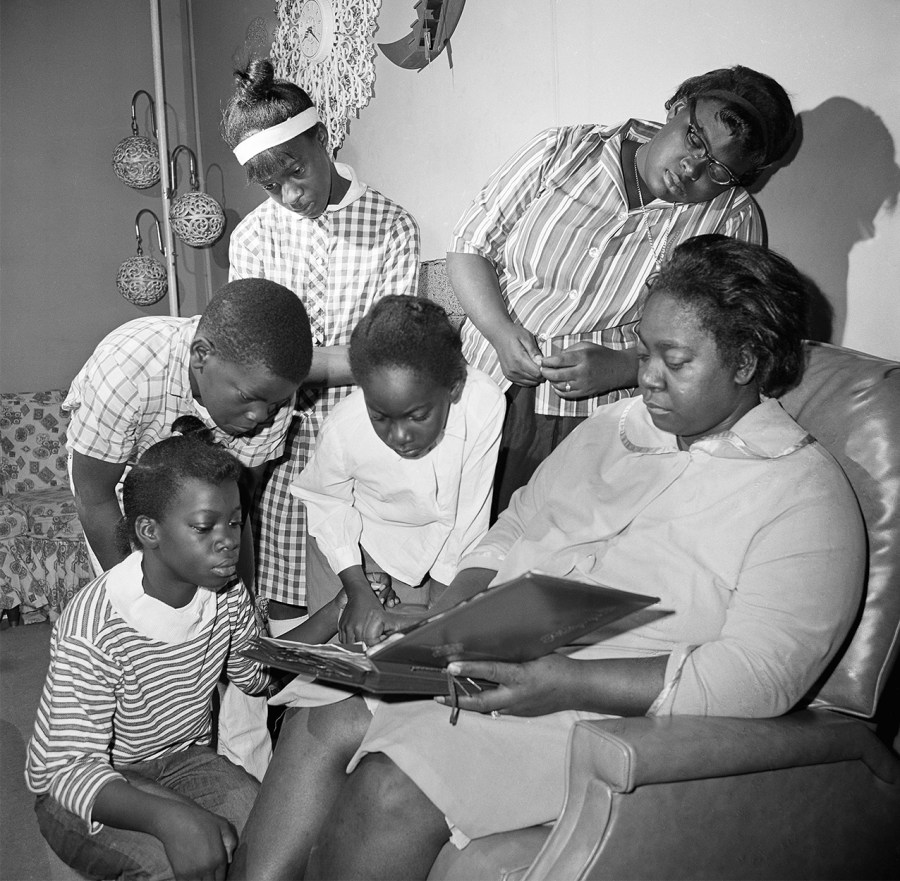
“American Reckoning” movingly charts this history, drawing on remarkable historical footage, home videos and an array of oral interviews. The filmmakers centered the voices of Jackson’s relatives. But they also interviewed descendants of those Ku Klux Klan members who were active in 1967. They did that, Lichtenstein told me, to “provide a window into the long-lasting impact of violence.”
Richen expressed shock that so few documentaries of this kind “include the voices of the descendants of white families who perpetrated the violence.” She said: “I know it can be hard to get those family members to talk, but it is our job as documentarians to do everything we can to make sure those voices are part of the story. Otherwise, we are not telling the full story.”
“American Reckoning” succeeds in telling a story that’s not only full but also moving and nuanced. During the 1960s, the Ku Klux Klan did not relent as the NAACP presence in Natchez grew. The film’s extraordinary footage shows Klan members surveilling Black residents and recounts how they even erected signs that read, “The KKK is watching you.”
But there’s a shift in the atmosphere after Black activists consulted with the Deacons for Defense and Justice and proceeded to send the clear message that they would not be intimidated. We see Black residents marching, holding demonstrations and hosting mass meetings to plan their response to racial violence. And the Deacons responded to the Klan’s signs with signs of their own: “The Deacons are watching you.”


In her 1892 pamphlet Southern Horrors, anti-lynching crusader Ida B. Wells wrote, “A Winchester rifle should have a place of honor in every black home.”
Local activists’ decision to arm themselves was not an anomaly; it was part of a long-standing tradition emerging from Black Americans’ recognition that they could not rely on law enforcement for protection. As the film makes clear, the “Ku Klux Klan and the police went hand in hand.” It underscores why, in her 1892 pamphlet Southern Horrors, anti-lynching crusader Ida B. Wells wrote, “A Winchester rifle should have a place of honor in every black home, and it should be used for that protection which the law refuses to give.”
In the film, Charles Evers, the late brother of assassinated civil rights leader Medgar Evers, flashes his gun on screen to indicate that Black activists like him had stayed armed and ready to protect themselves from white supremacist violence. And James Jackson, the bold and courageous leader of the Deacons in Natchez, took advantage of his position as a barber to covertly recruit new members. “A lot of the conversations about armed resistance and nonviolence” took place, Lichtenstein told me, “in the casual intimacy of his shop.”
In August 1965, Evers, with the support of several local civil rights groups, delivered to Natchez Mayor John Nosser 12 demands that included the city’s denouncement of the Ku Klux Klan, the desegregation of schools and the appointment of Black school board members.
Weaving together narratives of those who were present at the time and vivid outtakes from Ed Pincus’ 1967 film “Black Natchez,” “American Reckoning” captures the tense moment when members of the Black community learned that Nosser not only rejected their demands but also imposed a curfew, and the governor called in the National Guard. Those Black residents responded by boycotting the white businesses in Natchez. Viewers catch a glimpse of the crucial role Black women played in that organizing as Jessie Bernard Williams, a leading civil rights figure in town, called on Black men to stand up to do their part. “If the children can walk the line,” she said, “then you can protect them.”
The boycott was so successful that six white businesses closed after just a few weeks. Three months after the Metcalf bombing, Nosser conceded to the demands of Black activists. Soon, in a major victory for activists, six Black police officers were hired and several public facilities were desegregated, major evidence that the fight had not been in vain.
About a year after the boycott, however, Jackson was assassinated — an act of violence that served as a bitter reminder that the fight was far from over. Black activists in Natchez rallied together again, seeking justice for Jackson’s family that remains elusive to this day.

Keisha N. Blain
Keisha N. Blain is an award-winning historian and writer. She is a professor of Africana studies and history at Brown University and has written extensively about race, gender and politics in national and global perspectives. Her most recent book is “Until I Am Free: Fannie Lou Hamer’s Enduring Message to America.”