



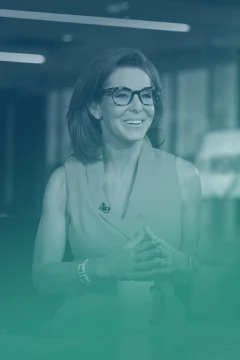

President Donald Trump’s nominee for surgeon general, Dr. Casey Means, on Wednesday would not commit to encourage parents to vaccinate their children, while she also fended off questions before Congress about her business interests and stated past use of psychedelics.
“As surgeon general, I would call on every American and the Public Health Service to join in a great national healing, one that halts preventable chronic disease, makes healthy living the easiest choice, honors the body’s connection to the environment and puts America back on the road towards wholeness and health,” Means, an ally of Health and Human Services Secretary Robert F. Kennedy Jr., said at her Senate confirmation hearing.
During a roughly two-hour session, Means — a 38-year-old Stanford Medical School graduate-turned-wellness influencer who dropped out of her residency and lacks an active medical license — told the Senate Health, Education, Labor and Pensions Committee her “dream” for the position is “first and foremost to help nudge, push, inspire our health care system towards focusing on root causes and the reasons why we’re getting sick.” That is also a core focus of Kennedy’s so-called Make America Healthy Again movement.
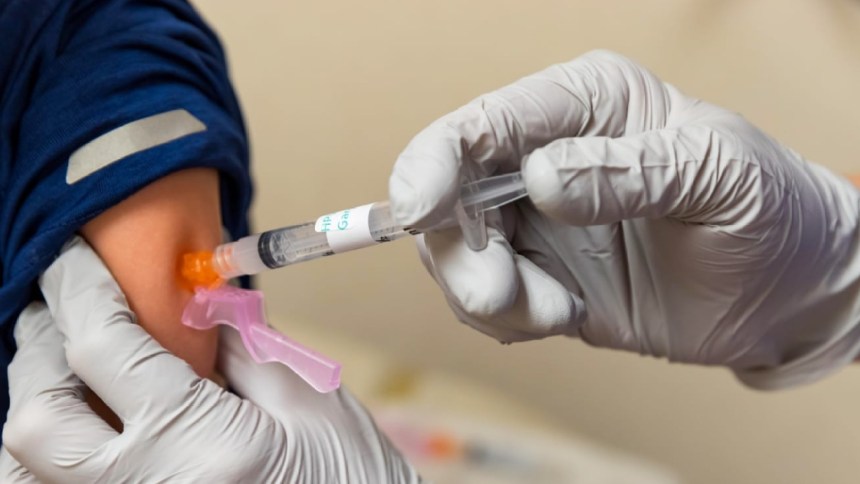
Means acknowledged that “vaccines save lives,” but she would not pledge to encourage parents to vaccinate their children against measles and the flu, despite three known deaths from measles last year, with flu cases on the rise.
“You’re the nation’s doctor, would you encourage [a mother] to have her child vaccinated?” asked Sen. Bill Cassidy, R-La., the chairman of the committee.
“I’m not an individual’s doctor, and every individual needs to talk to their doctor before putting a medication in their body,” Means replied, adding, “I’m absolutely in support of the measles vaccine and I do believe vaccines save lives and are important part of the public health strategy.”

After the hearing, Sen. Susan Collins, R-Maine, told reporters she wants more answers from Means on her stance on vaccines. She called Means “a very bright, well-educated physician with some unorthodox practices and views,” adding that she wants to know if she will follow the lead of Dr. Mehmet Oz, administrator for the Centers for Medicare & Medicaid Services, “in telling people to get vaccines.”
Across the political spectrum, Means has proved to be a controversial pick for the role — considered to be the “nation’s doctor” — attracting criticism from both Democrats and Republicans, including right-wing provocateur Laura Loomer, a Trump ally, for her limited medical credentials.
She has most recently made her name as a wellness influencer, hawking dietary supplements and other products, and authoring a book called “Good Energy: The Surprising Connection Between Metabolism and Limitless Health.” In 2019, she co-founded Levels Health, a subscription-based metabolic health measurement company.
She wrote the book with her brother, Calley Means, who worked as a special government employee in the White House until last fall. He was in the audience at her testimony on Wednesday.
The president previously said that he does not know Means but that Kennedy “thought she was fantastic.” Responding to critics last year, Kennedy said: “Casey is the perfect choice for Surgeon General precisely because she left the traditional medical system — not in spite of it.”
She was originally scheduled to testify before the Senate in October, but that was postponed after she went into labor just hours before the hearing was set to begin. She gave birth to a son that day.
The job of surgeon general, which has been around since the 19th century, has two requirements: The candidate must be a member of the Regular Corps, part of the Commissioned Corps of the U.S. Public Health Service, which the surgeon general oversees, and must have “specialized training or significant experience in public health programs.”
Prior surgeons general have issued public health warnings on issues ranging from the threat social media poses to young people’s mental health and the national crisis of firearm violence.

When Cassidy asked if Means accepts the evidence that vaccines do not cause autism, she replied: “I do accept that evidence. I also think that science has never settled.”
Kennedy has long pushed the discredited claim that vaccines cause autism, and in November he ordered the website for the Centers for Disease Control and Prevention to update a page on vaccines and autism reflecting his beliefs.
But Means suggested she would be willing to stand up to people within the administration if necessary.
When Sen. Patty Murray, D-Wash., asked if she would contradict a statement from Dr. Tracy Beth Høeg, acting director of the Food and Drug Administration’s Center for Drug Evaluation and Research and a vaccine skeptic, that cast doubt on RSV vaccines for babies, Means said, “I certainly have absolutely no issue having very frank conversations with anyone in the administration if I believe that their statements are misguided in some way or not fully informed.”
But she said she would voice those concerns privately, not publicly. That’s in contrast to six former surgeons general who, in October, wrote an op-ed in The Washington Post saying that Kennedy’s actions as HHS secretary — including de-emphasizing vaccines and firing myriad experts — “are endangering the health of the nation.”
Sen. Tim Kaine, D-Va., asked Means multiple times if she agreed with Kennedy’s recent false claim that there is “no evidence that the flu vaccine prevents serious disease or that it prevents hospitalization or deaths in children.” After initially dodging the question, she finally conceded that she believes the flu vaccine reduces the risk of injury or hospitalization “at the population level.”
Murray also asked Means if she believes women should trust FDA-approved birth control, given that Means has railed against the pills, claiming they shut down a woman’s “life-giving nature” and have “horrifying health risks.”
“I absolutely believe these medications should be accessible to all women, and also all medications have risks and benefits,” Means replied.
The senators also grilled Means about the appearance of conflicts of interest over some of the products she has promoted on her social media accounts and in her newsletter. Means says she has 845,000 Instagram followers, 227,000 X followers and 200,000 weekly newsletter subscribers.
Sen. Tammy Baldwin, D-Wisc., said information provided to the committee shows that Means allegedly made at least $325,000 by promoting longevity supplements and wellness teas and elixirs since the start of 2024.
“You’ve said that our health care system is broken,” Baldwin said, “but it seems to me that you’ve spent your career sort of making money off the flaws in the system, and I’m left wondering how the American people are supposed to trust you to put their health and safety first, not profits?”
Means called those “incorrect characterizations” and said she is “committed to giving Americans the best public health information possible,” adding that she has worked closely with the Office of Government Ethics to prepare for potentially assuming the role of surgeon general.
Sen. Chris Murphy, D-Conn., alleged that Means failed to adhere to a Federal Trade Commission policy requiring her to disclose her financial connection to companies whose products she promotes, citing a pending complaint against her. He rattled off examples including prenatal vitamins, basil seeds and a lab testing company that Means allegedly promoted without acknowledging her financial relationships.
“This seems systemic,” Murphy said. “It seems that in the majority of instances in which you were, as a medical professional, recommending a product, you were hiding the fact that you had a financial partnership.”
Means denied those claims, calling them “incorrect and a false representation.” She added, “If it inadvertently has happened, I would rectify that immediately.”
Collins also questioned Means about claims in her book that she was inspired to try psychedelics after an internal voice whispered, “It’s time to prepare.”
“Do you stand by what you said in your book encouraging people to try psychedelics?” the Maine Republican asked. “And second, as surgeon general, should you be confirmed, how would you speak to the American people about the use of illicit drugs?”
Means said she would not formally recommend Americans use psychedelics for mental health treatment, noting that “the science is still emerging,” but adding that “exciting work being done in this area.”
Responding to Collins’ question about the “internal voice” she wrote about in her book, Means said she was referring to her mother’s death from pancreatic cancer.
“In my meditations and prayers at that time, I was having a deep sense that something ominous was coming,” she said.

Julianne McShane is a breaking news reporter for MS NOW who also covers the politics of abortion and reproductive rights. You can send her tips from a non-work device on Signal at jmcshane.19 or follow her on X or Bluesky.