








MINNEAPOLIS — The young Nigerian man’s confidence visibly dissolved as he began to understand how long he might remain detained.
He had entered the United States on a student visa. When his full-time enrollment ended on Dec. 18, immigration agents arrested him 13 days later for violating a restraining order in a disorderly conduct case. Now detained at a facility in North Dakota and appearing before Immigration Judge Audrey Carr, he desperately wanted out.
He explained to the judge that he felt unsafe in the facility and had already been assaulted. He had documentation showing he planned to apply for another visa extension. Could the judge release him so he could retrieve it? The 22-year-old’s pleas shifted rapidly — first asking to represent himself, then requesting voluntary deportation. He had money for a plane ticket. He had his passport ready.
Judge Carr’s response was patient but firm: Even voluntary departures take time. The government sets ticket prices. The government coordinates flight schedules.
“This is just the process, and sometimes, the process is slow,” she said.
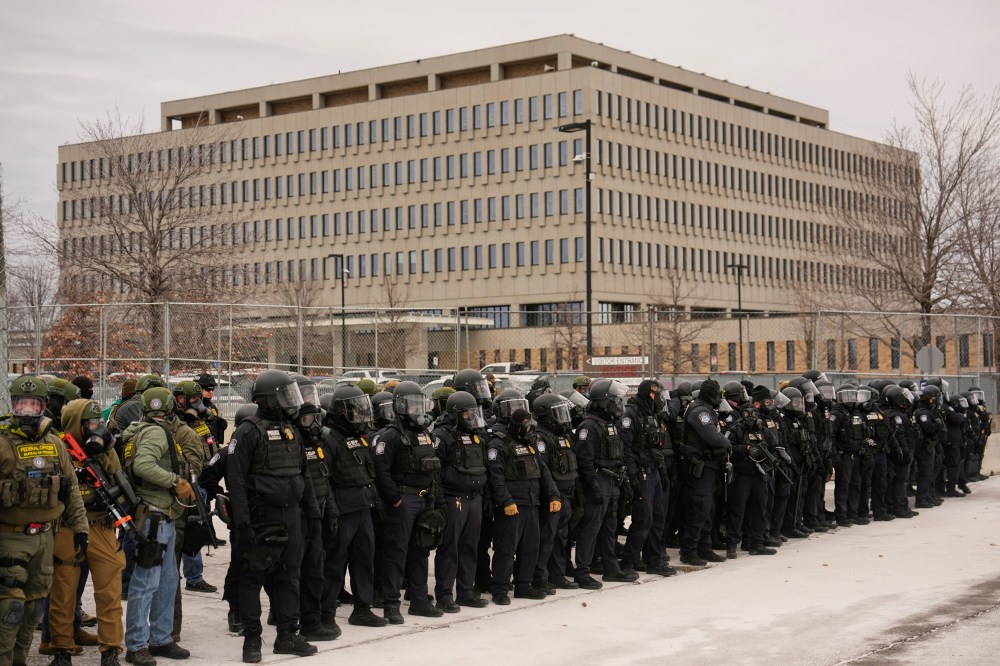
Over roughly two hours on a recent morning at the Whipple Federal Building, the site of increasingly tense clashes between federal agents and anti-ICE protesters, this reporter observed four cases before Judge Carr. The four cases were just a feather on the mounting pile of cases judges in Minnesota’s Fort Snelling Immigration Court are overseeing as the federal government surges thousands of immigration personnel to ramp up detentions and deportations — a surge that has resulted in fierce clashes between federal agents and protestors and two fatal shootings in less than a month.
But each case undercuts the government’s assertion that the aim of its aggressive nationwide deportation agenda is to pursue the state’s “worst of the worst,” and aligns with data that suggests a majority of immigrants detained by the government have no criminal background.
All four defendants were men of African descent. Most had not been convicted of violent crimes. In each case, the government attorney argued against their release.
“DHS law enforcement continues to remove violent criminal illegal aliens from the streets of Minnesota,” Assistant Secretary Tricia McLaughlin said in a statement last week, citing arrests of “pedophiles, sexual predators, and drug traffickers.”
None of the defendants that day fit those categories.
The disconnect between the government’s public messaging and the reality in the courtroom was perhaps most stark in the first case: a working-age Somali refugee who entered the country in 2023 and filed for a green card after a year of residence, as required.
His lawyer, an over 8-month pregnant attorney named Karen Bryan, argued that the defendant’s detention was improper as he maintained his legal status, attended court appointments and had his refugee status eligibility affirmed by the government in June.
The government’s attorney, Lisa Kumiega, appeared to struggle with her case load, shuffling through folders of documents and requesting a brief recess to organize her thoughts. When she returned, her argument was simple: The defendant had submitted one form five days late. That warranted immediate deportation, she said.
The government’s position, Kumiega said, was that the late filing warranted the defendant’s immediate deportation. Carr appeared incredulous: the defendant had no criminal background, and still was eligible for refugee status irrespective of the late filing. She terminated the deportation order and dismissed the case. The government, however, reserved its right to appeal, which meant even Carr was unclear as to whether the defendant would be immediately released.
“You may be released. I don’t know,” she said to the Ethiopian national through the virtual monitor he appeared through.
The cases that followed revealed similar patterns: bureaucratic tangles, government attorneys sometimes learning case details in real time and immigrants caught between policies and practical realities.
An Ethiopian national detained for overstaying his visa had actually entered legally as a refugee. The Biden administration had granted Ethiopia temporary protected status, allowing him to remain. But Homeland Security Secretary Kristi Noem terminated that designation in December, with benefits ending Feb. 13. The man had never violated his legal status requirements or missed a filing deadline. Yet he would have to leave.
Judge Carr struck down the government’s overstay charge but could not authorize his release — the policy underpinning his residence had been rescinded. He requested voluntary departure, saying he no longer feared returning to Ethiopia and could pay his own way. The judge approved. He is no longer in custody, according to ICE’s detention database.
Only one case involved an immigrant with multiple criminal convictions: a 21-year-old Liberian national arrested most recently for marijuana possession, who had previous convictions as an adult teenager for shoplifting and domestic violence.
He made a personal plea to Judge Carr: Could she grant him temporary release to witness the imminent birth of his child?
The judge was empathetic but blunt. Not only would his bond request be denied, she said, but he would likely be deported.
“You are removable because you have been convicted of at least two crimes of moral turpitude,” she told him.
The young man said he feared returning to Liberia, where he had not lived since childhood. Going back would be like arriving in a foreign country, he said.
Judge Carr told him he could apply for cancellation of removal and strengthen his case with character testimony from friends and family. According to government records, he remains in detention.

Nnamdi Egwuonwu is a reporter for MS NOW.

Dorothy Whalen is a New York-based field producer for MS NOW.