









Republicans are likely in for a tumultuous new year, if the end of 2025 is any indication.
President Donald Trump began his second term on a high, surrounded by a pageantry of riches, in firm command of his party. Within months, his tariffs upended global trade, sent prices soaring and handed Democrats pivotal election victories. Trump’s power over GOP lawmakers unfastened, culminating in a revolt over his attempts to block the release of government files related to Jeffrey Epstein.
The party enters 2026 confronting a shaky midterm election forecast that mirrors the president’s declining approval ratings. This comes amid a crucial redistricting war, which Trump himself orchestrated in a bid to secure long-term GOP control over the House of Representatives. He still controls the party he commandeered more than 10 years ago, but his MAGA movement faces an uncertain future. With the fate of his final act far from settled, Trump has not yet given his blessing to a successor.
That could change as the 2026 campaign trail becomes a runway of surrogates vying to lead a new, post-Trump era, if not outright running for president themselves.
The ensemble of possible contestants will grow, but it already includes one of the president’s own sons, Donald Trump Jr.; Sen. Josh Hawley of Missouri, who may not seek the White House but has tried to rebrand himself from a fist-pumping Jan. 6 riot supporter to a Medicaid-defending maverick working across the aisle; and Sen. Ted Cruz of Texas, whose presidential aspirations are hard to disguise.
There’s also Utah’s Republican governor, Spencer Cox, who emerged as a compassionate voice of reason after Charlie Kirk’s assassination on a college campus in his state. (Cox has bonded with Democratic Gov. Josh Shapiro of Pennsylvania, since both have handled political violence in their respective states, including the assassination attempt on Trump in Butler, Pa., and an arson attack on Shapiro’s home.)
Among them all, here are six Republicans worth watching in 2026.
Vice President JD Vance
Crisscrossing the country for fellow Republicans in the November midterms will present a plum opportunity for the sitting vice president to jump-start his 2028 presidential bid. But Vance will have to master a tricky maneuver as he flies coast to coast in 2026: playing wingman without overshadowing the leader in his quest to become Trump’s heir apparent.
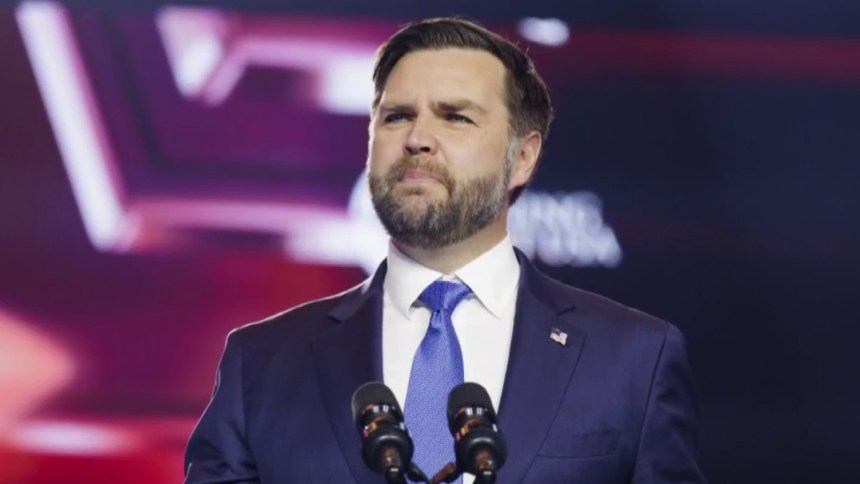
As vice president, Vance, 41, has been deployed as a key messenger touting his boss’ foreign policy decisions, including lethal airstrikes on suspected drug boats near South America, the bombing of Iran’s nuclear sites and Trump’s proposed Ukraine-Russia peace plan. Vance also played a significant role in the infamously contentious Oval Office meeting between Trump and Ukrainian President Volodymyr Zelenskyy.
And lately, as Politico pointed out, Vance has been harping on the problems with “illegal aliens,” an issue that worked for him and Trump during the 2024 election but that polls show has lost popularity in light of the administration’s deportation crackdowns.
But the president has refrained from endorsing his second-in-command, the “Hillbilly Elegy” author who morphed from Trump critic — “Trump is cultural heroin” — to staunch loyalist. In August, when asked point-blank if Vance was his heir apparent, Trump said, “Well, I think most likely. In all fairness, he’s the vice president.” But he qualified his remark: Secretary of State Marco Rubio is “also somebody that maybe would get together with JD in some form.”
Secretary of State Marco Rubio
The onetime Trump presidential rival is viewed as a strong contender for the Republican presidential nomination in 2028, though he has suggested he would not run if Vance does. “If JD Vance runs for president, he’s going to be our nominee, and I’ll be one of the first people to support him,” Rubio told Vanity Fair.
But the 54-year-old former Florida senator has time to change his mind and figure out how to position himself as a viable alternative by using his unique influence as secretary of state in executing Trump’s national security strategy.
Rubio, who has also been serving as interim national security adviser, has reportedly been a key architect of the Trump administration’s pressure campaign — including boat strikes — to oust Venezuela’s autocratic leader, Nicolás Maduro. Rubio is inextricably tied to the administration’s “America First” foreign policy agenda, which is sharply critical of longtime U.S. allies in Europe.
Erika Kirk, Turning Point USA CEO
Erika Kirk kept a low profile relative to her husband, Charlie Kirk, until he was killed in September. That fatal shooting thrust her into the national spotlight, and she has since taken over as CEO of Turning Point USA, her husband’s far-right organization, which sent young men to the polls to put Trump back in power.

Kirk, 37, espouses beliefs in traditional gender roles, and she has called for the “revival of Biblical womanhood.” When the couple appeared on a podcast in early 2025, Charlie Kirk joked that he was “a moderate compared to Erika.”
Under her leadership, Turning Point USA appears poised to expand its influence on the right in the coming year. And Republicans are hoping she can draw in more women to a party that has been trending toward hypermasculinity and has snubbed key female leaders, including outgoing Reps. Majorie Taylor Greene of Georgia and Elise Stefanik of New York.
Unlike Trump, Kirk has endorsed her late husband’s good friend, JD Vance, for president.
House Speaker Mike Johnson
The Louisiana Republican might just have the toughest job in Washington. He’s tasked with managing an impossibly slim majority made all the more challenging by a record number of lawmakers calling it quits.
Despite his efforts to corral his caucus to get behind Trump’s whims and agenda, Johnson has struggled to wrangle House Republicans on major issues like the Epstein files and Affordable Care Act subsidies. As speaker, he has faced embarrassing revolts from members of his caucus and presided over the longest government shutdown in history.
Greene had threatened to seek a vote of no confidence against Johnson, as MS NOW first reported, but she officially leaves Congress on Jan. 5 and the House doesn’t return until Jan. 6. Still, the speaker’s job isn’t exactly steady.
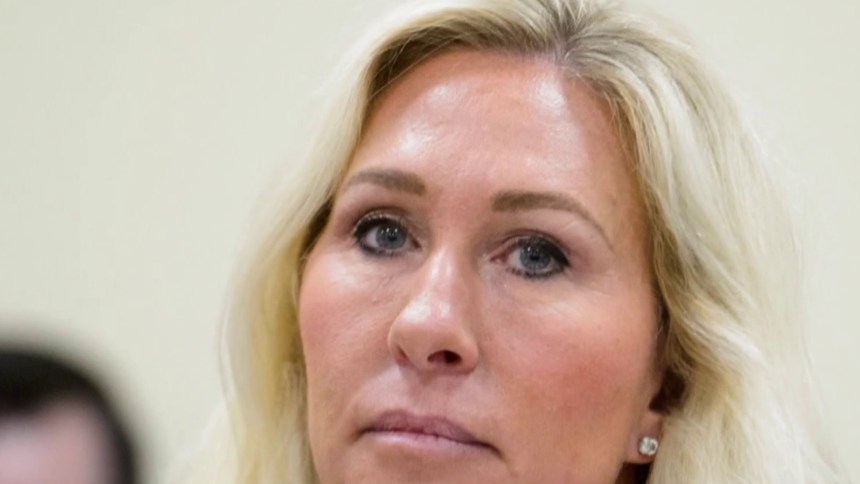
Stefanik, who will finish out her current term, says she and plenty of others would gladly boot Johnson, who turns 54 on Jan. 30. “He certainly wouldn’t have the votes to be speaker if there was a roll-call vote tomorrow,” Stefanik told The Wall Street Journal.
But as long as he has the title, Johnson is a walking, talking fundraising machine for House Republicans — whether they want him or not.
Virginia Gov. Glenn Youngkin
Can the former darling of anti-MAGA Republicans recover from any potential reputational damage caused by the scandalous implosion of his state’s GOP apparatus?
Thanks to a personal fortune estimated by Forbes to be close to $470 million, Youngkin, a former private equity executive, has options.
Having defended Trump’s massive federal layoffs despite the commonwealth being home to a significant chunk of government workers, the outgoing term-limited governor has been floated as a possible replacement for Homeland Security Secretary Kristi Noem, whose days could be numbered.
And while his presidential ambitions have been dampened by the GOP turmoil in Virginia, Youngkin visited Iowa and South Carolina over the summer, fueling speculation about a national campaign. That means he’ll likely be a presence on the 2026 catwalk, helping congressional candidates and building goodwill.
Texas Attorney General Ken Paxton
Paxton, a fierce Trump ally who has used his office as a home base to advance conservative culture wars, is running to unseat incumbent Sen. John Cornyn in the Lone Star State’s Republican primary.
Polls show a tight race between Paxton, who appeals to the MAGA base, and Cornyn, one of the few remaining old-guard Republicans in the Senate. But the attorney general’s personal baggage could prove too weighty.
In April, Paxton’s aides were awarded more than $6 million after a judge found they were improperly fired for blowing the whistle on their boss’ corruption allegations. In July, Paxton’s wife, state Sen. Angela Paxton, filed for divorce, citing infidelity, which Paxton has denied. In 2023 the GOP-led state House impeached Paxton over his alleged misconduct, though he was later acquitted by the state Senate after a trial that included evidence of his extramarital affair.

Clarissa-Jan Lim is a breaking news reporter for MS NOW. She was previously a senior reporter and editor at BuzzFeed News.