



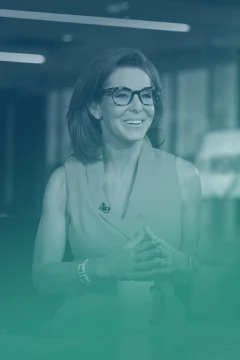
North Carolina is one of the most interesting swing states in this election. Democrats have not won the Tar Heel state at the presidential level since 2008 when Barack Obama won it. It was a close race in 2020 and recent polling has shown Harris and Trump neck and neck in the state. There’s a lot to unpack about what’s going on. Anderson Clayton is the chair of the North Carolina Democratic Party. Elected at 25 years old, she is the youngest chair of a state Democratic Party in the U.S. Clayton joins WITHpod to discuss her political trajectory, the state of North Carolina politics, key issues including gerrymandering, her experience at the DNC and more.
Anderson Clayton: The saying of like Democrats have got to fall in love, Republicans fall in line. And I sort of think that in the case of some of our candidates that I’m like this year, to be honest, I think we have the most qualified Democratic candidates that we’ve ever had in North Carolina. And it is genuinely extremism versus experience on your ballot all the way down in our state.
Chris Hayes: Hello and welcome to “Why Is This Happening?” with me, your host, Chris Hayes.
You know, every single election in America, every single last one, school board, state rep, works the same way. Person that gets the most votes becomes the office holder they’re seeking. They win the election; they get to serve in that role. There are places that have ranked choice voting, but that’s the same rule everywhere. The most votes, you win the election, except for one election. There’s one election in America that does not work that way. And that’s the most important election. That’s the election for president. It’s the only election in America where you can win if you don’t get the most votes. And what that means is presidential elections are just run in a totally different way. They have their own kind of gravity in law.
And we have this institution of the swing state because you have to win states and all but two states have a kind of winner take all system for their electoral college votes, which means if you win the state, you get all of them. Even if you win by 10 votes or 100 votes. This year, we’ve got the sort of usual crop of swing states. Three, the so-called blue wall, Pennsylvania, Michigan, and Wisconsin, which are three that Barack Obama carried both times. Donald Trump won those narrowly in 2016, thereby giving him the Electoral College victory. Joe Biden won them back in 2020. There’s Georgia and Arizona, which Joe Biden flipped. There’s another state on the radar that I think might be the most interesting swing state this election. That’s North Carolina.
Now, Democrats have not won North Carolina at the presidential level since 2008 when Barack Obama won it. But they’ve also been quite close. Last time in 2020 was about 1.5 percentage points, which is a close race. It’s also a state that, even though it has, you know, two Republican senators representing it statewide, it has a very popular two-term Democratic governor and an extremely gerrymandered, super majority Republican legislature at the state level. It also has a really interesting gubernatorial race.
And polling has showed Kamala Harris and Donald Trump neck and neck in the state of North Carolina. So there’s a lot going on in North Carolina that’s really interesting. So I thought it’d be great today to talk to the chair of the North Carolina Democratic Party, who also happens to be the youngest chair of a state Democratic Party in the entire country. Her name is Anderson Clayton. You may have seen her speaking at the DNC in Chicago. She’s also been on my program “All In.” So Anderson, welcome to the program.
Anderson Clayton: Happy to be here, Chris. Thanks for having us.
Chris Hayes: How old are you, Anderson?
Anderson Clayton: Twenty six.
Chris Hayes: And when did you become state chair?
Anderson Clayton: When I was 25.
Chris Hayes: Where are you from in North Carolina?
Anderson Clayton: A little tiny town called Roxboro, it’s in Person County.
Chris Hayes: Tell me about what that area is like.
Anderson Clayton: Well, I joke with people. I’m like, if you take Raleigh and you know where it is and you go about an hour North, you’ll hit me before you hit Virginia. And a lot of people know it by the base of Danville, Virginia, but it’s rural, it’s agrarian, a lot of manufacturing in it right now. And in the last two years, Walmart used to be the largest employer in it, and then that has recently changed. And it’s our currently, our Person County government is the largest employer in it. And so when you’re looking at sort of the demographic of where, you know, one out of what 80 counties in North Carolina looks like right now, it gives you a good snapshot of it.
Chris Hayes: Tell me about what your political trajectory or awakening was like growing up there. I’m imagining, I haven’t looked at the precinct level results, but I’m imagining it’s a county that goes pretty heavily Republican in recent races, probably a pretty strongly Trump county just based on its geographic and demographic profile. So what was your household like? How’d you get introduced to politics?
Anderson Clayton: I would say that I came from a family that was very non-political. Person County’s an R plus 20 counties. It’s an area of the state where I think a lot of our rural communities that used to be democratic, maybe when Democrats were Dixiecrats a little bit more than they are right now in that case, and they’re not right now in that case. But I think it’s really important for folks to realize like that transition in rural communities when that happened, made it so that a lot of our areas sort of became a little bit more conservative.
And my dad is a little bit more conservative, I would say, but my mom is really the person that was and grew up teaching me about, you know, women’s values, our healthcare rights, their abortion rights, and it’s a woman’s right to choose in every case for that. And so I think I was really lucky. People oftentimes look at me and they’re like, how do you become a party chair when you’re from an area like that? And I think it’s the basis that you have good values that you were brought up on that still match in or aligned with what the Democratic Party still believes in to this day.
Chris Hayes: Did you do high school or college politics? Do you run for office?
Anderson Clayton: I did not do high school politics. I guess like student council was like high school politics —
Chris Hayes: Yeah.
Anderson Clayton: — maybe a little bit. I was involved, but there weren’t that many people in my high school. So, you know, you want what you ran for, you know what I mean? In that sense, it was just about getting involved. But I was very interested in journalism. I joked with people I wanted to be the next Anderson Cooper before I became Anderson Clayton. And at the DNC, I got to fill my lifelong dream of meeting Anderson Cooper there, so it was very fun.
Chris Hayes: That’s awesome.
Anderson Clayton: But college is really where I became political for the first time. And a very big shout out to the Watauga County Democratic Party. It’s the way in which I think I believe now how parties should operate and really where we should look to as the foundation of our starting places, which is the ground level, right? It’s the grassroots, it’s the local races that you were starting to talk about at the beginning of this, the school boards, the Senate races, the state legislature, and how we can really take back and blue map North Carolina like Republicans once red mapped it.
And so when I was in college, the Watauga County Democrats were on Appalachian State’s campus where I went to school and they were registering people to vote, which right now they’re doing the same thing out there this year in Watauga County, making sure that the average age of a new voter in Watauga County right now in North Carolina is 19, which is fantastic. And they were really involved with keeping a voting site on our campus in 2016, which when North Carolina went red in that election cycle, we saw Watauga County go blue for the first time in history. And that was because of the impact of student voters. And that’s what really got me involved.
Chris Hayes: So that’s interesting. So the local state Watauga County party did outreach or registering on your campus when you were a student. And that was your first kind of official interface with the Democratic Party.
Anderson Clayton: Yeah, because I think when you grow up in a rural area, right, like it’s not really so much partisan. It is more about getting involved with, I would say, public service and civic engagement is really important. And the Watauga County Democrats were the first ones that looked at me and said, hey, we want you to get registered to vote, A, but we also want you to know that Republicans right now are trying to threaten your right to vote on this campus. And that was something that was interesting to me. And I think right now, a lot of folks consider that young people are disengaged and they don’t actually want to be involved with politics. And I’m like, no, you just have to educate them. Like you have to bring them in a way that makes them feel like they’re involved with it and that it’s impacting them. And I think that they did that really well for me when I was in college.
Chris Hayes: So tell me about, you’re 26 now. You were 25 and became the state chair. So you go to college, you’ve kind of taken on this role as a member of the Democratic Party. It’s been interesting to watch, you know, Tim Walz, who’s obviously the vice presidential nominee. He’s from a rural area in Nebraska, small town that moved to Minnesota in a district in Minnesota. It’s pretty rural and quite Republican. It’s gone for Trump a few times. So swing district that he won a few times. And, you know, there’s been coverage of the fact that one of his brothers is a Republican who supports Trump, not going to vote for Walz and stuff like that, which is just kind of par for the course, right? I mean, if you’re from, like, yeah.
Anderson Clayton: I was going to say we’ve all got that family member, maybe (inaudible) one of them.
Chris Hayes: Or more, right?
Anderson Clayton: Yeah.
Chris Hayes: I mean, actually, you’re probably the family member.
Anderson Clayton: No, genuinely, which I would say in my family, like I definitely am. I think my dad, I joked with people, I’m like, my dad voted for Trump in 2016. He voted for Joe Biden in 2020. He’s now running as a Democratic County Commissioner in my home county —
Chris Hayes: Oh, wow.
Anderson Clayton: — in Person County. And it’s a really cool thing to see because it’s like, that’s one person in our family that’s sort of converted back over —
Chris Hayes: Wow.
Anderson Clayton: — right? But that is not what’s to be said for a lot of my family members. And so I don’t know. I feel like maybe you need to keep talking to your relatives, which is what I hope everybody takes from this, but it happens slowly, I think, and it’s a slow burn over time.
Chris Hayes: Wait, I want to stay with that. So your dad was a Trump voter in 2016, a voter for Biden in 2020, and he’s now running for a local position in the county you guys are from as a Democrat?
Anderson Clayton: Oh yeah, North Carolina. He looked at me and he said, Anderson, I’m going to fill one of these seats that you got on the ballot because I know that is part of what you’re trying to do this year in North Carolina with the state party, which we did. We’re contesting. You mentioned earlier, we’re like under a super majority in our state legislature from the Republicans. And this year, the North Carolina Democrats are contesting 168 out of 170 state legislative seats. And we’re really excited because in 2022, we left 44 of those seats uncontested.
Chris Hayes: Whoa.
Anderson Clayton: So it’s a big gap back that we’re getting in the state, we think.
Chris Hayes: So you’re fielding candidates in all but two races across the state, you’ve got someone on the ballot. And this isn’t a state rep, this is a local county position, but your dad is running for it as a Democrat.
Anderson Clayton: Yeah, I know. Exactly.
Chris Hayes: Wait, I want to say this because I find this extremely moving as a father, actually. Like, no, there’s something really profound here. So like, did you guys talk about politics a lot? How do you understand that trajectory?
Anderson Clayton: I think to your point, honestly, I would have never thought that that would happen. You know, in 2016, we sat down at the Thanksgiving dinner table and I remember throwing a deck of cards at him because that’s when he admitted to us that he had voted for Donald Trump and getting to a point in 2020. But I mean, it took a lot of like, my sister’s a seventh grade science teacher. My mom, she’s a nurse anesthetist, she worked in healthcare her entire life, right?
And then you’ve got me, who’s someone right now that cares about my right to healthcare access in the future and my right to have clean air and clean water and to be able to do more things in my life. And it was that for four years that we worked on him. And we did, we talked to him a lot about politics. And I also think he heard Donald Trump talk a lot about things that he was turned off by right, the way in which he talked about issues. And my dad would tell you to this day, you know, I’m smarter than that now. And I think that that’s the way that we have to approach Trump voters is like, it’s not like you’re, you’re stupid for doing that. It’s like, you’re smarter than that. Like, you know, better than a con man who’s been able to really grift off of people —
Chris Hayes: Yeah.
Anderson Clayton: — in rural communities right now and across this country right now.
Chris Hayes: Do you feel both personally and in the folks, you work with in the state party in a state that is a very purple state and there’s folks, there’s areas that are R plus 20, there’s probably areas that are R plus 30 and R plus 40 and R plus 50. And then I’m sure there’s parts of Chapel Hill or Raleigh, Durham or in Asheville where you’ve got, you know, precincts that are 90/10 Democrat, right? So I’m curious to hear you talk more about how you think about these conversations and how to make sure that you’re not alienating people, you’re not lecturing them. You’re not writing people off, but you’re also engaging and you’re also holding to your values and you can sort of have neighborly conversations or conversations across that divide that might have a chance of persuading folks.
Anderson Clayton: You’re talking to them about the issues. I mean, this year in our state, one thing that I feel like we have to really lean in on is that local races have impacted so much of what’s happening to people in their own backyard. You know, our state legislature in 2023 and this last year are voting to take more funding away from public schools in North Carolina, which is the number one economic driver in 80 counties and rural communities in our state. Like it’s important to realize North Carolina is the most rural of all the battleground states right now. Most of our population still lives in a rural or ex-urban or suburban community right now in our state.
And it’s important that we have people that are running everywhere and being able to carry that message because right now so many folks are not paying attention to what’s happening in our state legislature. And the impact of that, we’re seeing it across our communities where the defunding of public schools, but also the denial of Medicaid expansion throughout North Carolina over the last decade. Last year, because of Democrats, we were able to see Medicaid expansion finally happen in North Carolina, and over 600,000 people got access to health care for the first time. And I’m like, that’s what we have the stories to be able to go out and tell in these communities right now. And people just don’t know otherwise.
But we also have good candidates to talk about. Like North Carolina is one of 11 states in the country that have 15 statewide races. And there are folks on the ballot this year, like our commissioner of insurance race with Natasha Marcus, who’s running against Mike Causey, who is the Republican that’s been in there for eight years and given 16 rate hikes to homeowners and car owners insurance in the last eight years that he’s been there. And I’m like, folks are really interested right now in how we’re addressing kitchen table issues. And I’m like, well, let me tell you about some of these people on the ballot.
Chris Hayes: Right, that’s interesting. You could sort of bypass ideological presuppositions or people getting dug in on, you know, who do I identify with if you’re like, if you talk about something like commissioner of insurance, you’re like, let’s talk about rate hikes, which really has no real partisan valence and probably doesn’t. And that’s an end up (ph) to a conversation you can have in that context where you’re not bringing in like, you know, what do you think about wokeness or war in Ukraine or whatever?
Anderson Clayton: Yeah. But it’s also giving people a way to look at like, if I can vote for a Democrat at the state level, maybe I can vote for a Democrat up here too. And some of those issues that I think that we’re talking more to Republicans about this year is just like, your own backyard has been suffering from a Republican majority in a state legislature, Republican majority on the Supreme Court, and that’s what’s happening around us right now. Like you don’t have checks and balances in government anymore either in our state.
Chris Hayes: Yeah, I mean, your state is very similar in some ways to Wisconsin. I think they’re sort of the two closest states to each other and for this reason. You’ve got a situation where the state is a 50-50 state. And when you look at statewide races, North Carolina leans a little to the right of where Wisconsin leans, I’d say. They’re probably three points away from each other, one point to this side, one point to that side, something like that. But you’ve got this insane state legislative map that means even in a state where you’ve got a democratic governor whose approval rating is north of 50%, who’s won two terms, who’s on his way out, which means it’s a state that you can win in statewide, super majorities in both houses because of how intensely gerrymandered those maps are, and a lot of litigation over it, and a very complicated litigation record. It’s gone up to the Supreme Court and back, and get kicked back, then the state Supreme Court dominated by Republicans. So you guys are in a weird situation where you’ve got a popular Democratic governor and a Republican super majority born of these gerrymandered maps.
Anderson Clayton: Well, also it’s even more interesting, right. when you look at the fact that people always ask me, they’re like, why can Barack Obama win the state in 2008 and no one else can? And I always like to point out, well, our legislature was a Democratic legislature when he won it the first time and Democrats had control of our legislature and then in 2012, they didn’t, right, because Republicans took control of our state and they gerrymandered North Carolina. And I actually think the day that we’re not a gerrymandered state is honestly a day where you’re going to see a much fairer opportunity for us at the statewide and the federal level too.
But that’s not to say that Democrats haven’t still, over the last eight years in North Carolina, right to your point, won the last seven out of eight governor’s races, last eight out of eight attorney general’s races, even under those gerrymandered maps. I just think that us having all of these candidates running this year for the state legislature too is helping provide the turnout that we’re going to need, the 74,000 votes that we lost by in 2020 because it’s 42 votes per every precinct in every county. And we know it’s there. It is just making sure that those people feel like they have the potential and the possibility that their votes matter this year, that they can feel a part of something because so much of our state has been gerrymandered out of voter, like their voting protection or their voter rights. In that way, I feel like voters feel intimidated in so much of Eastern —
Chris Hayes: Right.
Anderson Clayton: — North Carolina because of this.
Chris Hayes: You’re in a super, I mean, just to tease this out a little bit, if you get gerrymandered into these sorts of districts where they’re not competitive, it is a little enervating. It does take away your motivation to vote. If you’re gerrymandered into a 65, 35 district, it’s like, it doesn’t really matter if I vote, like it’s going to be this. So that has a kind of effect, you’re saying, on just the sort of muscle of people exercising.
Anderson Clayton: Especially if you like go to the ballot and you’re a Democrat, you don’t have somebody to vote for.
Chris Hayes: That’s a great point, yes. You’re showing up and there’s literally no one.
Anderson Clayton: The average voter doesn’t know, oh, that’s because my district is gerrymandered. The average voter is just going, well damn, like, no Democrat thought I was worth fighting for.
Chris Hayes: Right. Right.
Anderson Clayton: And I’m like, no. We think every vote is worth fighting for this year. And we’ve got really brave folks —
Chris Hayes: That’s such a good point.
Anderson Clayton: — that are stepping up to do that everywhere, which is awesome.
Chris Hayes: That’s such a good point that there’s something like morale killing and sort of democracy killing, even if you’re in a district that’s 65, 35, right?
Anderson Clayton: Yeah.
Chris Hayes: I say this all the time. Like if you’ve got 10,000 people in a county and its a plus 30 districts, okay? You’re still talking about 3,500 Democrats, okay? So those are actual people out there.
Anderson Clayton: Yeah.
Chris Hayes: So, you know, they’re not a majority, but they’re people you can go talk to and you can organize and you can do stuff with. And what you’re saying is, if you’re one of those people who goes out of their way, both their neighbors have big Trump signs and they’re going to go out of their way to go vote in a midterm and they show up and there’s no Democrat on that ballot, that is really, really demoralizing.
Anderson Clayton: Yeah. And I think that one of the things that we’ve been able to do so well this year is recruit really good candidates as a party to make people feel like I’m going out and I’m not just voting for a Democrat. I’m voting for the best candidate this year. And you know, people like our Republican Senate Majority Leader, Phil Berger, right now, who has been taking away rights from people left and right in North Carolina, right, finally has competition from Dr. Steve Luking, who’s running against him in Rockingham County this year. And he went unopposed for the last two election cycles. And Phil Berger is the reason why Medicaid expansion was held up for 10 years in North Carolina. And now you’ve got a doctor, a family physician out of that county, you know, and Phil Berger’s drawn this district for himself and we know it’s gerrymandered and so does Steve Luking. But he’s still putting up a fight —
Chris Hayes: Right.
Anderson Clayton: — and he’s still going out and talking to people and telling folks like my patients have suffered because this man cost them health care. Like that’s a very powerful message to have out in places like that. And also having people getting out there the message for Kamala Harris and Tim Walz this year too about the fact that Democrats are the reason why this health care opportunity existed in the first place.
Chris Hayes: More of our conversation after this quick break.
(ADVERTISEMENT)
Chris Hayes: There’s two big issues I want to talk about in your state. Well, there’s a few, but let’s talk about the top of the race, the top of the ticket race, which is not the presidential, but the statewide race. So Roy Cooper, the incumbent Democratic governor, has term limited out. The current sitting attorney general, Josh Stein, is running to be governor as a Democrat. And the current sitting lieutenant governor, who is elected separately from the governor. So it’s not like a combined ticket like some places, he’s elected separately.
He’s a guy by the name of Mark Robinson. Mark Robinson is in a field of extremist candidates who say crazy stuff, which is sort of true in the MAGA era, I would say one of the worst. I mean, talked about people having to get abortions because you weren’t responsible enough to keep your pants zipped or your skirt down. He’s talked about how some people need killing in a riff about his political enemies, basically, people on their side. He’s called people talking to children about anything having to do with gay folks as filth. I could go on and on, but he’s really something. Tell me your read of that race.
Anderson Clayton: I think that the best framing of it is that Mark Robinson is a denier, a Holocaust denier, a human rights denier, an election denier, someone that we do not want in the governor’s office and we would like to deny him that this year because we know that we’ve got a great candidate in Josh Stein, who’s our current attorney general, who’s running on the democratic side this year to protect the people of North Carolina. And that is what our governor’s office has always been able to do in our state, which is why Democrats have won the last seven out of eight governor’s races because people trust our party to be able to do that, especially at the state level.
Anyone in North Carolina right now can go to DOJ delivers and see how much money every single county in North Carolina has gotten back this year in opioid relief from the attorney general’s office and the work that Josh Stein has been doing on the ground because I think that is what’s really impactful for voters is to be able to see the impact of someone like him in an office like that, because Mark Robinson is crazy. And so is every other Republican that’s running in North Carolina, quite frankly. We’ve got the extremist slate.
Chris Hayes: You’ve got a woman running for a statewide school position, was a school superintendent?
Anderson Clayton: Yes, Michele Morrow.
Chris Hayes: She was at January 6?
Anderson Clayton: Took her kids, in fact, yes. Brought her children. Cares more about public execution.
Chris Hayes: And she’s a homeschooler too, right?
Anderson Clayton: Yes, and also said that she would like to see the public execution of President Barack Obama live streamed on national television. And so someone that cares more about public execution than public education is what I’ve been saying because I’m like that is absolutely wild to me to have someone that could do that.
Chris Hayes: So she took her kids to January 6. Again, you don’t take our word for it. You can Google this. Obviously, these podcast episodes get fact-checked but has called for public execution of Barack Obama. She’s running for a statewide educational office.
Anderson Clayton: Yes, running to run our $18 billion budget of public education in the state.
Chris Hayes: I mean.
Anderson Clayton: And this is the thing, like people laugh, but I’m like —
Chris Hayes: She might win. That’s the other thing.
Anderson Clayton: She won a Republican primary. That’s what I think everyone needs to understand. And not only that, people like Dan Bishop, who is running for attorney general, right? Has fully endorsed Michele Morrow. They fully endorsed Mark Robinson. They are holding themselves up —
Chris Hayes: Yeah. Oh, yeah.
Anderson Clayton: — hand in hand with these people. And I don’t understand it at all, but I’m like, Dave Bollock, who’s running for our state auditor, has also endorsed Michele Morrow. The races that people would go down the ballot, like this could be a sensible Republican. No, there’s no such one that exists.
Chris Hayes: Right, I mean, there’s an old Ben Franklin quote which I use all the time where he’s talking about the revolutionaries during the colonial times. He says, we must all hang together. Assuredly, we will hang separately, right? Meaning like, we got to just stick together. And Republicans, I think, really have figured that out. That if you don’t turn on each other, you reduce. Like, there’s a world in which a bunch of Republicans on that statewide ballot are saying, I got to distance myself from Mark Robinson because right now he’s pulling behind. I think he’s, he’s probably the underdog in this race. Some polls have him as far as 10 points behind. I think it’ll be much closer than that.
Anderson Clayton: It will.
Chris Hayes: And you can imagine a world in which the A.G. or the state auditor is like, I got to save my own hide here. But what they’ve learned for their own sort of preservation is if everyone just sticks together and is like, oh, this is fine. Like the woman who brought her kids to Jan. 6, who wants the public execution of Barack Obama, the guy who, you know, thinks that, you know, the Holocaust was a bunch of, I think hogwash was the term that he used, like if we just say that they’re normal Republicans, like we’re normal Republicans, you kind of flatten everything out and like everybody’s got a shot basically.
Anderson Clayton: Yeah. No, absolutely. The saying of like Democrats have got to fall in love, Republicans fall in line. And I sort of think that in the case of some of our candidates, and I’m like, this year, to be honest, I think we have the most qualified democratic candidates that we’ve ever had in North Carolina. And it is genuinely extremism versus experience on your ballot all the way down in our state.
Chris Hayes: Let’s talk about abortion in your state and the state of abortion, which I imagine will be a big issue in the state of North Carolina. You do have an abortion ban in your state, right?
Anderson Clayton: We do. Our Republican Supermajority in 2023 enacted a 12-week abortion ban in North Carolina right after we saw abortions increase almost 37% of the state after Roe fell.
Chris Hayes: And I imagine that’s going to be a huge issue up and down the ticket, both in the presidential and the statewide races as well.
Anderson Clayton: Well, especially when you have someone like Donald Trump that said, I’m fine with leaving it up to the states. And I’m like, well, then you’ve endorsed the band that’s already enacted. And you’ve also endorsed a Mark Robinson abortion ban that he’s promised to enact when he’s governor without exceptions for rape or incest as well. And I think that that is something that people have to understand is at stake even more in this election cycle when southern states all over have really enacted some of the strictest abortion laws that we’ve seen post Roe. And then afterwards, you’re seeing Donald Trump say, we endorse what the states are saying. You’re endorsing all the bans themselves as well.
Chris Hayes: I also wonder, you know, North Carolina is a state and sort of like Texas, and I think like Georgia. I mean, these are states that are pretty economically vibrant places that have a lot of folks moving to them. People get drawn down to North Carolina to study. It has an incredible higher education system, obviously, in the state. You might get relocated there for work. And I wonder what it does to those aspects of the state and its sort of economic vibrancy, if, you know, I don’t know. Do you want to send your 19-year-old daughter down to a state where she can’t exercise reproductive choice? Do you want to relocate your family for a job for a state that has an abortion ban?
Anderson Clayton: I mean, it absolutely threatens it. And I think that we have companies and businesses that have also been in the general assembly this year that have lobbied against such extreme abortion bans. But we’ve had a Republican majority that’s refused to listen to them. And we’ve also had a Republican majority that’s refused to listen to the majority of the people of North Carolina, right? I think that the fact that you have a Republican supermajority does not help that fact, but it also is going to be able to prove at the ballot box in November that people care about the right to have the choice in North Carolina to access healthcare wherever they choose to whenever they choose to for their own right.
Chris Hayes: And you guys do not have a statewide ballot initiative like some of the other states like Florida and Arizona, et cetera?
Anderson Clayton: No, it has to go through our state legislature, unfortunately. So you know that they’re not trying to put abortion on the ballot in that sense this year.
Chris Hayes: No. They are not. Oh, I see. So there’s no direct citizen route to get a state ballot initiative. The state legislature has to put something up for a state ballot initiative?
Anderson Clayton: Yes, and correct.
Chris Hayes: Oh yeah. Well, then there’s no way, right?
Anderson Clayton: No. They wouldn’t give us that shot in hell to be real with you. I feel like that would be our dream in North Carolina to be able to have a citizen-led ballot initiative in the state, but you could not do that unfortunately.
Chris Hayes: Yeah, and I mean, it’s really interesting. There’s going to happen in Arizona. It’ll be on the ballot in Ohio. It’ll be on the ballot in Missouri.
Anderson Clayton: Florida.
Chris Hayes: It’ll be on the ballot in Florida. I think it might be a clean sweep in all those states, it’s possible. I think Florida’s got a clear 60%, which, you know, makes it a little more difficult. And it’s interesting to think about North Carolina when you think about it in terms of Medicaid expansion. It’s been one of the last holdouts, despite the fact, right? This is like, you know, part of the Affordable Care Act. It’s huge amount of federal dollars. There’s rural hospitals in all sorts of areas that were dying without that Medicaid expansion money. I covered it myself, seven or eight years ago. I was down in rural areas in North Carolina. Despite the fact that, it’s a fairly closely divided state, democratic governor that it took that long to get Medicaid expansion in North Carolina is a telling thing about the state’s politics.
Anderson Clayton: I mean, it should be. You know, it’s really interesting to me going back to the point that you’re making earlier about the Council of State positions that there are people oftentimes say that we’ve got a Democratic governor’s, we’ve got a Democratic executive branch. I’m like, no, no. Republicans control all three branches of government in our state right now. Our executive branch is a 10-person council basically in North Carolina. And so Democrats right now sit at a six to four minority on that. And then also Republicans control our Supreme Court. They control our Court of Appeals, which we saw this last week with RFK coming down and saying that we had to remove him from the ballot in North Carolina. And that’s a Republican-led court right now in our state. And we’re seeing the partisanship play out at that level. We’re also seeing it play out in our state legislative level. And just the power grabs that they’re making right now in our state is actually something that is just egregious to look at.
Chris Hayes: Yeah, on that ballot initiative, on the day that I’m speaking to you, which is September 6, today was supposed to be the day that mail-in ballots went out to voters in the state of North Carolina for early voting. The Supreme Court of the state of North Carolina, which has a Republican majority, stopped that sort of emergency stop to get RFK, Jr. taken off the ballot, right, because he wants to come off the ballot so that he can help Donald Trump win North Carolina. He doesn’t want any votes going to him. He wants them to all go to Donald Trump. And so this last minute attempt by him to stop them was successful, right? I guess they’re going to reprint the ballots. Is that right?
Anderson Clayton: Yes, it’s going to cost taxpayers in North Carolina millions of dollars to have ballots reprinted. And, you know, our Court of Appeals did something that was unprecedented. And the Republican Court is really messing with the integrity of an election, in our opinion, stopping mail-in ballots from going out the day that they were supposed to. And so it’s something horrendous that we’re having experiencing in our state right now. But that is also partly due to all what’s going on.
Chris Hayes: I want to talk about ballot access and sort of voting as we come down the home stretch here for the state of North Carolina. So you mentioned that your first interaction with the Democratic Party was when you were going to Appalachian State and the Republican Party was threatening to take the polling location off campus. This is a thing that Republican parties have done all across the country and in states they control. They hate having polling locations on campus because those voters tend to vote overwhelmingly democratic. They try to make it harder for students to vote. What have state Republicans tried to do in terms of ballot access and in terms of voting rights in the state of North Carolina?
Anderson Clayton: I mean, since they’ve had a Republican control of our Supreme Court, which happened after we lost it for the Democrats in 2022, they’ve been able to roll back voter ID rights in North Carolina, right? So you’re going to the polls this year in North Carolina, you have to have a valid voter ID. And originally that was not including student IDs. And so we had to fight to ensure that those would be part of it. And we had to go through an approval process that our college Democrats took and really went after making sure that we had all of our colleges across North Carolina with valid voter IDs that counted as student IDs this year.
Chris Hayes: So they do count now.
Anderson Clayton: They do count now.
Chris Hayes: Oh, that’s great.
Anderson Clayton: And that was a good effort that a lot of young people in our state led up and I did so in a volunteer capacity and we were really grateful because we have over a hundred campuses in North Carolina that we were trying to make sure that their student IDs all counted or that they had a way to make sure that they did. It was exciting, but we’ve also seen that in terms of just right now Democrats thankfully control boards of elections in North Carolina, which are in charge of where polling locations go.
So in 2016, when I was telling that story, we had a Republican governor. He was trying to make sure those polling sites were taken off campuses, right? This time we’ve got a Democratic governor who’s like, we want everyone to vote, and we want to make sure everybody’s got access to a polling location. But Republicans in my state legislature have tried to take away his appointment powers to the election boards in North Carolina.
Chris Hayes: Really?
Anderson Clayton: Yeah. No, absolutely. They’re trying to give that power. That’s also caught up in courts right now too.
Chris Hayes: Oh my God.
Anderson Clayton: That’s before our Supreme Court, get this, this is what really makes my day in just every sense of the word. So we’ve got a Republican Supreme Court Justice, Phil Berger Jr. His dad is Phil Berger Sr. He’s the seating Senate majority leader in the North Carolina State Legislature right now. Governor Cooper is before the court right now because the legislature is trying to take away his appointment powers to the election’s boards. He’s fighting them on it, trying to keep it. It’s before my Supreme Court. Phil Berger Jr. will not recuse himself from the Supreme Court, even though his dad would benefit and be the one that gets to appoint the people to the elections boards that then control the elections. And the Republicans would still have a majority on the Supreme Court, even if he would recuse himself. And so it’s just out of like, telling the voters basically like, we don’t care. But it’s crazy.
Chris Hayes: So, the dad is the Senate Majority Leader for the Republicans.
Anderson Clayton: Yes.
Chris Hayes: The son is a justice on the state Supreme Court.
Anderson Clayton: Yes.
Chris Hayes: The dad is the one who’s either a direct party to the lawsuit or would be a beneficiary of removing the election board appointment power from the governor and then the Republican state Senate Majority would do the appointing.
Anderson Clayton: Yes.
Chris Hayes: Right, so if he wins, he gets it. And his son is going to rule on whether daddy should get the appointment power?
Anderson Clayton: Yes. Vote for Justice Allison Riggs, everybody, in the North Carolina Supreme Court this year.
Chris Hayes: That is wild. You know, state Supreme Courts, it’s interesting. They don’t get a ton of attention generally, but I think starting in 2020, we were in such uncharted territory in terms of the pandemic and how people were going to vote. State Supreme Courts played a really crucial role in ruling on these questions. We’ve also seen state Supreme Court to be really crucial in the state of Wisconsin, where in North Carolina, you guys saw the state Supreme Court flip in the direction of Republicans and Wisconsin slipped in the other direction. That’s also cleared the path for overruling the maps as being essentially unconstitutional under state law. So state Supreme Court’s very, very, very important loci of power at the state level.
Anderson Clayton: Yeah, and we have the opportunity, Democrats in North Carolina, we’ve created a judicial office in our party. We are really trying to make sure that we focus on the court. So we’ve got one seat up this year with Justice Allison Riggs, one Democratic seat up in 2026, Anita Earls. And in 2028, we’re going to come take three Republican seats on the state Supreme Court and make sure that we get back our state where it needs to be.
Chris Hayes: We’ll be right back after we take this quick break.
(ADVERTISEMENT)
Chris Hayes: So given that you’re the state party chair, I’m curious a little bit about just the trajectory of the last say four to six weeks and what people are calling the switch, the surprise announcement from the President of the United States that he would not seek reelection as president, that he would step aside from his position as a democratic nominee and then the endorsement of Kamala Harris. What has that done to the race in North Carolina?
Anderson Clayton: I mean, I think it’s just energized a whole new generation of people and folks that are maybe newer to politics that weren’t involved beforehand.
We were seeing even before, I think the presidential switch up, right, we were seeing an extreme amount of energy, but it was really bubbling up a lot from the ground, from the state legislature, like I talked about, from some of the down ballot races that we were trying to really get that reverse coattail effect. And I think that now we’re sort of seeing it from both sides and that’s what’s very exciting to me, is that we have a lot of people that are interested in the top of the ticket, but that are also getting educated about the importance of down ballot. Democrats are oftentimes more likely than Republicans to have that down ballot drop off. And it’s really important for us to be able to educate people about you’re going to vote for Kamala Harris and you’re voting for Democrats down the ballot this year too.
Chris Hayes: Do you have evidence of that? Is there a lot of folks that say fill out the top of the ticket and just leave other stuff blank?
Anderson Clayton: It’s not that you say leave other stuff blank. It’s just like even anecdotally the other day, to be honest with you, like my dad running for that county commissioner seat, right? Like we were getting lunch in Roxboro and there was a girl that waited on us that I went to high school with and she looked at me and she goes, oh, like I know a lot about what’s happening at the presidential level. And I was like, well, my dad right here is running for county commissioner. And she said, I don’t really pay attention to that stuff. And I was like —
Chris Hayes: Yeah.
Anderson Clayton: — well, you need to. And it was sort of like being able to, I think, educate her about somebody that was running and bringing local politics to people, the fact that we’ve so much has made it so that’s where people’s focal points always are, right? And we’ve got to be able to really put people in the perspective of like the politics that impacts you is right in your own backyard. And that means your city council, your county commission, like your state legislature. And that’s, I mean, Tip O’Neill said it best, all politics is local. And that’s something we’re trying to still, you know, put on people this year in that way.
Chris Hayes: You were in Chicago for the convention, right?
Anderson Clayton: Yeah.
Chris Hayes: Had you been to a convention before?
Anderson Clayton: No.
Chris Hayes: So this is your first one.
Anderson Clayton: Yeah.
Chris Hayes: Oh, wow. Well, tell me. What was it like? I’m so curious to hear your impressions.
Anderson Clayton: It was exciting and a little nerve wracking. I don’t know that I love to tell people it was my first time because I was also my delegation chair and being a state party chair. Going to your first convention as a state party chair is sort of not the norm, right, I would say.
Chris Hayes: Right, because, I mean, a lot of people go and they’re hanging out, basically. You’ve got a lot to do. Like you as the delegate chair. There’s breakfast every morning, you’re running programming, you’re getting people. People are like, wait, I missed the bus. Like, texting you to be like, I can’t get to the venue. Like you’re doing all that stuff, right?
Anderson Clayton: I know you are. You become a logistics manager. And I kind of came home being like, Camp Counselor Clayton has taken off her hat for a moment.
Chris Hayes: Yeah.
Anderson Clayton: Like I got to get, and then the roll call. And my voice? You know, the roll call was on Tuesday, so my voice was out like I was trying to yell at people and I couldn’t get them to pay attention to me because I didn’t have no pipe. And it was just like, well, what are you doing right now? But it was interesting. I had also the youngest delegation in the entire country that went with me. So you can imagine that we had a lot of folks that were out pretty late, enjoying the John Legend’s, the Natasha Bedingfield’s. I’ll admit. I was also out there doing that too, but I’m just like, it was a good job, but —
Chris Hayes: It sounds like it was a lot of work and exhausting, is what you’re saying?
Anderson Clayton: It was, Chris. It was.
Chris Hayes: And you gave a speech, right, from the podium? Am I making that up?
Anderson Clayton: That was the roll call. That’s why I was like, I was just yelling.
Chris Hayes: Oh, right.
Anderson Clayton: We were yelling.
Chris Hayes: Okay, so tell me how that came. I was curious about the sort of backstory that every state had different setups and it was always sort of interesting to see who was going to have the mic for what portions and some states it was like very famous folks, like Chuck Schumer is up there for New York or Kathy Hochul. And then some of those, it was just like, hey, I’m the oldest delegate in our delegation. Did the state get to decide who was going to do it and how did that process work?
Anderson Clayton: Honestly, the campaign asked me to do it in the sense of they were like, you’re the youngest state party chair and this makes a lot of sense. Anthony Hamilton was also there and so there was a moment where they looked at me and they said, you all have figured this out, right? And I was like, I don’t know. And Anthony looked at me and he said, you’ve got what you want to say, right? And I said, yeah. And he goes, keep it simple. Just roll with it. And I was like, okay.
(BEGIN AUDIO CLIP)
Unknown: North Carolina, how do you cast your vote?
Anderson Clayton: My name is Anderson Clayton. I have the honor of serving as the youngest state party chair in this country. And North Carolina is the home of folks like Anthony Hamilton! Yeah! Governor Jim Hunt, Dr. Rev. William Barber, Nina Simone, we represent a new south. And we are proud to be that again this year by electing Josh Stein, Allison Riggs, Wesley Harris, Anita Earls and everyone else that’s on our ballot this year. We are going to make sure that we put Democrats on the ballot and in people’s hearts and minds. North Carolina gives a 131 votes to the phenomenal Kamala Harris.
(END AUDIO CLIP)
Anderson Clayton: Ceremoniously, it’s usually your delegation chair is the one that does the roll call unless they like would give it to someone. So you saw a lot of the state party chairs or your governor is typically like your delegation chair, which is kind of a historical piece of that a little bit. So it was weird, I think sometimes for some people to see a young person standing up there and I was like, no, I just, I got elected to do this so I’m here now, but it was cool and I was very excited about it.
Chris Hayes: Were you nervous about it beforehand?
Anderson Clayton: Yes. That’s why I sort of blacked out when I did it, which is normally when I get up there and I say anything, I do that. National television especially, oh my God. People looked at me and they said, it must get easier, and I’m like, no. I sit in a chair and I literally like, I feel like a cloud goes over my head. Like, okay, you’re here. Just answer and try to do your best.
Chris Hayes: So, I was thinking about this just from a broadcasting perspective. Obviously, if you’re up at the podium, you’ve got a prompter and reading off prompter is a little harder than it looks. I think people don’t quite appreciate that.
Anderson Clayton: They don’t.
Chris Hayes: It’s hard to make it sound casual and normal and like you’re talking and not reading. So that’s a difficult skill and people need to practice it to get good at it. So I was thinking about, so that’s one thing. But the thing I kept thinking about the roll call is no one’s got prompter. People have things they call it off state, but that’s actually, that kind of middle space, casual, somewhat extemporaneous, but with marks you have to hit is actually kind of the hardest speaking because if you’re fully extemporaneous, you can just talk. If you’re fully scripted, you could read. If you’re in between and you’re extemporaneous, but there’s marks you got to hit, you have to say the great state of North Carolina with the blah, blah, blah, that’s actually pretty hard. So did you have like an index card or you’re just doing it from memory?
Anderson Clayton: No. I’ll be honest. I did see people holding things and I was like —
Chris Hayes: Yes, some were reading, yep.
Anderson Clayton: I know, but in my head, I was like, man, I don’t want to hold anything. I really don’t want to do that to North Carolina. And not to say that that was terrible on them that did it because I get why they did it. But in my head, I wrote it like a few minutes beforehand and I was sitting there. Because the word, the framing of a new south was something that like just came out of my body. And I think if I had been doing my digital team, right, I would have written that speech a long time ago and I would have handed it to them and I would have said, have some merchandise ready for this because everybody has been DMing me being like, when is that coming out? But, it’s the heat of the moment, I think. And it was such a cool thing because I got to name some of my statewide candidates and people were like, you were the only person that named down ballot races. And that was really important to me because I know that everybody’s focal point is up there this year and I’m trying to bring it down as much as I possibly can to the ground so.
Chris Hayes: Yeah. Right now you’ve got podcast listeners that are walking their dog or going for a jog and across the country and, you know, they’re getting shout outs for the state auditor, state insurance commission.
Anderson Clayton: You’re learning something.
Chris Hayes: Yeah, somewhere from Venice Beach to St. Paul, you know. What are the last two months of the campaign look like for you?
Anderson Clayton: Honestly, GOTV. I’m going to be on every college campus that I possibly can. We were at Winston-Salem State University yesterday. We’re going to be on ECU’s campus tomorrow and trying to make sure that we are all over the place covering universities and registering college students, educating them about the election. And then also making sure that all of my counties are revved up and ready to go. And so launching canvases, it’s all about GOTV, and GOTV being Get Out The Vote, and how many people can we really pull out in this election cycle at the last couple of moments. But I did kind of look at folks and I was like, man, before the chaos of last week and everything, I was like, ballots are out basically, like now we just got to see if the operation can hold itself.
Chris Hayes: For folks that might be listening and no people in North Carolina who are not registered or themselves not registered, what is the registration deadline in North Carolina?
Anderson Clayton: It is October the 11th and you can also do same day registration as early voting, which starts on October the 15th.
Chris Hayes: All right. So you can go in and do same day registration during the early vote. That’s awesome. Anderson Clayton is the chair of the North Carolina Democratic Party. She’s the youngest chair of a state Democratic Party of the 50 states and she’s going to be very active in the state of North Carolina for the next two months. Anderson, thank you so much.
Anderson Clayton: Thank you.
Chris Hayes: Once again, great thanks to Anderson Clayton. She’s going to have her work cut out for her in the state of North Carolina down the stretch here. I learned a lot from this conversation. I hope you did too. We’d love to hear from you with your feedback. You can email us at WITHpod@gmail.com. Get in touch with us using the hashtag #WITHpod. You can follow us on TikTok by searching for #WITHpod. You can follow me at Threads and Bluesky and what used to be called Twitter @chrislhayes.
And you can be sure to hear new episodes every Tuesday.
“Why Is This Happening?” is presented by MSNBC and NBC News, produced by Doni Holloway and Brendan O’Melia. The episode was engineered by Cedric Wilson and features music by Eddie Cooper. Aisha Turner is the executive producer of MSNBC Audio. You can see more of our work including links to things we mentioned here by going to nbcnews.com/whyisthishappening.
“Why Is This Happening?” is presented by MSNBC and NBC News, produced by Doni Holloway and Brendan O’Melia, engineered by Cedric Wilson, and featuring music by Eddie Cooper. Aisha Turner is the executive producer of MSNBC Audio. You can see more of our work, including links to things we mentioned here, by going to nbcnews.com/whyisthishappening.