



This is the March 2, 2026, edition of “The Tea, Spilled by Morning Joe” newsletter. Subscribe here to get it delivered straight to your inbox Monday through Friday.
I spoke to President Donald Trump on Friday afternoon to get a better understanding of his goals in Iran. Our last conversation was after his invasion of Venezuela, when he declared that unlike George W. Bush in Iraq, “I’m going to keep the oil.”
The president was equally brash Friday afternoon, declaring hours before the invasion that the Iranian leaders were brutal killers who could not be trusted.
“It’s going to be an interesting two weeks, Joe,” he said.
He repeated the sentence for emphasis. Given my conversations with administration negotiators, I initially read Trump’s comment to suggest he would be debriefed by his negotiators before making a decision.
But on Sunday, a White House official told me they received the intel that Iran’s most powerful leaders were meeting together exposed and above ground. The decision was then made to strike Ayatollah Ali Khamenei and his top military commanders.
Time will tell whether that decision reshapes the region positively or is yet another in a series of disastrous American attempts at regime change in Iraq, Afghanistan, and Libya.
The president made clear in our call that his aim was regime change in Iran and to succeed where he believed other presidents had failed.
On “Morning Joe” today, we turned to a deep bench of veteran reporters and foreign-policy hands to help make sense of the past few days.
Thomas Friedman, the Pulitzer Prize-winning New York Times columnist who has covered the Middle East for more than four decades, stepped back to 1979 to explain how the Iranian Revolution reshaped the region — and what could happen if Iran’s trajectory shifts again.
David Ignatius, Washington Post columnist and longtime national security reporter, shared fresh reporting from the Persian Gulf on who is emerging at the top in Tehran, and why Iran’s missile and drone capacity may be eroding faster than many expected.
Jonathan Martin, senior political columnist at Politico, examined the White House’s strategic thinking and the political stakes at home.
And Mychael Schnell, MS NOW congressional reporter, walked us through her late-night phone call with the president — offering a revealing window into how Trump is framing the strikes as Congress moves toward a war powers vote.
I also shared new reporting on the White House’s larger geopolitical strategy, and a through line that runs from Venezuela to Iran to Russia.
Here’s what we’re hearing — and what it could mean for what happens next.
“I always said Barack Obama will attack Iran, in some form, prior to the election.”
—
President Donald Trump, Aug. 2012
REPORTER’S NOTEBOOK: Tom Friedman
Joe: For viewers who haven’t followed Iran and the region as closely as you have over the past few decades, could you give a quick primer? Iran has an extraordinary history and culture going back thousands of years, yet there’s such a disconnect between its educated population and the theocratic regime that’s ruled since 1979.
Friedman: I actually arrived in Beirut as a reporter in 1979 — quite a year. In my first months on the job, we saw the Iranian Revolution, the takeover of the Grand Mosque in Mecca (which was as consequential as Iran’s revolution), the Soviet invasion of Afghanistan, the Camp David peace treaty, the opening of Dubai’s Jebel Ali port by Queen Elizabeth II, and the Three Mile Island nuclear accident — all in one year.
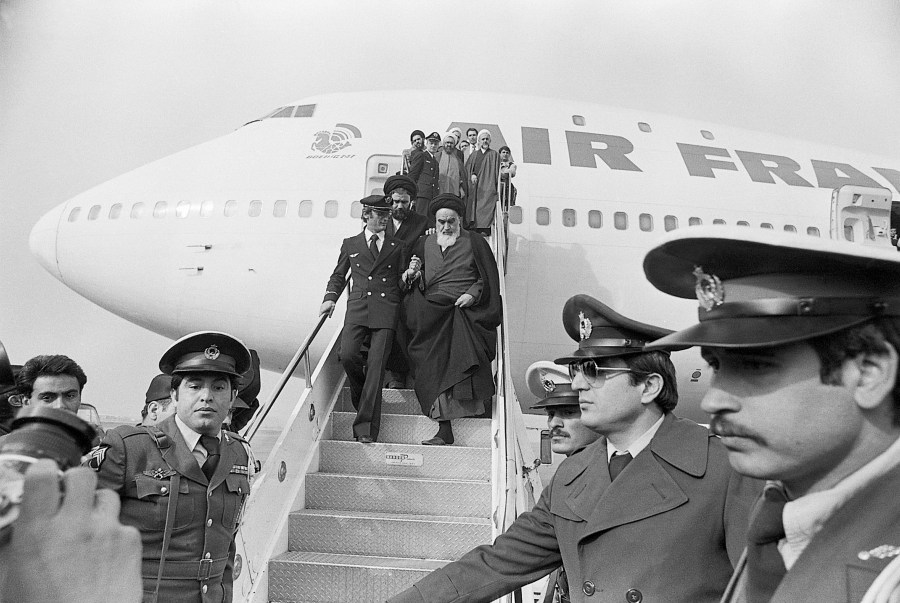
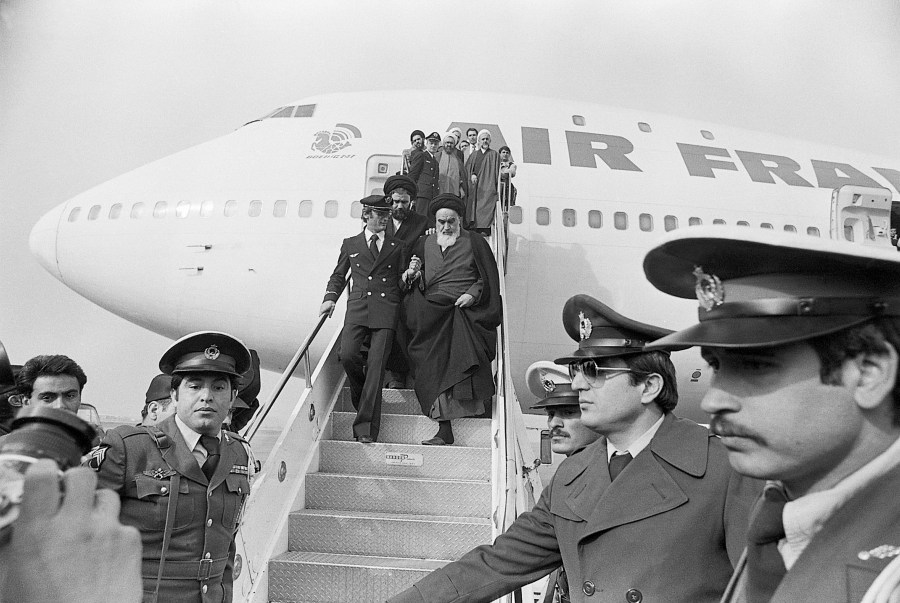
Ayatollah Ruhollah Khomeini, Iran’s main opposition leader, returning to Tehran in 1979 after 15 years in exile.
That year shaped the modern Middle East: a struggle between inclusion and resistance — globalization symbolized by Dubai and resistance embodied by Iran.
It’s the dynamic I’ve covered for more than 40 years. In the mid-2010s, Saudi Arabia’s Crown Prince Mohammed bin Salman began reversing the post-1979 drift into religious extremism that followed the Mecca siege. Despite his many flaws, including the murder of Jamal Khashoggi, he redirected Saudi Arabia toward modernization and development. That shift has reshaped the Muslim world.
Now, if Iran also reverses its 1979 trajectory with the current regime falling or reforming, the potential is enormous. You could see a more integrated, inclusive Middle East.
I’m not confident this U.S. administration can navigate that transition effectively; they create leverage but rarely use it well. Iran is a great civilization whose current rulers are not true to its history. If change comes, it could unlock tremendous potential.
And don’t forget that after 9/11, Iran was the one country in the Middle East where people spontaneously held candlelight vigils for America. At its core, much of Iran remains naturally pro‑Western.
REPORTER’S NOTEBOOK: David Ignatius
Washington Post columnist David Ignatius returned from the Persian Gulf region this week with new reporting on who’s now leading Iran after the death of Ayatollah Ali Khamenei. He joined us to share what he learned on the ground — and to assess what it could mean for U.S. policy and the broader balance of power in the Middle East.
Joe: Donald Trump says he’s willing to talk to Tehran’s new leadership. David, you have some fascinating reporting on that new leadership, as well as on what sort of hit Iran stockpiles have already taken. What are you hearing?
David Ignatius: After this overwhelming barrage — 2,000 targets, according to CENTCOM estimates — it does raise the question of who is running the show. Sources in contact with people in Iran tell me two things.
First, the person that Ayatollah Khamenei designated as his succession figure if he were killed is now in place. He’s the head of the so-called Supreme National Security Council, and his is Ali Larijani.
He’s a wily, tough survivor and familiar to anyone who follows Iran. People call him a pragmatist, but that means he’s managed to be useful to every president and [Islamic Revolutionary Guard Corps] commander who’s come along. He was known as the hanging judge early in his career because he was responsible for so many convictions of people who were caught protesting.
There are also some reports that an early, informal ballot of the so-called Council of Experts — the group charged with choosing the next supreme leader — has selected Ayatollah [Alireza] Arafi, a conservative cleric not well known in the West. He is described as fairly risk averse, a person who keeps a low media profile, kind of the opposite of Khomeini.
JS: You also have breaking news about the state of Iran’s possibly depleted abilities to strike targets across the region. Has America once again overestimated our geopolitical rival’s military capabilities — as we did with Russia?
DI: That’s the suggestion of my source in the Gulf after two days of war.
Iran responded to the attacks on Tehran and other cities with the spasm of missile and drone strikes on the Gulf countries themselves: Dubai, Abu Dhabi, Qatar, Kuwait. According to my informants, Iran started with around 1,500 ballistic missiles and many hundreds of Shahed drones, but have likely depleted 50% to 60% of the missiles — with 20 destroyed in strikes, that obviously stretches their capacity to near the breaking point.
And you’ve got U.S. and Israeli planes in the air over Tehran to this moment, further depleting their capacities. Gulf leaders are sending me messages that they are now considering offensive retaliation against Iran, something they would never have considered two days ago.
So there’s been a shift, and I think that reflects part of the success of the mission so far. They’ve taken out the supreme leader and other key Iranian leaders. There seems to be a growing sense that Iran’s power may be depleting hour by hour.
REPORTER’S NOTEBOOK: Jonathan Martin
Jonathan: New images coming out of the Middle East suggest the war is widening. Later today, we’ll see President Trump on camera for a few events. What are you hoping to hear from President Trump’s next public remarks on Iran?
JM: Public salesmanship of the war. As Joe has reported, there appears to be a strategy within the administration to gain control of Venezuela and Iran and pressure Russia.
The goal, they believe, is to limit China’s access to cheap oil. If that’s the thinking, it’s a massive geopolitical move aimed at their biggest rival in the 21st century.
If that’s their strategy, the administration needs to say so clearly to the American people.
JS: Agreed. An official close to the president told me this expansive geopolitical goal regarding China has been driving their military actions for months: Take control of Venezuela to cut off Russia and China’s cheap oil supply there, and then do the same with Iran’s oil supply.
Their goal is to isolate China and Russia from allies from Venezuela to Iran, and from Cuba to Syria. And if the United States can reach a peace deal between Ukraine and Russia, administration leaders see that as the final piece of that strategy.
That’s what highly placed White House sources told me this weekend. But if their goal really is to cut off China from cheap oil in Russia, Venezuela, and Iran, that could possibly reshape the global balance of power regarding energy and give Washington leverage over Beijing.
My question now is why they are not making this larger strategy public?
JM: Right now, we’re only getting fragments of this strategy through scattered leaks and late-night calls. Meanwhile, three American pilots have had to eject, possibly due to friendly fire from Kuwaiti forces, and three U.S. service members were killed over the weekend. The administration needs to give the country a clear explanation of what our specific goal is in Iran and how it fits into a broader plan. Today would be a good time to start articulating that.
REPORTER’S NOTEBOOK: Mychael Schnell
JS: Mychael Schnell, tell us about your conversation with the president this weekend and how it’s guiding your thinking about the war right now in Iran.
MS: My colleague Laura Barrón-López and I were at the office on standby, working that evening on the developments in Iran. It was about 10 p.m., and we realized that the president didn’t have a press conference at all that day. He didn’t take any questions from reporters on camera, which is odd, considering it was such a big day, not just for the United States, not just for the world stage, but also for President Trump, himself.
It was a curious fact, but he was taking a number of calls from reporters, so we thought, let’s give him a call, and we can hopefully ask him some questions about Iran.
To our surprise, just before 11 p.m. he picked up the phone. It’s a practice that the president has of taking these calls from reporters, and we asked him if he had, first off, seen the celebrations in the streets in Iran. He said he did. He called them fantastic. He also noted that he saw the celebrations in Los Angeles, as well. He was particularly excited by that point. He mentioned it twice.
JS: Did the president say he had talked to anybody in Iran after the death of the supreme leader?
MS: He said he had spoken to leaders in Iran, but he did not specify whom.
We then asked him how he was feeling after this monumental development about what’s happening in Iran. He said, quote, “I think it’s a great thing for our country.”
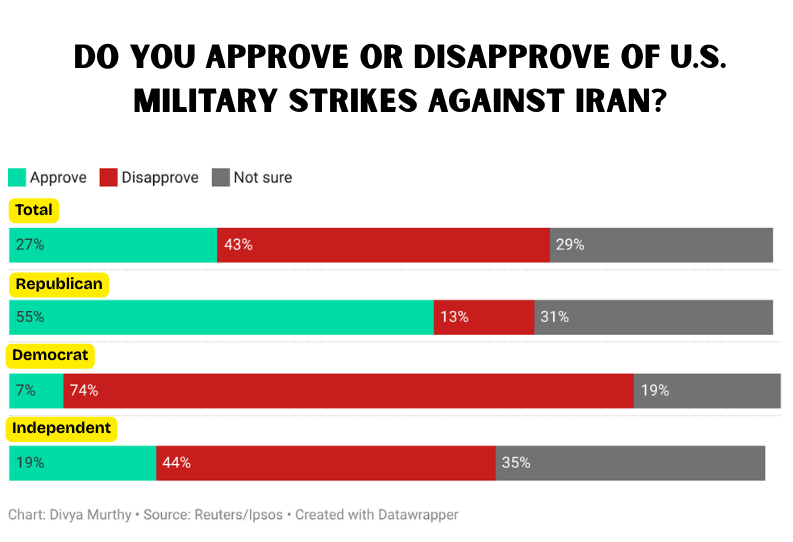
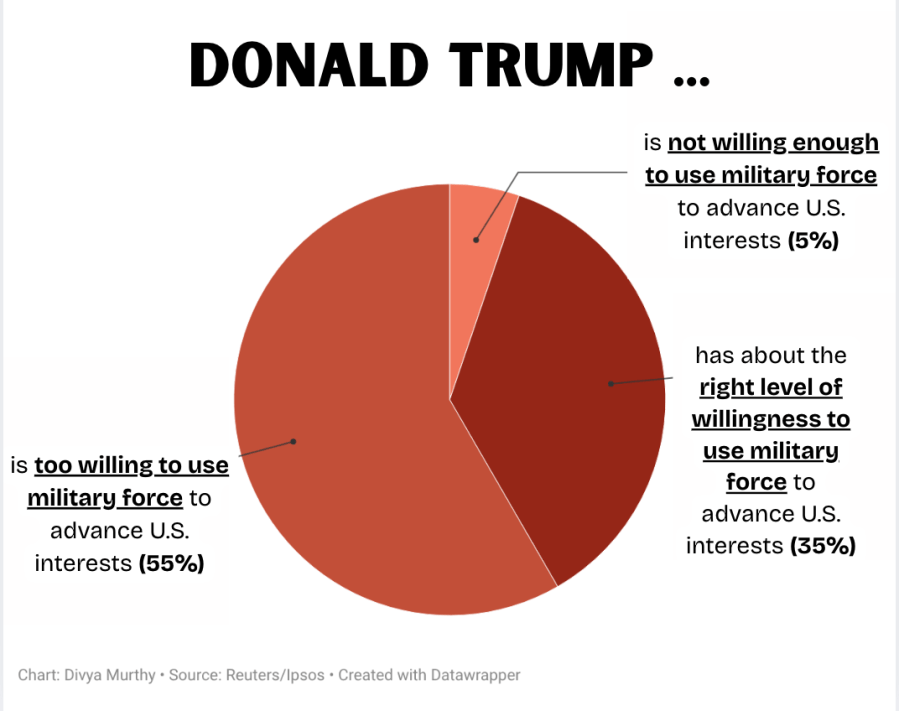
I think that part is important because we know the president in these videos has doubled and tripled down on believing this was the right move, despite widespread criticism from Democrats, as well as a number of Republicans.
The House and Senate are both scheduled to vote on a war powers resolution this week to try to curb the president’s authority when it comes to Iran now. Even if those resolutions squeak through both chambers — they only require a majority vote — it’s going to be an interesting, complicated vote because there are a number of Republicans and Democrats bucking their party leadership.
Even if the resolution passed Congress, President Trump would certainly veto it. And Congress is unlikely to override a veto. So it gets into the fact that regardless of what Congress votes to do, or thinks it can do, this is really President Trump’s decision.
EXTRA HOT TEA
Donald Trump has authorized more individual airstrikes in 2025 than President Joe Biden did in four years.
ONE MORE SHOT
Demonstrators hold an effigy of the shah of Iran and posters of Ayatollah Khomeini outside the American Embassy, which is occupied by “students following the Imam Khomeini’s line” on Dec. 15, 1979, in Tehran, Iran.
CATCH UP ON MORNING JOE



Former Rep. Joe Scarborough, R-Fla., is co-host of MS NOW's "Morning Joe" alongside Mika Brzezinski — a show that Time magazine calls "revolutionary." In addition to his career in television, Joe is a two-time New York Times best-selling author. His most recent book is "The Right Path: From Ike to Reagan, How Republicans Once Mastered Politics — and Can Again."