








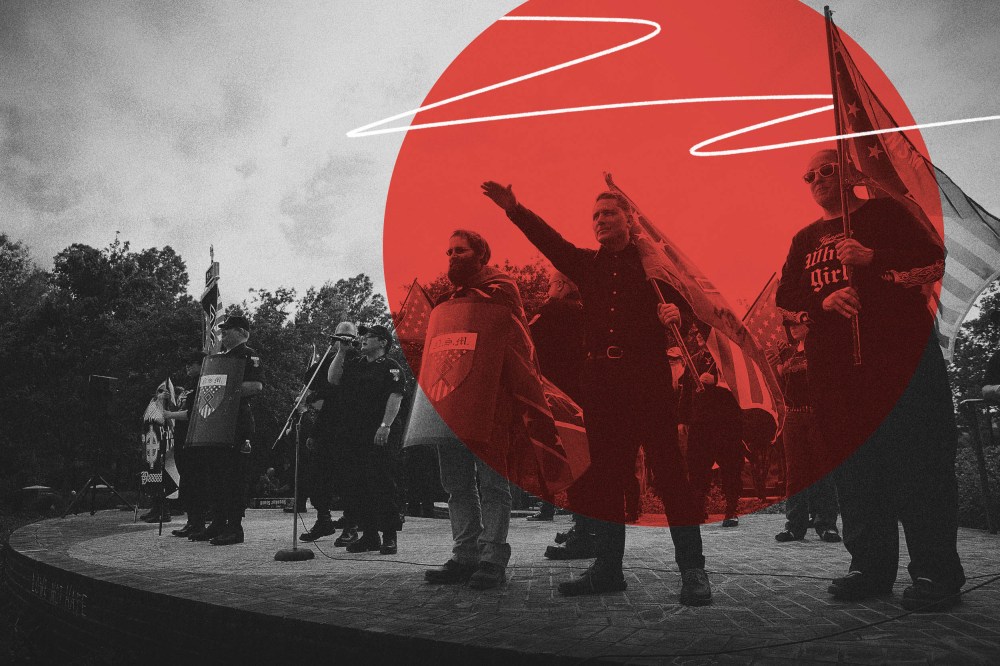
It’s been two decades since the terrorist attacks on 9/11 killed nearly 3,000 people on American soil. In the wake of that shock, U.S. and global intelligence and law enforcement pivoted almost entirely to the threat from Islamist extremism. But 20 years into the counterterrorism push, the threat landscape has shifted to American domestic extremism in ways that we are ill-equipped to address.
It would have helped if the United States had recognized sooner that far-right extremism had become the primary threat to the nation’s security. Like much of the country, authorities spent a lot of time over the past 20 years asking “why they hate us.” When it turned out that the people who hate “us” are more likely our neighbors than the international terrorists we had focused on, many American policymakers and the public did not want to see it.
These blind spots persisted over more than a decade of rising global white supremacist and anti-government extremism that were partly fueled by the events of 9/11. Immediate anti-Muslim backlash grew into increasingly mainstream anti-immigrant sentiments, especially as refugees fled violence and instability in the Middle East brought about by the global “war on terror.” The politics of fear after 9/11 eventually helped generate support for immigration restrictions, border closures and “America First” agendas that more explicitly aim to preserve white, Christian culture. The surge of post-9/11 patriotism, meanwhile, was fertile ground for extremist rhetoric centered on heroic defense of the nation or one’s people.
In late 2020, the Department of Homeland Security finally acknowledged that domestic violent extremism in general and white supremacist extremism in particular are the most pressing and lethal threats to the homeland. This came on the heels of white supremacist terror attacks in a Pittsburgh synagogue, two New Zealand mosques and an El Paso Walmart store — whose victims were part of the nearly 300 lives lost to far-right terrorism across Western countries between 2002-2019. The Jan. 6 attack at the U.S. Capitol should have erased any lingering doubts Americans have about the threat we face from our own citizens.
Recognizing the problem is a good first step. But as we move beyond acknowledging the challenge into trying to address it, we need an entirely new framework for thinking about prevention. We cannot adequately counter domestic extremism using a toolkit of strategies designed to fight the global war on terror.
We cannot adequately counter domestic extremism using a toolkit of strategies designed to fight the global war on terror.
In part, this is because jihadi extremism is more ideologically coherent and hierarchical than most forms of domestic violent extremism. Islamist forms of terrorism tend to be organized into cells with clear chains of command and leadership structures and relatively predictable radicalization pathways. Domestic violent extremism, on the contrary, is a patchwork of incoherent ideologies, often pieced together in pick-and-choose ways as individuals encounter propaganda online.
Far-right extremism is heavily driven by the weaponization of online youth culture and the use of satire and humor that positions the far right as a kind of countercultural, edgy resistance to “triggered snowflakes” in the mainstream. It leans into language that evokes American history and national myths, with rhetoric focused on freedom, heroic defense of the nation and the Constitution, and an aspiration to courageous revolutionary action that will thwart threats from illegitimate rule. This kind of rhetoric has helped fuel significant growth in the unlawful militia movement.

Domestic extremism is also highly adaptable by nature. Far-right extremism has absorbed wide swaths of disaffected citizens upset about recent Covid-19 shutdowns and mask and vaccine mandates, alongside more traditional grievances related to immigration and demographic change. It is fueled by massive amounts of disinformation and propaganda that ranges from Holocaust denial and scientific racism to conspiracy theories about a global cabal of elites trafficking in children. Its radicalization pathways are disjointed and lead to violent outcomes in sometimes unpredictable ways. Most far-right terrorists aren’t affiliated with groups at all.


Countering these forms of extremism requires a different approach than the ones we have become familiar with in the aftermath of 9/11 and the global war on terror that ensued. The counterterrorism approaches of the past two decades focused heavily on law enforcement readiness, aiming to prevent violent extremism by improving surveillance, intelligence, and the use of tactics like extremist group infiltration. The clear aim was oriented toward fringe groups, with a goal of monitoring and disrupting plots before they were executed.
The rampant spread of disinformation and dangerous conspiracy theories poses a threat to our communities, our elections, and our democracy itself.
Those efforts may well still be necessary into the future. International and Islamist terrorism still represents a tremendous threat to the U.S. and to our allies around the world. And new forms of extremism, including unexpected cross-ideological coalitions, are ever-evolving. But we can’t repeat the mistakes of the past by turning a blind eye toward any form of extremism across the ideological spectrum.
But to effectively address the domestic violent extremism we face today, we have to shift our focus from the fringe to the mainstream. The rampant spread of disinformation and dangerous conspiracy theories poses a threat to our communities, our elections, and our democracy itself. We need earlier prevention and intervention that equips everyone with the tools to recognize and resist propaganda, disinformation, and the persuasive tactics of extremist rhetoric.
Focusing on the kinds of digital literacy that might help ordinary individuals be more resistant to propaganda and disinformation will not solve all our problems with domestic violent extremism. We must also find ways to address the underlying social and political issues that help drive extremists’ grievances. Counterterrorism experts too often treat white supremacist extremism, for example, as if it is separate from the broader, systemic problem of white supremacy itself. We ignore intersecting issues that clearly drive violence, like the widespread availability of weapons and a lack of effective gun control. Any successful approach to combating domestic extremism will need to be deep and multifaceted.
But investing in prevention that equips the mainstream to resist the persuasive tactics of the extremist fringe is an essential step in stemming the spread of domestic extremism. As we acknowledge and honor the anniversary of 9/11, there is no better time to call on everyone in the mainstream to recognize the part they play in defending democracy.

Cynthia Miller-Idriss is an author and expert on extremism.