








This is the March 4, 2026, edition of “The Tea, Spilled by Morning Joe” newsletter. Subscribe here to get it delivered straight to your inbox Monday through Friday.
“I guess the worst case would be we do this and somebody takes over who’s as bad as the previous person. You go through this, and then in five years you realize you put somebody in who’s no better.”
— President Donald Trump, on his “worst case” scenario in Iran
JS: John, walk us through what happened last night in Texas on the Democratic side.
John Heillemann: Turnout was off the charts. It is one more sign Democrats are hyper‑engaged this cycle.
JS: How significant was their turnout operation?
JH: Democratic turnout was likely higher than in any previous Democratic primary for a midterm in Texas. It was wild. The electorate was unusually young, especially in the big metros of Houston and Dallas, where Democrats already tend to draw younger voters. They really did this time because James Talarico connected with them.
JS: His opponent was also young.
JH: Jasmine Crockett is young, but Talarico is the candidate of the young. Some commentators called him a moderate, but last night’s race created a huge turnout and a clear choice between two young Democratic stars.
Talarico, a state rep neither of us could have picked out of a lineup one year ago, not only won but won decisively over Jasmine Crockett, a national progressive star.
JS: Where did Talarico do best?
JH: We don’t have full exit polling, but the county data show Talarico winning rural counties, suburban counties, and narrowly winning the urban counties too. His strength in cities goes back to that youth vote. Talarico connected intensely with young voters. He won white voters; she won Black voters, both comfortably. But Talarico crushed her with Hispanic voters.
JS: How did he win the Hispanic vote so decisively?
JH: It’s not really surprising. With Talarico, you have someone appealing to a culturally conservative, highly religious community, and his background as a seminarian and practicing pastor was key to his success. Forecasters expected him to do well with Hispanics, and he did, in both rural and urban areas.
JS: Is this the return of “hope and change”?
JH: Talarico put together a very Barack Obama‑like performance. He’s a formidable online fundraiser; his small‑dollar operation was off the charts, and he took no corporate or PAC money. He’s also a natural in viral media — a brand that works on social platforms — which matters enormously now. Over the last year, he pulled an Obama‑style move: As I said, we couldn’t have picked him out of a lineup a year ago, and then suddenly everyone in politics knows who he is.
JS: How did most voters first meet James Talarico?
JH: He went on Joe Rogan. Rogan didn’t know him. Somehow, Talarico got the slot. Rogan talked to him for an hour and 45 minutes and ended by saying, “You should be president.”
JS: That doesn’t hurt.
JH: That Rogan appearance is how most people first said, “Who is this guy?” That’s how I first heard of James Talarico. Then he bookended that with the Stephen Colbert controversy in a more Democrat‑friendly environment. Trump went after him, and Republicans overplayed their hand.

JS: So that got him known by Texas Democrats?
JH: Even with all that exposure, Nate Silver has noted that primary dynamics are what they are: A lot of Texas Democrats still didn’t know who Talarico was even a month ago. The Colbert episode, on top of the money it brought in, gave him national exposure at exactly the right moment — just as voters were tuning in — and turned him into a martyr of sorts. It framed him as what he is: an interesting blend of cultural traditionalism, even conservatism in the church sense, and political progressivism.
JS: How bright do you think Talarico’s future is in Democratic politics?
JH: There’s a story from 2004 that reminds me of this moment. Hillary Clinton flies to Chicago to fundraise for a state senator named Barack Obama she’s never met but everyone says she has to see. She and Bill do events for Obama, and when she gets back, her top aide Patti Solis Doyle asks how it went. Hillary says, “There’s a superstar in Chicago.”
I think Democrats feel like last night was that kind of moment for James Talarico.


REPORTER’S NOTEBOOK: DAVID IGNATIUS
JS: It seems like the initial attack on Iran has ended. Based on your reporting, what does the next phase of this war look like?
DI: President Trump said yesterday in the Oval Office that we’re moving into what he called the “big-scale hitting” phase of this conflict. That would mean targeting regime security forces: the Basij militia, the Islamic Revolutionary Guard Corps, and special police units that carry out much of the regime’s internal repression and were responsible for killing many protesters earlier this year.
“We can now destroy any target of our choosing in the country,” one source close to the White House told me. “And we use this opportunity to destroy their strategic nuclear and missile programs.”
The confidence behind that assessment stems from the belief that the United States and Israel have largely neutralized Iran’s air defenses. President Trump said as much, and it appears to be broadly accurate. That leaves U.S. and Israeli forces with something close to open access to the targets they’re pursuing.
JS: What does that look like inside Iran?
DI: One intelligence official described it this way: Imagine being an IRGC or Ministry of Intelligence officer in the field. You have no clear orders, no pay, and no certainty about who your leadership will be next week. That kind of uncertainty matters. It’s one reason that, despite ongoing confusion about the trigger for the conflict, officials on the U.S. side express a fairly confident view about what comes next.
At the same time, several knowledgeable sources caution that there is no clear evidence yet of regime fragmentation — which is what you typically look for when considering the possibility of regime change. That would mean visible splits among senior leaders that might allow parts of the system to peel away.
As one source put it: “The regime is a fabric. Trump has yet to unravel that weave.” It’s a vivid way of describing how, despite the intense pressure, Iran’s leadership structure still appears intact at the top.
JS: What can you tell us about Iran’s current missile capabilities?
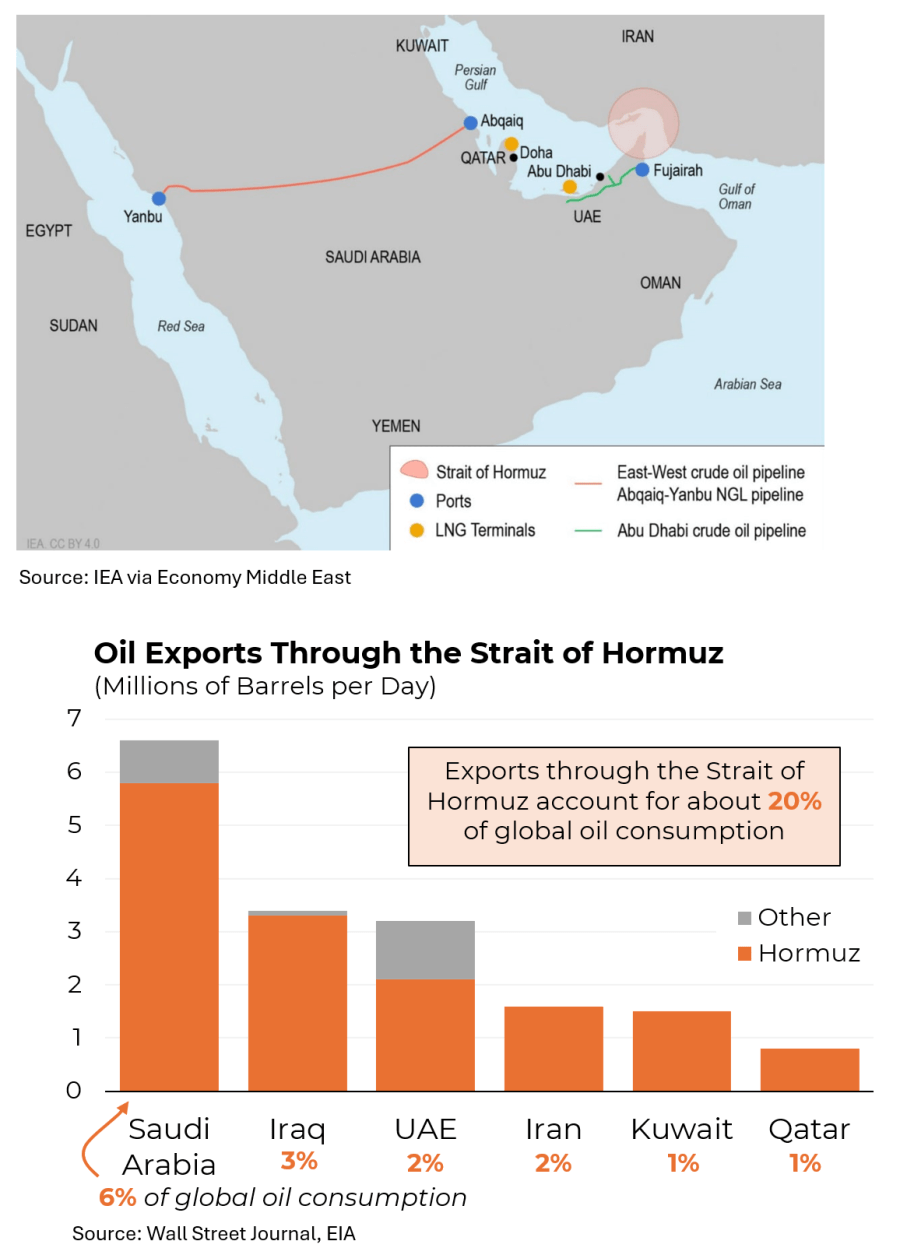
DI: Iran responded to the initial attack with a major wave of missile and drone strikes across the [Persian] Gulf. There were large numbers of launches — scores and likely several hundred missiles — targeting the UAE, as well as attacks on Saudi Arabia, Qatar, and Kuwait.
In terms of specific estimates, according to one official in the gulf, the number of Iranian missile launches appears to be decreasing. There were 350 missiles launched on Day 1, 175 on Day 2, 120 on Day 3, and 50 yesterday.
And there were reports this morning from Israel that both Lebanon and Iran had fired missiles into Israel today, so there are obviously still some left. But those numbers give you a sense of how people in the field view Iran’s declining missile capacity.
REPORTER’S NOTEBOOK: KIM GHATTAS
Willie Geist: Kim, you’re in Lebanon, on the outskirts of Beirut right now. What is the scene like there this morning?
Kim Ghattas: It’s really quite tense. This morning there were warnings for Iranian diplomats in Lebanon to leave the country. There was also a warning for residents of southern Lebanon — up to the Litani River, about 40 kilometers into Lebanon — to evacuate. So we may be looking at a fairly large ground incursion.
This feels very different from a year and a half ago, when there was also a war between Israel and Hezbollah, because it’s part of a much larger conflict — one that, from where we’re sitting, feels almost like Armageddon.
WG: What’s the mood among civilians?
KG: There’s a lot of anger, including within the Shia community — Hezbollah’s constituency — over Hezbollah launching the first salvo of missiles against Israel and once again dragging Lebanon into war.
Over the past year, Israel has continued to strike Lebanon despite a ceasefire, killing Hezbollah members and civilians. Hezbollah did not retaliate — which, for Lebanon, was fortunate.
But now, Hezbollah chose to strike Israel to avenge the death of Ali Khamenei, the supreme leader of Iran. This has left many of Hezbollah’s constituents asking: What on earth are you doing? Now we’ve lost our homes and are refugees sleeping on the street.
WG: How is the region reacting to the supreme leader’s death?
KG: There are many people in this region who are not unhappy to see the end of Ali Khamenei — a leader who ruled Iran with an iron fist and whose policies deeply affected people in Lebanon, Syria, and elsewhere through the militias he backed.
But if the United States had entered this moment with a clear plan for what comes next — one that genuinely benefited the people of the region — the outcome might look very different. Instead, what many people here fear is that the result will simply be more chaos.
JS: We saw what happened when the United States left Iraq: ISIS filled the vacuum. Who fills the void in Iran if the current leadership collapses?
KG: At the moment, it still looks like the current leadership — just with a different face. It could be Khamenei’s son, or another figure from the Revolutionary Guard. The system itself may remain intact.
What we may be seeing is the end of what you might call Iran’s Middle East — the regional order that emerged after 1979 and the creation of the Islamic Republic.
As I write in “Black Wave,” that regional architecture — Iran’s network of forward defense through militias and allied groups — was largely the project of Ali Khamenei. That system now appears to be weakening.
That doesn’t necessarily mean the Islamic Republic itself is ending. Iran can still inflict significant damage. But we may be entering a period in which the region is shaped far more by Israel’s military power and its expanding role in the Middle East, backed by the United States under President Trump.
ON THIS DATE
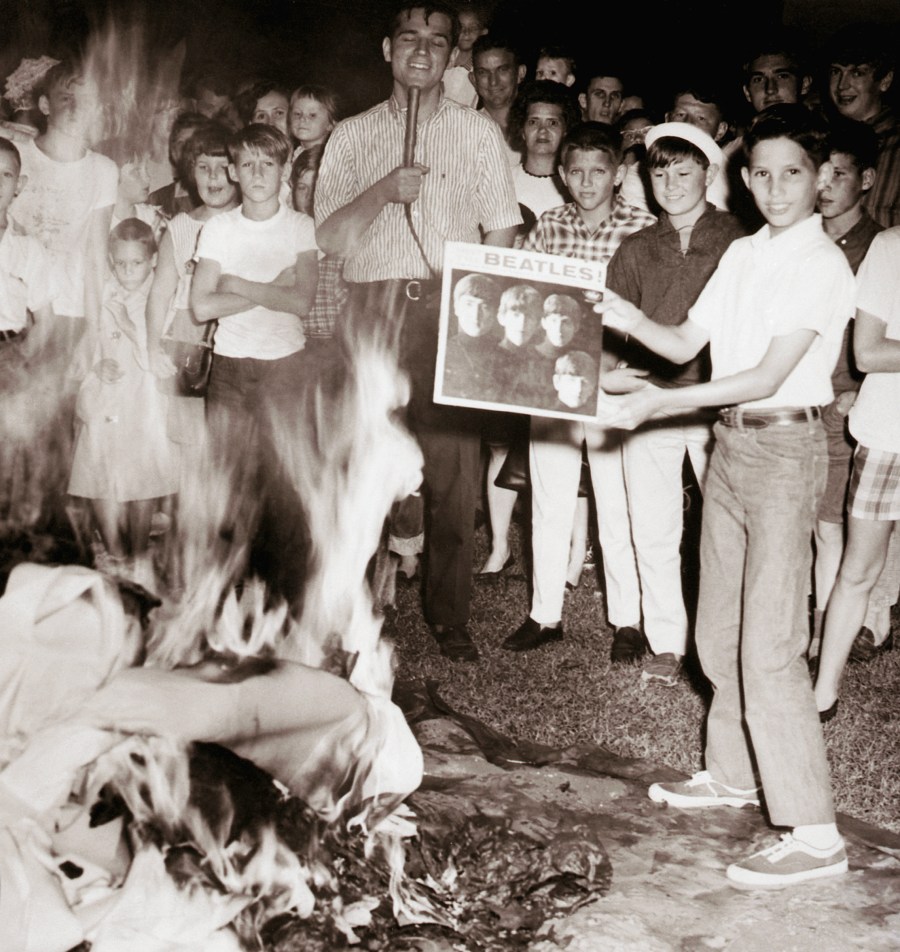
Today in 1966, John Lennon told a reporter that the Beatles were bigger than Jesus, noting Christianity’s decline among youth. Protests erupted across the Deep South over the claim as well as Lennon’s statement that “Jesus was all right, but his disciples were thick and ordinary.” The Ku Klux Klan used the controversy to picket Beatles concerts.
Lennon would later call himself “one of Christ’s biggest fans” and reportedly converted to Christianity for a time in 1977.
EXTRA HOT TEA
$14 billion
— The estimated total wealth of America’s richest county, Teton County, Wyoming, concentrated among a “tiny sliver” of its 10,000 residents
ONE MORE SHOT

Anya Taylor-Joy, star of “The Queen’s Gambit” and “Peaky Blinders,” on Day 2 of Paris Fashion Week.
CATCH UP ON MORNING JOE



Former Rep. Joe Scarborough, R-Fla., is co-host of MS NOW's "Morning Joe" alongside Mika Brzezinski — a show that Time magazine calls "revolutionary." In addition to his career in television, Joe is a two-time New York Times best-selling author. His most recent book is "The Right Path: From Ike to Reagan, How Republicans Once Mastered Politics — and Can Again."