








In late 2001, as the nation reeled from the 9/11 terrorist attacks, more than 80% of Americans supported U.S. military action in Afghanistan.
In early 2003, just after President George W. Bush sent forces storming into Iraq to oust Saddam Hussein, more than 70% of Americans backed the U.S. military invasion.
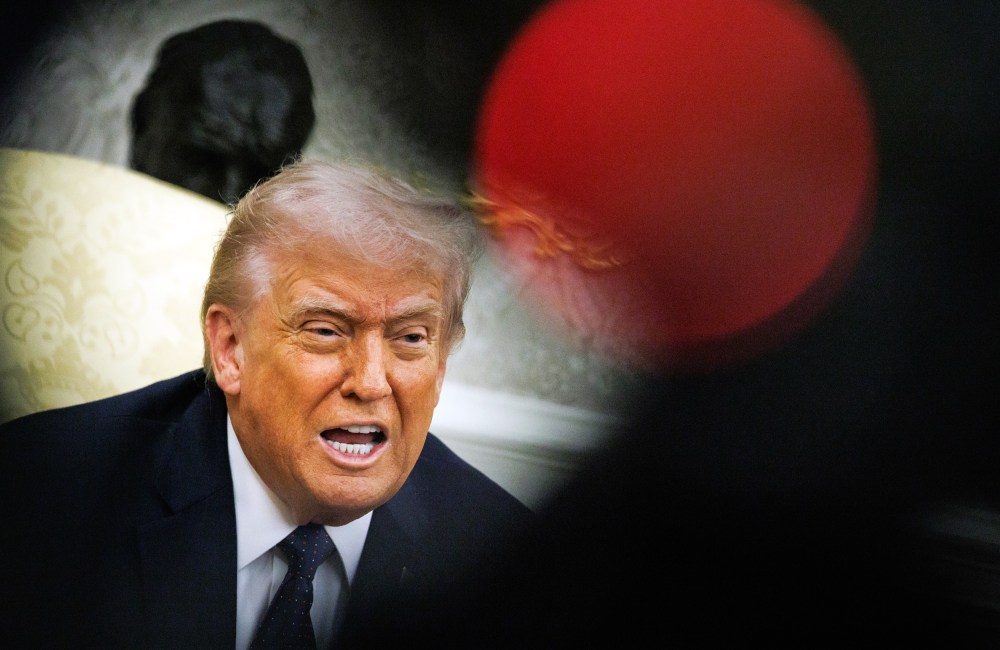
This week, after President Donald Trump attacked Iran, one of the first polls showed public support for his war sitting at just 27 percent. That is a level on par with disapproval of the Vietnam War as it ended in 1973 — after 58,000 American troops had died over an eight-year period.
Trump, who has made mocking American military misadventures a regular feature of his stump speeches since he first ran in 2016, is now facing the unusual challenge of selling Americans on a war after he started it. The president’s shifting justifications, explanations and timelines in recent days show he’s developing the narrative as he goes along.
And his own statements in the past decade highlight the risks — for international security, the economy and his party’s own standing.

‘Chaos’ in the Mideast
While campaigning in April 2016, Trump said the U.S. made mistakes in Iraq, Egypt, Libya and Syria that reverberated through the Middle East.
“Each of these actions have helped to throw the region into chaos and gave ISIS the space it needs to grow and prosper,” Trump said at the time. “We tore up what institutions they had and then were surprised at what we unleashed. Civil war, religious fanaticism, thousands of Americans and just killed lives, lives, lives wasted. Horribly wasted.”
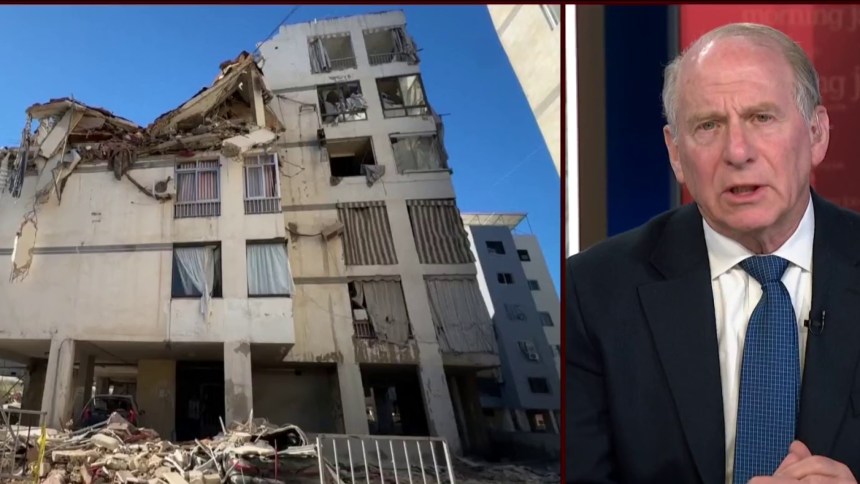
A decade later, Trump will have to persuade Americans that he’s not unleashing more chaos throughout the region. The president and his top aides have cited a wide range of goals in recent days — regime change, preventing nuclear weapons, destroying Iranian missiles and more — without a clear timetable or markers for success, or a picture of what they expect to emerge out of the rubble once the U.S. and Israeli air campaign ends.
So far, the Pentagon has announced six U.S. service members have died as a result of the new war with Iran. Trump and his team warn of more in the coming weeks.
One lesson of the early 2000s war in Iraq is that soldiers can face attacks for years after the first rounds of fighting. In the years after the infamous “Mission Accomplished” banner was unfurled six weeks into that war, more than 4,000 U.S. troops were killed and tens of thousands were wounded. Even without troops on the ground in Iran, forces in the region may face heightened threats.
‘We could have rebuilt our country’
“America has spent approximately $6 trillion in the Middle East, all this while our infrastructure at home is crumbling,” Trump said in 2017 during his first address to a joint session of Congress. “With this $6 trillion we could have rebuilt our country — twice. And maybe even three times if we had people who had the ability to negotiate.”
Today, economic and foreign policy concerns are among the areas in which the president’s own approval ratings are most underwater. Those two buckets of concerns could collide directly during the new war. Rising gasoline prices from disruptions to oil flows will only exacerbate Americans’ sour mood about affordability. It can fuel lasting inflation troubles — as the Biden administration learned following Russia’s invasion of Ukraine four years ago.
And uncertainty about the scope and length of a war tends to weigh on sentiment among both consumers and businesses, particularly when they see supply chains snarled and travel paralyzed in parts of the world. Despite popular support for invading Iraq in 2003, the war was widely blamed for contributing to the so-called jobless recovery after the 2001 recession.

‘Expel the warmongers’
“We will expel the warmongers, those horrible warmongers from our government,” Trump said in 2023.
Many Democrats today are sounding more like the Trump of an earlier era — openly denouncing Middle East interventions, regime-change wars and costly military adventures conducted at the expense of domestic priorities.
“This administration is cutting Medicaid to pay for bombs. It’s not [what] the American people want,” Democratic Sen. Ruben Gallego of Arizona said this week.
Almost every war has grown less popular as it’s dragged on. Without a rally-around-the-flag moment, voters tend to focus on concerns closer to home.
“This is the kind of thing that ends presidencies, over and over again,” Rep. Jim Himes of Connecticut, the top Democrat on the House Intelligence Committee, said Thursday.
“The cost that the American people are going to pay, both in blood and treasure, is going to be tragic,” Himes said. “It’s going to be felt in the pocketbook and of course it’s going to have a dramatic impact on the midterms.”
By 2008, more Americans said George W. Bush would be remembered for war than anything else during his presidency. Support for his war had diminished year after year as casualties and other costs mounted. A decade later, more Americans said the U.S. had failed than succeeded in Iraq.
This is a preview of MS NOW’s Project 47 Newsletter. As President Trump continues implementing his ambitious agenda, get expert analysis on the administration’s latest actions and how others are pushing back sent straight to your inbox every Tuesday. Sign up now.

Sudeep Reddy is Washington bureau chief at MS NOW. He previously worked at POLITICO, The Wall Street Journal and the Dallas Morning News.