








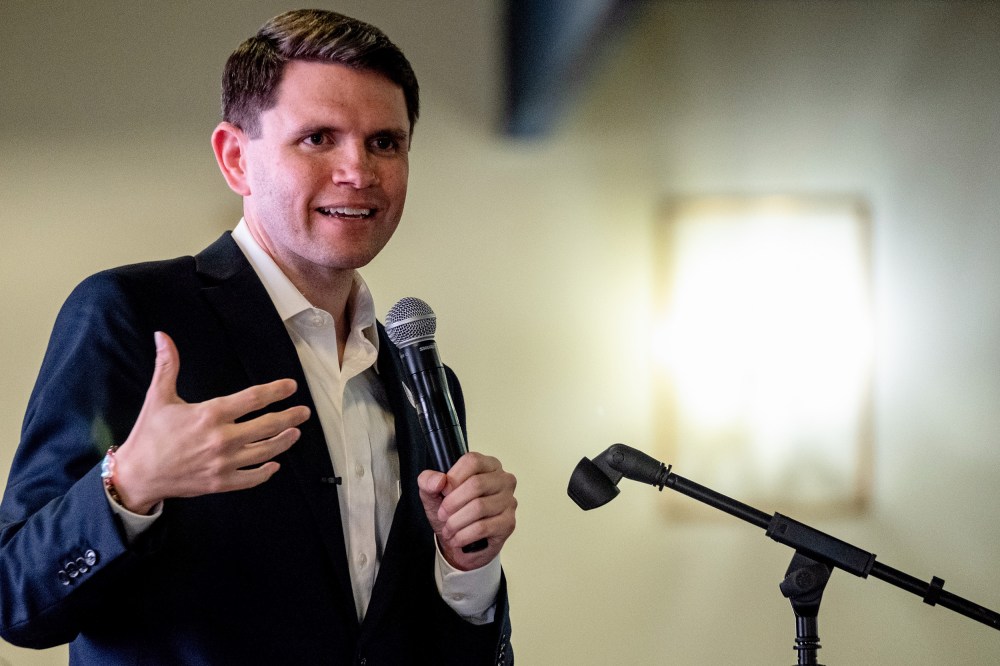
President Donald Trump carried the congressional district by 10 points in 2024. Two years later, Democrats are hoping to flip it — possibly with the help of a pastor-turned-politician.
Across the midterm map this year, Democrats are increasingly turning to seminarians and ordained pastors in key races, betting that faith-forward candidates can help chip away at the GOP’s dominance among religious voters — and offer an alternative to the right’s Christian nationalist rhetoric.
In Iowa’s 2nd congressional district, two of the candidates vying to be the Democratic nominee have a shared background: church leadership.

State Rep. Lindsay James is a Presbyterian pastor. Clint Twedt-Ball, the founder of the nonprofit Matthew 25, is a former United Methodist minister. Both told MS NOW they are embracing their faith journeys as part of their campaign pitch in this open seat — and both say voters are receptive.
“Folks are exhausted by politics,” James told MS NOW. “They’re longing for someone to just be authentically them and lead from a place of conviction.”
Twedt-Ball said voters are “really interested” in how his faith gives him “the energy, the optimism, the strength” to take on “real challenges.”
But James and Twedt-Ball are far from the only Democrats embracing religion this election cycle to reach voters who’ve traditionally voted Republican.
The most high-profile example of Democrats leaning into faith this cycle is Texas state Rep. James Talarico, a seminarian running for U.S. Senate — a race that could make him the state’s first Democratic senator since the early 1990s.
Both at the Texas Capitol and on the campaign trail, Talarico frequently invokes his Christian beliefs. At a recent town hall event in Laredo, Talarico told voters his faith “teaches” him “that love is the strongest force in the universe.” That love, he continued, sometimes requires that they “flip over the tables of injustice” — a not-so-subtle allusion to the gospels.
In an interview with MS NOW, Talarico pointed to his faith as a way of relating with voters.
“If you can be yourself, in my experience, you can connect with just about anybody,” he said.
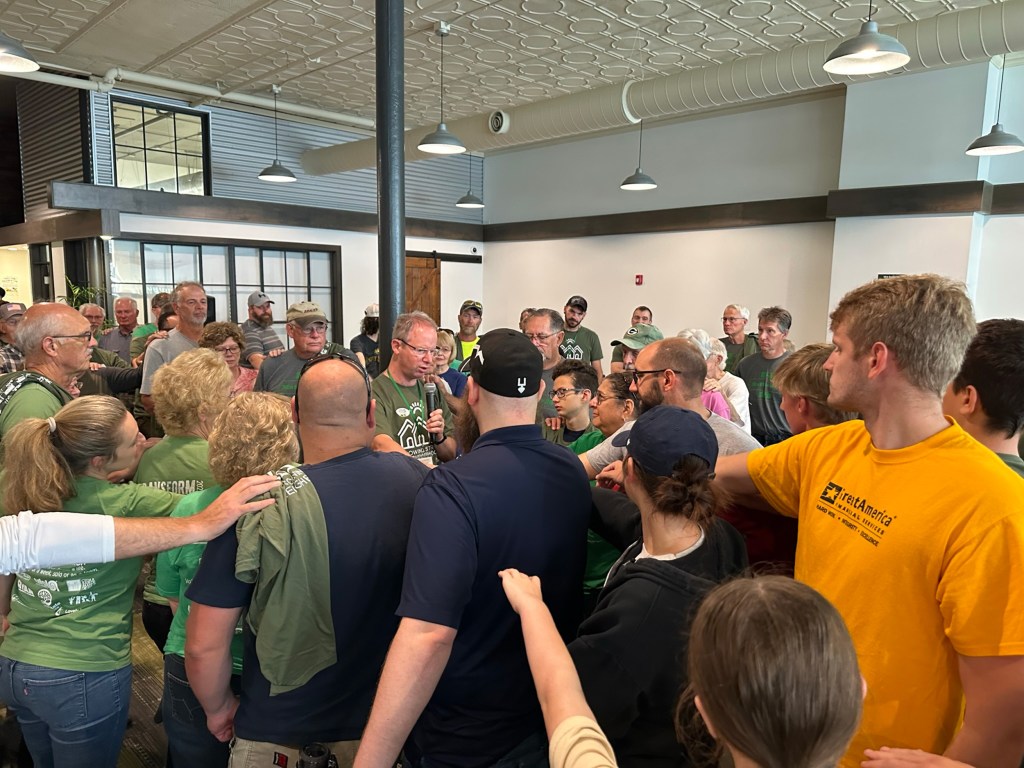
Other Democrats with pastoral backgrounds running for Congress this cycle include ordained Lutheran minister Sarah Trone Garriott in Iowa’s 3rd district, Sunday school leader (and Columbia, Tenn. mayor) Chaz Molder in Tennessee’s 5th district, and Presbyterian pastor Matt Schultz in Alaska’s at-large congressional district.
Garriott, who has served as a chaplain and works for a food pantry network, told MS NOW there is “a need for me to bring my whole self to my civic life. And truly, that’s what the Christian faith is all about.”
“It’s a word made flesh,” she said.
These Democrats said their faith isn’t just something they intend to highlight on the campaign; it’s a major reason why they’re running in the first place.
In interviews, many were eager to cast the GOP’s recent policy actions — like cutting food stamps and reforming Medicaid — as immoral and out of step with the Bible.
“However you treated these folks, is how you treated Jesus,” Twedt-Ball said, invoking the parables of Matthew 25. “If you look at all these policy decisions, they’re counter to that way of thinking.”
“As a Christian,” Molder said, “I want to ensure that children aren’t going hungry, that families are not being stripped apart, that we’re providing all the resources we can to our young people.”
For James, the Presbyterian pastor running in Iowa, it comes down to living out her convictions.
“When you’re seeing these kinds of policy failures come out of Washington, D.C. — that aren’t just policy failures, they’re moral failures, and they’re hurting people in Iowa — I couldn’t not stand up and fight for everyday working families,” she said.
Notably, this batch of candidates from the left is looking to enter Congress just as Christian nationalism from the right has taken new prominence in the country’s political discourse.
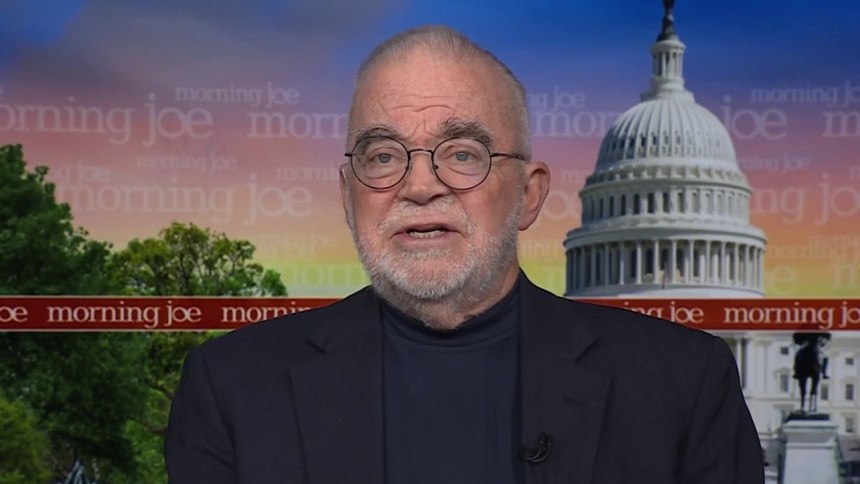
Andrew Whitehead, a professor at Indiana University Indianapolis who studies the intersection of faith and politics, said the U.S. currently has a number of “people in positions of power that are much more likely and ready and willing to use Christian nationalist rhetoric.”
What is Christian nationalism? Whitehead summed it up as Christianity with “extra cultural baggage.”
“The ideal American is white, heterosexual, able-bodied, Protestant men, leading women — following and submitting,” Whitehead said, summing up what he says are the core tenets of Christian nationalism. “Marriage is between a man and a woman, they have kids, preferably a lot of kids. And this country was made by those people, and for those people, primarily.”
These Democrats dismissed that sort of rhetoric as a warped vision of their faith, which only helped motivate their decision to run in the first place.
Garriott told MS NOW that her faith teaches her to welcome the stranger and stand up for the vulnerable. “I’m not seeing that vision being presented from a certain Christian perspective that’s very active in politics,” she said.
“That’s why I feel like it’s really important for people of faith — and not just Christians — to be engaging in the public realm and bringing their whole selves, because our faith has something to say to how we live together,” she added.
Of course, Democrats embracing faith as an electoral strength isn’t new. Plenty of Democrats with seminary and pastoral backgrounds have run for Congress. Many have won.
Georgia Sen. Raphael Warnock, a Democrat elected in 2021, is also the senior pastor at Atlanta’s Ebenezer Baptist Church, for instance. Sen. Chris Coons, D-Del., attended Yale Divinity School. And there are plenty of Democrats who have used their connections with various churches to drive turnout.
But — Whitehead notes — often religion is not front and center for Democratic candidates on the campaign trail.
In recent decades, Whitehead said, candidates on the right have been “more willing to engage and to use religious rhetoric” in part because the right is more “homogenous” religiously.
Meanwhile, he said, the coalition on the left is “more diverse” and so “to talk about religion sometimes would feel alienated to those Americans who are not religious.”
While there are a handful of pastors-turned-politicians running on the Democratic side of the aisle this cycle, the House GOP’s campaign arm — the National Republican Congressional Committee — notes its caucus on the Hill is already full of lawmakers involved in faith, including pastors, Sunday school teachers, and deacons.
The list includes Rep. Mark Harris, R-N.C., a Baptist pastor; Rep. Tim Walberg, R-Mich., an ordained pastor; and Reps. Mary Miller, R-Ill., Michael Guest, R-Miss., and Nathaniel Moran, R-Texas — who have served as Sunday school teachers.
“Republicans have dominated with faith-based voters cycle after cycle because we’re delivering on common sense while Democrats are ramming through their radical liberal wish lists that are completely out of step with their own faith,” a spokesperson for the NRCC, Mike Marinella, said in a statement.
“Republicans won’t back down from earning the vote of people of faith by standing up for fairness, parental rights, and common sense,” he added.
Surveys do back up Marinella’s assertion that Republicans have an advantage among Christians — at least when it comes to party affiliation.
A 2024 report from Pew showed 59% of Protestants identify as or lean Republican, while 38% lean Democrat. Among Catholics, Republicans again have the edge: 52% lean GOP, while 44% lean Democrat. And among the religiously unaffiliated, 70% align with the Democratic Party.
The think tank Third Way surveyed one particular voting block — young male registered voters — and analyzed the role religion plays in their voting preferences.
They found that — overall — among registered 18-to-29-year-old men, Democrats lead on the generic congressional ballot with more than 50% support. However, they lose among young men who identify as devoutly religious — Republicans instead garner 57% of the vote.

Jim Kessler, executive vice president at the think tank Third Way and a former aide to Senate Democratic Leader Chuck Schumer, told MSNOW it’s a “good thing” for Democrats to have several religious leaders running for office this cycle, arguing it’s time Democrats “get religion on religion.”
“One of the biggest predictors of how someone is going to vote is how often they attend church,” Kessler said.
While regular church attendance in the U.S. has declined in recent decades, polling by Pew shows that as of 2024, more than 60% of U.S. adults continue to identify as Christian.
In other words: winning elections still requires appealing to Christian voters.
Asked about the trend, Rep. Suzan DelBene, D-Wash., who chairs the Democratic Congressional Campaign Committee, argued that having candidates who are “independent-minded and authentic and focused on their community” is “a huge reason we over-performed last cycle.”
“Trust is key,” DelBene said. “You’re running in a purple district where you’re talking to folks who aren’t just of one party, right?”
Twedt-Ball suggested it was simply about being authentic. “I find very, very few things that are as motivating to people as living out their faith,” he said.
“So if we want to be a party full of energy that really drives change, we can’t just leave faith out of it,” Twedt-Ball added.
Correction: An earlier version of this article misspelled the name of the Presbyterian pastor running in Alaska. It is Matt Schultz.

Kevin Frey is a congressional reporter for MS NOW.