








This is the Feb. 18, 2026, edition of “The Tea, Spilled by Morning Joe” newsletter. Subscribe hereto get it delivered straight to your inbox every Monday through Friday.
With John Wayne fading from America’s collective memory, I spent this week on a cultural expedition, revisiting a few of his most acclaimed movies. “The Man Who Shot Liberty Valance” has long been a favorite for obvious reasons — Jimmy Stewart — while “How the West Was Won” still sits at the top of my list because of how much my dad loved it.
Last night I watched Wayne and John Ford’s “The Searchers.” As my attention turned away from the screen, I found myself thinking of a beautiful essay Joan Didion had written on the Duke. In her piece, “John Wayne: A Love Song,” Didion remembered:
In the summer of 1943 while the hot wind blew outside, I first saw John Wayne. Saw the walk, heard the voice. Heard him tell the girl in a picture called War of the Wildcats that he would build her a house, “at the bend in the river where the cottonwoods grow.”
As it happened I did not grow up to be the kind of woman who is the heroine in a Western, and although the men I have known have had many virtues and have taken me to live in many places I have come to love, they have never been John Wayne, and they have never taken me to that bend in the river where the cottonwoods grow. Deep in that part of my heart where the artificial rain forever falls, that is still the line I wait to hear.
Didion’s essay moved me to revisit parts of her 1979 book “The White Album,” which hit on themes also in her classic “Slouching Towards Bethlehem.” Specifically, that the radicalization of the 1960s left the author in a vertiginous state that had her questioning all the assumptions formed throughout her life:
We look for the sermon in the suicide, for the social or moral lesson in the murder of five. We interpret what we see, select the most workable of the multiple choices.
We live entirely, especially if we are writers, by the imposition of a narrative line upon disparate images. Or at least we do for a while. I am talking here about a time when I began to doubt the premises of all the stories I had ever told myself, a common condition but one I found troubling. I suppose this period began around 1966 and continued until 1971.
The only problem was that my entire education, everything I had ever been told or had told myself, insisted that the production was never meant to be improvised: I was supposed to have a script, and had mislaid it. I was supposed to hear cues, and no longer did. I was meant to know the plot, but all I knew was what I saw: flash pictures in variable sequences, images with no “meaning” beyond their temporary arrangement, not a movie but a cutting-room experience.
The chaos of Vietnam, the assassinations of Martin Luther King, Bobby Kennedy, and Malcolm X, Chicago, Cambodia, Kent State, riots, crime, the unrelenting attack on institutions left Americans like Didion reeling — searching for a moral center and an escape from the dystopian landscape before them.
Today, her words sound all too familiar. And still, Pulitzer Prize-winning historian Jon Meacham assures us America has been through greater challenges before — and has come through those crises stronger than ever.
We can all take comfort in the theme and contents of Jon’s latest book, “American Struggle: Democracy, Dissent, and the Pursuit of a More Perfect Union”.
In our conversation, Jon reflects on why periods of division and uncertainty are hardly new to the republic — and why the nation’s story remains essential to understanding the present moment.
Like those profiles in “American Struggle,” this is our time to remain vigilant and gain insight from American history, as we once again chart our course toward becoming a more perfect union.
Jon’s interview is below.
Enjoy!
“Navigating a white male world was not threatening. It wasn’t even interesting. I was more interesting than they were. I knew more than they did. And I wasn’t afraid to show it.”
— American novelist Toni Morrison, who was born on this day in 1931


LATE NIGHT SHOWDOWN AT THE FCC

Stephen Colbert is once again publicly clashing with his own network, this time over an interview with Texas Democratic Senate candidate James Talarico.
The dispute comes at a sensitive time for CBS’ parent company, Paramount Skydance, which is engaged in renewed merger talks with Warner Bros. Discovery — negotiations that would ultimately require federal approval.
Colbert told viewers Monday that CBS lawyers advised him the segment could not air, citing new FCC guidance suggesting that late-night programs may not automatically qualify for exemptions to equal time rules. CBS responded a day later, saying the show was “not prohibited” from airing the interview and that compliance options had been offered.
Colbert fired back on air Tuesday night, maintaining that his original explanation was vetted by network attorneys.
Regardless, the media dustup proved to be a big win for both Colbert and Talarico, with the controversial interview being seen by a larger audience online than would normally catch a Colbert segment on TV.
ON THIS DATE
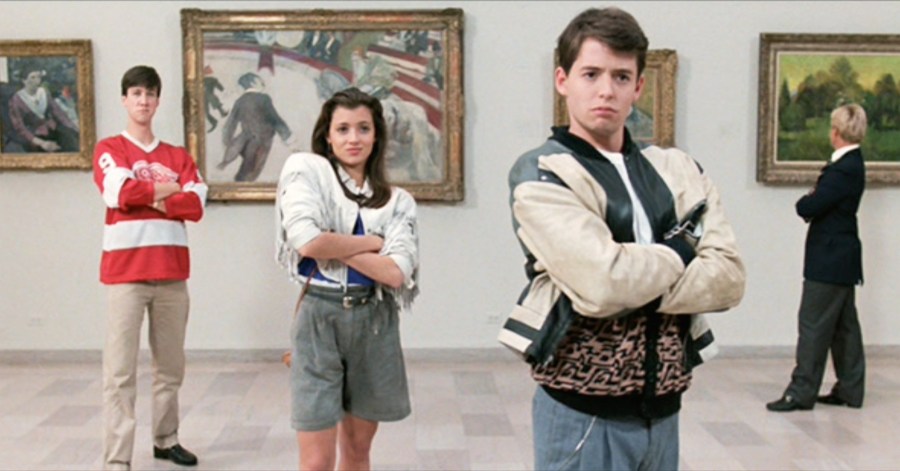
Filmmaker John Hughes — who wrote and directed classics like “The Breakfast Club,” “Sixteen Candles,” “Planes, Trains and Automobiles,” and “Home Alone” — was born on this day in 1950. Hughes, who died unexpectedly in 2009, created era-defining movies that reflected an idealized version of youth culture in the 1980s. “Ferris Bueller’s Day Off,” starring Matthew Broderick, remains one of his most beloved films.
A CONVERSATION WITH JON MEACHAM
America’s 250th anniversary is approaching at a moment of deep political division. Pulitzer Prize-winning author Jon Meacham’s new book, “American Struggle: Democracy, Dissent, and the Pursuit of a More Perfect Union,” turns to the voices of history to show how recurring battles over power, rights, and national identity have shaped the country from the beginning. Meacham joined “Morning Joe” to talk about the book and why these debates remain so central to American life.
WG: Why publish this book right now?
JM: The American story has never been a steady march toward consensus or perfection. It is a record of argument, reversal, and renewal — a reminder that periods of anxiety and division are not deviations from our history, but part of its engine. The idea is that this country does have a soul, which is neither wholly good nor bad. It’s an arena of contention where our better angels do battle against our worst instincts.
WG: You step back and let historical figures speak for themselves. What were you hoping readers would take from that?
JM: That’s enough of listening to me. Let’s listen to the people who lived it — who wrestled with the same questions and conflicts in their own time.
MB: When you look across those documents and speeches, what theme keeps resurfacing?
JM: Again and again, Americans confront the same essential test: whether the ideals proclaimed at the founding will be expanded and applied, or narrowed and withheld. Are we going to actualize the Declaration of Independence, or are we going to cave in to our own appetites and ambitions?
There is a strong movement afoot in this country that is about nationalism and according rights only to people who look like you. That is not what the United States is supposed to be about.
WG: In the book, you highlight Ronald Reagan’s famous words at the Statue of Liberty in 1986: “They came from every land.” Many Republicans still hold up Reagan as a hero. How does that sentiment fit within today’s GOP?
JM: I don’t think President Reagan could be nominated by the Republican Party of 2024. I know neither President Bush could, and certainly not Senator McCain or Governor Romney.
WG: You’ve argued that modern American democracy is younger than many people assume. What do you mean by that?
JM: In a meaningful sense, this country is about 60 years old. It wasn’t until 1965, with the Voting Rights Act and the Immigration Act, that the United States became a multiracial democracy in practice as well as principle.
JV: Many Americans feel like the system itself is failing. How do you respond to that concern?
JM: We have always had to confront the fundamental question of whether the system works. It’s not as if there was some democratic Valhalla that was somehow corrupted in 2015 — tension and instability have always been part of the story.
JS: For Americans who’ve grown up in an era of crisis and instability, why should they believe the constitutional order is worth defending?
JM: If you were born in the 21st century — Sept. 11, the Great Recession, Covid, Jan. 6, school shootings — why would you instinctively trust that the system can deliver? That’s why narrative matters. Confidence in a democracy has to be sustained by telling the story of how the country has endured disruption and renewed itself. Otherwise, the voices of nihilism — the belief in power above principle, in the rule of the strong over the defense of all — will prevail.
MB: When people ask what citizens can actually do in periods of instability, what do you tell them?
JM: What you do is exactly what the folks in this book did. They stood up. They understood that to whom much is given, much is expected. There’s nothing easy about citizenship, and there never was. Despair is not an option.
This conversation has been condensed and edited for brevity and clarity.
GO FIGURE

Alysa Liu of Team USA competes during the women’s single skating short program at the Milan Cortina 2026 Winter Olympic Games. Liu, third in the current rankings, could become the first U.S. medalist in the sport since 2006.
A BONELESS WING BY ANY OTHER NAME …
… is still a wing, according to a federal judge in Chicago. A lawsuit claiming Buffalo Wild Wings misled customers about its boneless wings was tossed for having — in the court’s words — “no meat on its bones.”
The judge’s logic was straightforward: No reasonable diner believes boneless wings come from actual wings.
After all, “cauliflower wings” aren’t fooling anyone, either.
ONE MORE SHOT
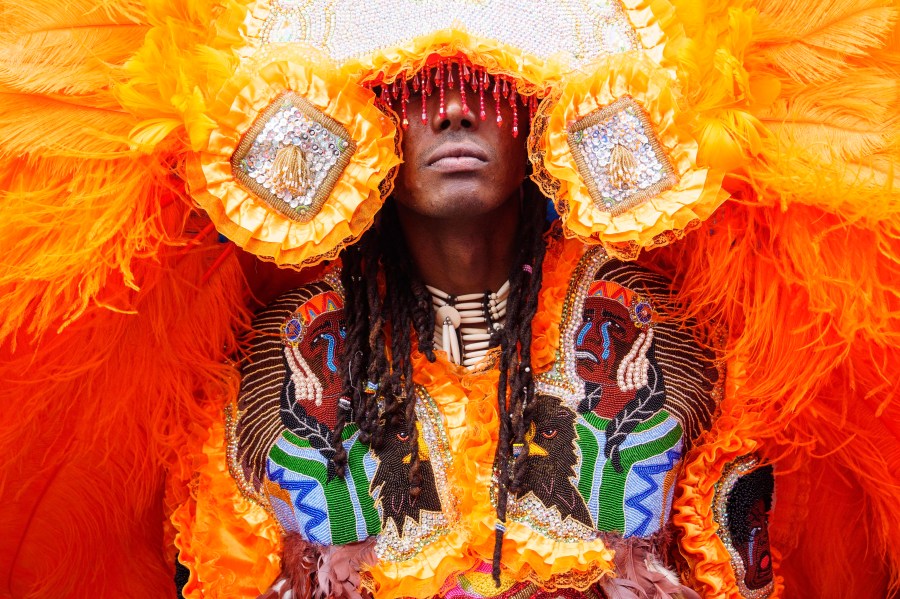
Flag boy Marwan Pleasant of the Golden Eagles Mardi Gras Indians is seen outside his grandfather’s house on Mardi Gras Day on Feb. 17, 2026, in New Orleans.
CATCH UP ON MORNING JOE





Former Rep. Joe Scarborough, R-Fla., is co-host of MS NOW's "Morning Joe" alongside Mika Brzezinski — a show that Time magazine calls "revolutionary." In addition to his career in television, Joe is a two-time New York Times best-selling author. His most recent book is "The Right Path: From Ike to Reagan, How Republicans Once Mastered Politics — and Can Again."