






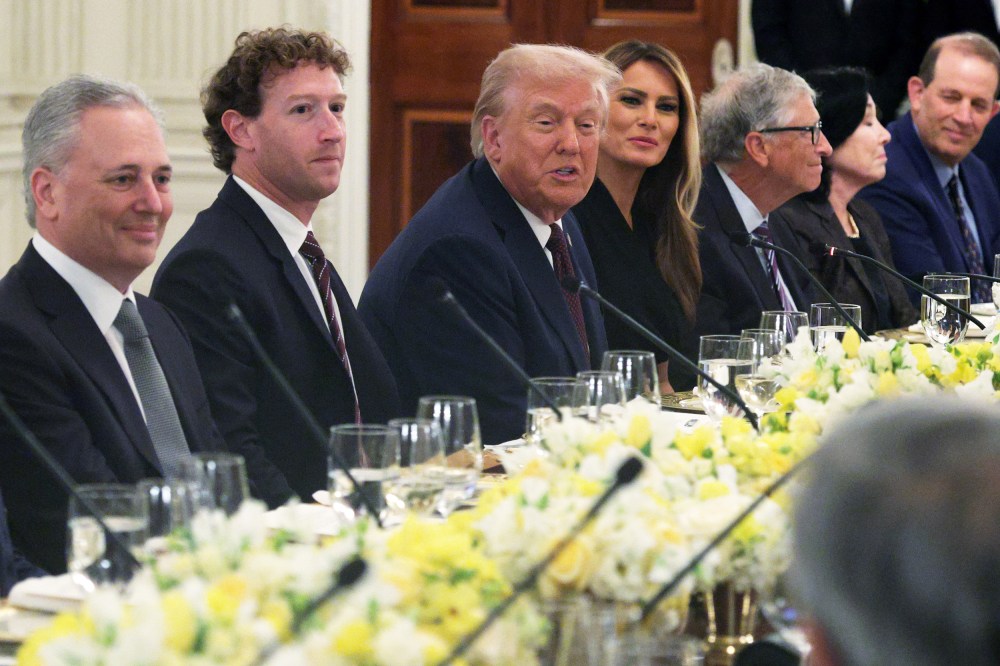
The corporate pilgrimage to Donald Trump started before he even took office. Millions flowed to his inaugural committee, then to the White House ballroom. Diversity programs were not-so-quietly dismantled. Public praise was issued on cue. Tech giants, oil companies, defense contractors and Fortune 500 CEOs all made their calculations about how to stay on Trump’s good side.
Now, as House Democrats plot a return to the majority, they are pledging to probe the deals, mergers, settlements and regulatory favors that flowed to corporations doing business with the Trump administration.
For now, Democrats are in the minority — limited to issuing strongly worded letters and exercising a mostly toothless investigative authority to rein in a president who has applied a maximalist approach to executive authority. But with increasingly rosy prospects for the party to win back the House in 2026, Democratic lawmakers are laying the groundwork for a sweeping expansion of oversight targeting the companies and CEOs who have done business with the Trump family, or sought favorable regulatory treatment, merger approval, or policy changes from the administration — from Paramount to Palantir.
It is a strategy that Democrats believe could reshape corporate America’s relationship with Trump: By threatening future investigations into companies that curry favor with the administration, they hope to make CEOs think twice before opening their wallets or bending to presidential pressure.
But it’s also a recognition that the executive branch is no longer responsive to congressional oversight. The private sector — which still fears subpoenas, the exposure of internal communications and the prospect of executives testifying before Congress — may be the only leverage point Democrats have left as long as Republicans hold on to the White House.
The investigators preparing these probes find themselves operating in uncharted territory. Nearly a dozen Congressional lawyers and lawyers who handle political investigations for private sector clients say that Trump’s brazen approach to the private sector over the past year has been unlike anything they’ve encountered in their careers – beginning even before the inauguration, where explicit demands for money were leveraged across multiple platforms.
“Trump’s running the presidency like a mob boss and everyone who has agreed to bribe him is a target for an investigation,” said a senior congressional staffer, speaking on condition of anonymity to discuss internal strategy. “And although there’s a spectrum of wrongdoing with Elon Musk at one end and not much more than small businesses trying to get by on the other, there are very wealthy CEOs who know better. And we’re taking names.”
There are very wealthy CEOs who know better. And we’re taking names.”
Jake Sullivan, who served as national security adviser in the Biden administration, briefed senior Democratic officials on Capitol Hill in December, encouraging them to hold the private sector more accountable as the Trump administration has engaged in openly transactional and retributive governance, according to three people familiar with the meeting.
The purpose of the meeting between Sullivan, other national security leaders in the Biden administration and Democratic leaders on Capitol Hill was to stand up for members of the national security community who have been fired or blacklisted by companies fearful of retribution from Trump. The conversation then expanded to how companies across the board have folded under pressure from the administration.
Sullivan argued that Democrats needed to make it more clear that the party would not accept such behavior. He explained that lawmakers needed to alter the cost-benefit analysis that private firms are making when cutting deals with and giving money to the administration. Companies see only upside in working with Trump and no downside, Sullivan explained. Democrats could change that calculation with future oversight efforts.
House Minority Leader Hakeem Jeffries has been closely involved with investigations, according to people familiar with the matter, and has appointed a person in his office to coordinate investigations across all committees. Jeffries’ office did not respond to requests for comment.
The efforts span multiple committees and cover a wide range of corporate behavior.
In November, Democrats on the House Judiciary Committee demanded that Paramount produce documents and communications regarding the company’s merger with Paramount, after questions of whether a “side deal” was brokered to curry favor with Trump ahead of the FCC approval. Earlier this month, Rep. Jamie Raskin, the Maryland Democrat and ranking member on the Judiciary panel, sent a letter to the Justice Department requesting they turn over all records of communications with Google and Apple related to the blocking of apps alerting users to ICE and CBP activity in their communities.
Democrats on the House Homeland Security Committee requested the nonprofit group managing private donations to the White House ballroom project provide the committee with information about donors, the value of gifts they’ve received and whether donors were offered special access or influence.
And Democrats on the House Oversight Committee recently sent letters to the chief executives of four major oil companies — Chevron, ExxonMobil, ConocoPhillips and Continental Resources — requesting information to help lawmakers determine “who stands to privately or personally benefit from President Trump’s actions and whether corrupt motives were a driving force in U.S. foreign policy decision.”
In a statement to MS NOW, White House spokesman Kush Desai said that the “only special interest guiding the Trump administration’s decision-making is the best interest of the American people. The fact that major stock indexes have hit multiple all-time highs, real wages have grown, and inflation has cooled since President Trump took office is proof that this administration is delivering for every American.”
For now, the Democratic threats carry little weight. Without subpoena power, the minority party’s inquiries amount to what a former congressional lawyer described as “feign cooperation.” Companies face no consequence for refusing to cooperate beyond public criticism, and the guidance from experienced Hill lawyers is straightforward: Engage with committee counsel to maintain appearances, but do not provide substantive information until the power dynamics shift.
“From a private-sector perspective, how seriously are they going to take a Democratic inquiry?” the lawyer said. “It can really go nowhere.”
Even so, the much-mocked “strongly worded letter” isn’t entirely toothless — though its effectiveness depends on how well it’s crafted. A request for document preservation is one of the few legal tools Democrats can deploy from the minority, putting companies on formal notice to retain emails, texts and internal communications. That threat may not stop a company from pursuing a lucrative deal with the administration, “but on the margin, they may be a little more cautious,” the lawyer added.
Whether that caution translates into meaningful resistance is uncertain. For now, most corporate leaders have chosen accommodation to Trump over confrontation, even as the threat of future Democratic investigations looms.
But cracks are beginning to show in the united front of corporate deference. In recent weeks, some prominent business leaders have started to speak out against the administration. Ken Griffin, the founder and CEO of Citadel, criticized the pattern of what he called government “favoritism” toward businesses during a conversation at the Wall Street Journal Invest Live event in West Palm Beach, Fla., last week.
“When the U.S. government starts to engage in corporate America in a way that tastes of favoritism, I know for most CEOs that I’m friends with, they find it incredibly distasteful,” said Griffin. “Most CEOs just don’t want to find themselves in the business of having to, in some sense, suck up to one administration after another to succeed in running their business.”
Yet the risks of speaking out were starkly illustrated last month when JPMorgan Chase CEO Jamie Dimon, speaking at the World Economic Forum in Davos, Switzerland, called Trump’s proposed one-year, 10 percent cap on credit card interest rates “an economic disaster,” and criticized the administration’s approach to immigration. One day later, Trump sued Dimon and Chase for closing his accounts after the Jan. 6, 2021, attack on the U.S. Capitol, and alleged that he was “debanked,” seeking $5 billion in damages.

Jacqueline Alemany is co-anchor of "The Weekend" and a Washington correspondent for MS NOW.