



As The Washington Post reels from last week’s massive layoffs and the weekend’s leadership upheaval, former executive editor Martin Baron is pointing the finger at the newspaper’s owner, Jeff Bezos, accusing him of decisions that have deepened the Post’s financial and editorial crisis.
The Post announced cuts to a third of the staff Wednesday, stunning the staff and readers of the outlet and the wider news industry. Saturday, its chief executive and publisher Will Lewis resigned amid the turmoil “in order to ensure the sustainable future of The Post.” Lewis, who thanked only Bezos on the way out, will be succeeded by chief financial officer, Jeff D’Onofrio, the Post announced Saturday.
Baron was the Post’s executive editor from 2013 until 2021, and the newspaper won 11 Pulitzer Prizes during his tenure.
Baron was the Post’s executive editor from 2013 until 2021, and the newspaper won 11 Pulitzer Prizes during his tenure. He was clear Sunday that he thinks the Amazon founder is to blame for the chaos.
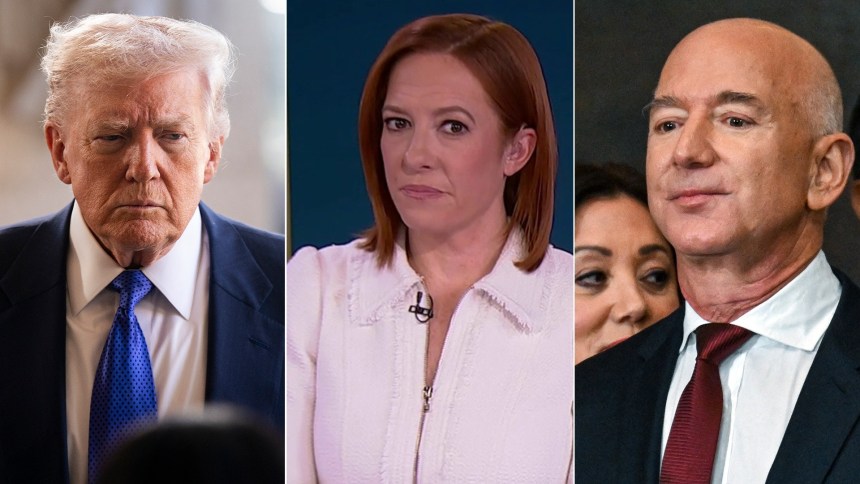
“At The Washington Post, things have been made dramatically worse, I think, by the behavior of the owner,” Baron told Ali Velshi on Sunday, referring to Bezos. Bezos’ missteps, according to Baron, include his scrapping the paper’s editorial endorsement of Kamala Harris in 2024 and more broadly dictating the newspaper’s editorial direction, his standing on stage with Trump at his inauguration last year and his acquiring the rights to the Melania Trump documentary that debuted in theaters last month.
“Changing the editorial page and the opinion pages generally, such that there are no commentators who are essentially left of center. That has really damaged the reputation of the Post,” Baron said.
Baron said that while news organizations as a whole remain in peril as constant technological change puts more pressure on the industry, Bezos has made a bad situation signficantly worse.
“The Washington Post is facing all the same challenges that other media organizations are facing. This is a very tumultuous time in the media environment and generative AI has made it even worse,” Baron said. “You do a Google search, they come up with an answer, you don’t have to go to a link, don’t have to go to a media outlet. Traffic is plummeting as a result of that. So there’s a real need for dramatic changes.”
Still, Bezos signed up for this when he bought the Post in 2013, Baron said, but he thinks Bezos now “worries about reprisals from Donald Trump.”
Bezos’ close relationship with the Trump administration has been criticized as an ethical problem for what should be an independent news organization. Baron noted Amazon’s vast amount of contracts with the federal government, particularly for cloud computing. His private space company, Blue Origin, also stands to benefit from federal contracts.
Bezos’ close relationship with the Trump administration has been criticized as an ethical problem.
When asked about a possible solution to the Post’s problems, such as selling it to a new owner, Baron was less optimistic. He warned that a sale could risk placing the paper in the hands of an owner aligned with Trump, pointing to similar changes at CBS and TikTok recently.
Baron suggested a possible path for the Post to regain its footing, which would be to put the paper into non-profit ownership with an independent board and a short-term, tax-advantaged investment from Bezos.
“I think a lot of subscribers who have left because they were very upset by what Jeff Bezos has done would return to the Post,” Baron said, but adding that the “likelihood of that happening is quite low.”
But why does Bezos want to hold onto the newspaper?
Baron said, “You’d have to ask him.”

Erum Salam is a breaking news reporter for MS NOW, with a focus on how global events and foreign policy shape U.S. politics. She previously was a breaking news reporter for The Guardian.