









As foolish as this might sound, ending the partial government shutdown was the easy part. Senate Democratic leaders laid out a straightforward solution last week — open negotiations over immigration enforcement reforms, and tie them to a Homeland Security funding bill — and after Donald Trump approved, the resolution of the standoff appeared inevitable.
With this in mind, the Republican-led Senate approved the compromise package Friday night, and though the road was bumpier in the lower chamber, the Republican-led House followed suit Monday afternoon.
Now comes the hard part. As MS NOW reported:
Congress has now approved 96% of the discretionary money for federal agency budgets this year. What’s remaining is a $64 billion Homeland Security bill — which promises to be the most difficult negotiation yet.
The clock is ticking. As of Tuesday, 10 days remain for Congress to strike a deal on DHS funding, which received a short-term patch as part of the funding bill.
Part of the challenge is nailing down exactly what the congressional Democratic minority expects from the negotiations. On Wednesday morning, Senate Minority Leader Chuck Schumer said on the chamber floor: “Democrats have been clear about what Congress needs to do to end ICE’s violence and ensure public safety. ICE needs to end roving patrols, follow basic standards of accountability, and end the secret police who are masked and unidentified.”
The New York Democrat added, “These are reasonable demands. Reasonable demands include masks coming off and cameras staying on. Reasonable demands include accountability, meaning someone looking over and saying what’s going on and stopping it, limiting it. Reasonable demands mean no roving patrols where these ICE agents just at whim pick up people, go into schools and churches. What we’re asking for is common sense and what the American people want.”
Republican leaders, not surprisingly, have very different ideas about what kind of reforms deserve to be seen as “reasonable.”
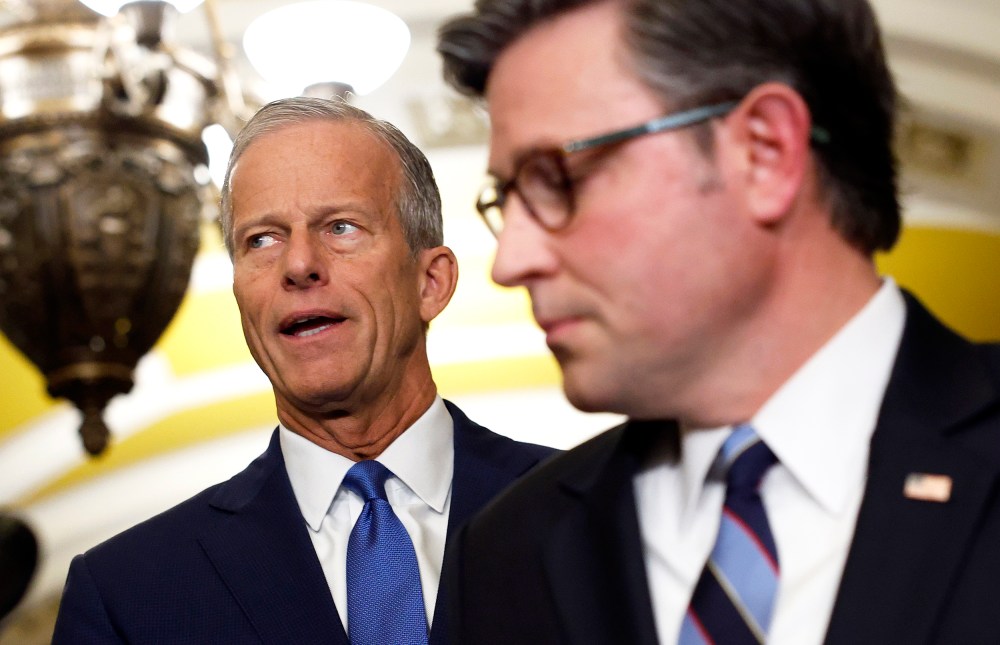
That said, as the partial shutdown came to an end, Senate Majority Leader John Thune told reporters: “My hope and expectation is that, yeah, as the White House and Senate Dems, they work this out, that they’ll be able to produce the votes that are necessary to get it passed.”
This was not an unreasonable position. Indeed, if there’s going to be a deal, it’s going to need the support of Senate Democrats (because the final package will need to clear the 60-vote threshold) and the backing of the president, who’ll not only have to sign it into law, but who also controls much of the congressional GOP, especially in the House, where the party’s majority is vanishingly small.
It therefore stands to reason that a breakthrough, if one is even possible, will need to emerge from talks between Trump and Democratic leaders.
There is, however, one nagging problem standing in the way: Trump apparently has absolutely no idea how to negotiate such a deal.
“Mr. President, can you give us any update on how the talks are going for potential changes to the Department of Homeland Security?” a reporter asked Trump at a White House event on Tuesday afternoon. “Have you agreed to any specifics?”
He responded with a variety of words, none of which answered the question.
Asked soon after about possibly negotiating on the issue of search warrants in immigration enforcement actions, Trump shrugged with indifference. “I haven’t even thought about it,” he replied. “I’m not thinking about search warrants.”
In a normal and healthy political environment, a capable president, familiar with the issues, could sit down with congressional leaders and at least try to work on a possible compromise.
But in 2026, this isn’t possible for reasons that too often go overlooked: Trump doesn’t know or care about governing. The very idea that he could negotiate with anyone about granular, substantive details surrounding homeland security policies is preposterous on its face — not because the challenge is too great, but because Trump is a television personality, not a policymaker.
As a candidate for the nation’s highest office a decade ago, Trump told Fox News: “The problem with Washington, they don’t make deals. It’s all gridlock. And then you have a president that signs executive orders because he can’t get anything done. I’ll get everybody together.”
A year earlier, the Republican identified what he saw as his greatest strength. “Deals are my art form,” Trump claimed. “Other people paint beautifully or write poetry. I like making deals, preferably big deals. That’s how I get my kicks.”
After five years in the White House, however, the total of number “big deals” he’s negotiated after “getting everybody together” is still zero.
In theory, it’s easy to understand why Thune would look to the president to work out an agreement. In practice, the South Dakota Republican is expecting Trump to do something he does not know how to do.
