






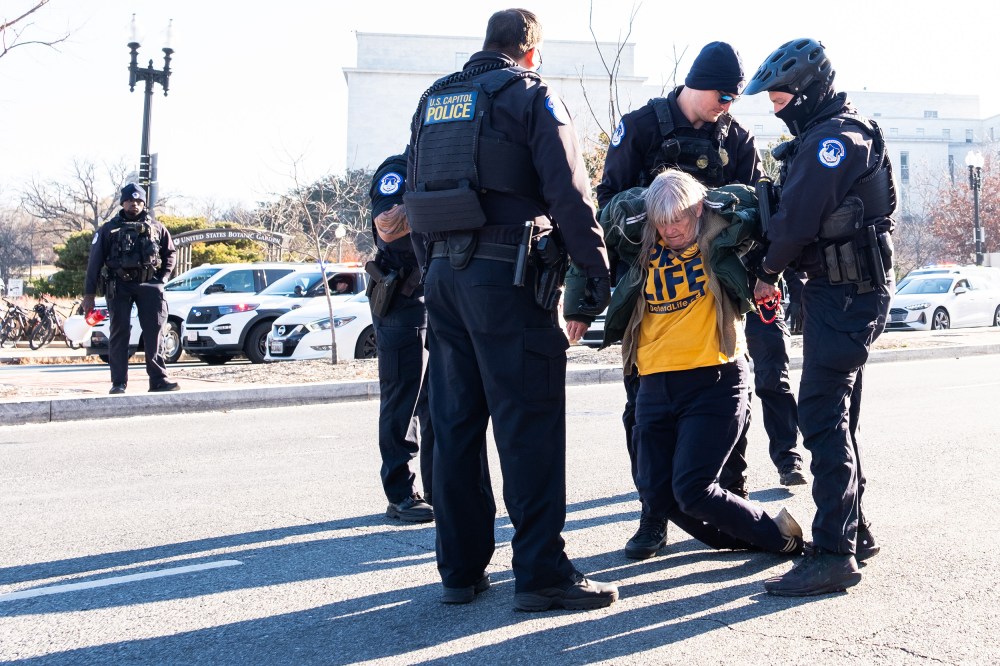
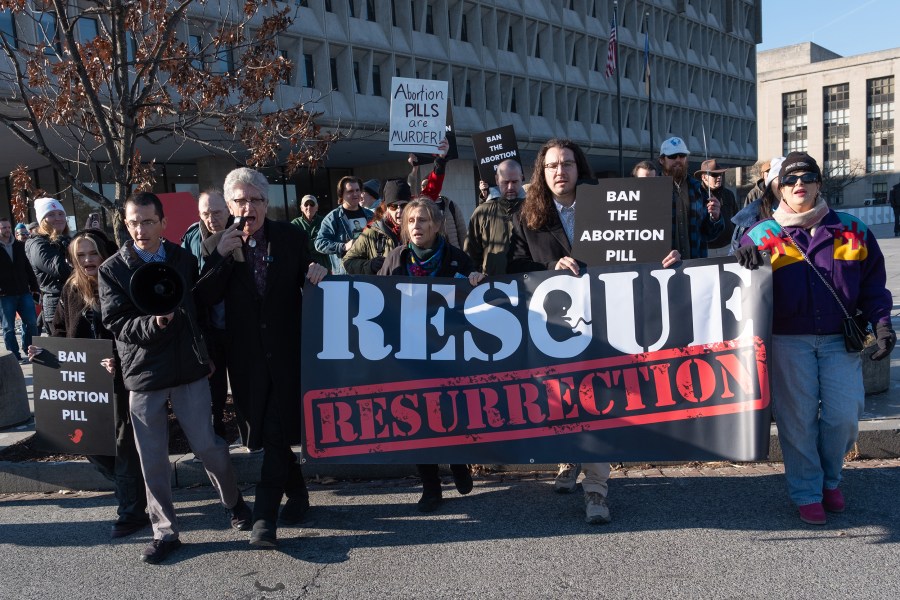
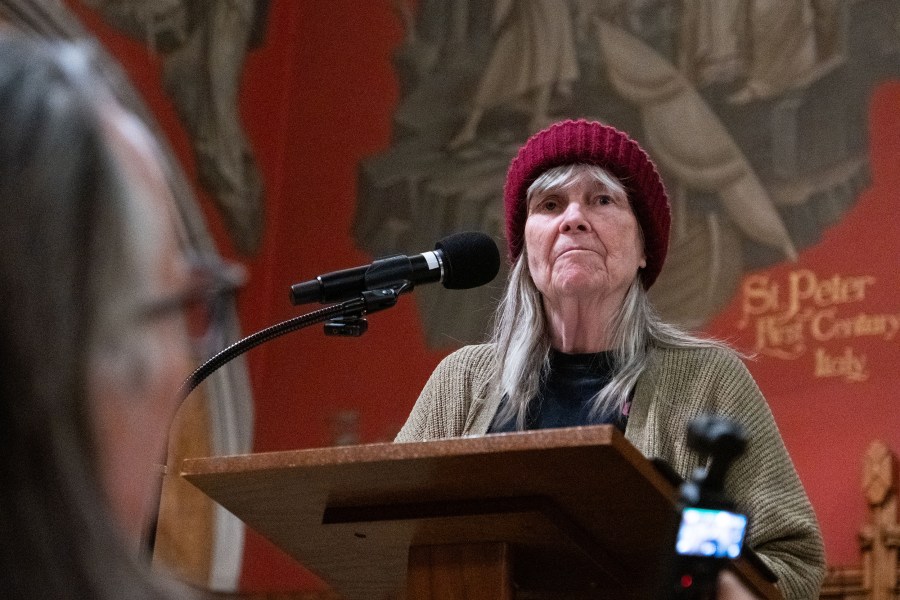
WASHINGTON — Joan Andrews Bell knelt on the pavement in the middle of Washington Avenue Southwest before a handful of irritated officers on Jan. 22, hunched over a rosary she clutched in her hands.
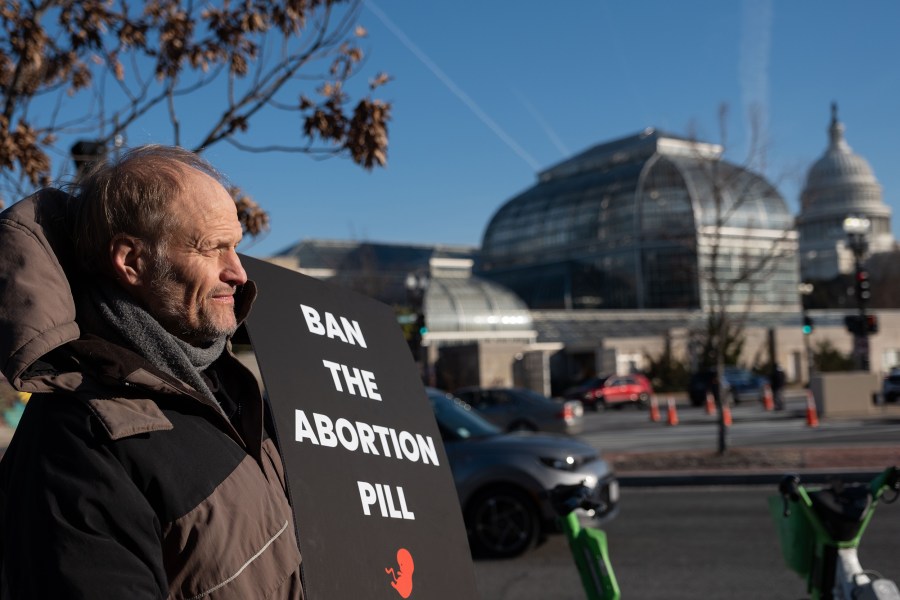
The 77-year-old anti-abortion-rights activist planted herself outside the U.S. Department of Health and Human Services headquarters, joined by more than a dozen like-minded protesters, to issue a demand that Secretary Robert F. Kennedy Jr. restrict access to — and ultimately ban — mifepristone, one of two pills used in a medication abortion.
Bell’s act of rebellion ended in her arrest. Four Capitol Police officers picked her up and carried her off the street, limb by limb.
But this wasn’t her first rodeo. Bell spent much of the past half-century facing off against police for her cause, which generally involves blocking women from access to abortion care, often by physically standing between patients and clinics that perform abortions. She told MS NOW that she’s been arrested some 200 times and spent seven years behind bars.
Authorities call her line of work a “blockade” and, in some cases, a civil rights violation and a federal crime. Bell and her anti-abortion-rights comrades prefer the term “rescue.”
Bell was one of two dozen people pardoned by President Donald Trump last year for their convictions under the Freedom of Access to Clinic Entrances Act (or FACE Act), a federal law that bans blockading or invading reproductive health clinics. At sentencing, the Department of Justice described the activist’s “rescue” operations as conspiratorial, violent and an “obstruction of civil rights.” Bell and her fellow protesters reject that characterization, though many of them spent over a year in federal prison for their crimes.
Last week, nearing the one-year anniversary of their pardons, Bell and several defendants met up with about 40 other activists in Washington to plot out their next chapter. The threat of incarceration did not seem to weaken their resolve — instead, Trump’s clemency gave them new license to regroup and mobilize.
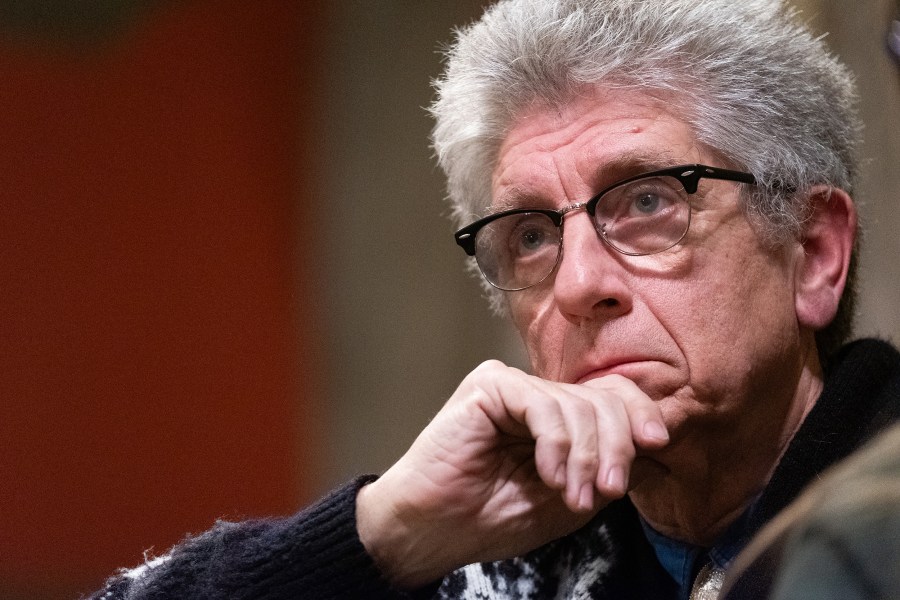
The meetup was organized by longtime abortion opponent (and failed presidential candidate) Randall Terry, who seeks to revive the anti-abortion-rights movement of the 1980s and ’90s — an era of nationwide civil disobedience and protest, when Terry introduced an aggressive new approach to clinic demonstrations through a Christian organization he called Operation Rescue. In his view, Trump’s pardons represent an endorsement of sorts from the White House, and his best chance to revitalize a moribund movement.
Terry told MS NOW that he’s amassing a new coalition this year under a new banner and hopes to recruit “hundreds of people willing to be arrested” at abortion clinic protests. And this time, given the DOJ’s suggestion that it would not prosecute most FACE Act violations going forward, they’ll operate without fear of federal intervention or lasting consequences.
“Under the Trump administration, we know that they’re not going to prosecute people for FACE violations, and we have people who are at least tepidly pro-life in the White House, in the Senate and in the House,” he said. “This is our window.”
Last week, he called on Bell and dozens of anti-abortion-rights activists to gather at a church, about a mile northeast of Capitol Hill, for a planning meeting. This shepherd had a new flock, and he gave them a new name: Rescue Resurrection.
Old tactics for a new ‘protest movement’
Terry and Operation Rescue rose to fame in the ’80s by employing dramatic tactics at abortion clinic protests, including handcuffing themselves together outside facilities and going limp when police tried to arrest them. The spectacle frequently landed them on the front pages of national papers.
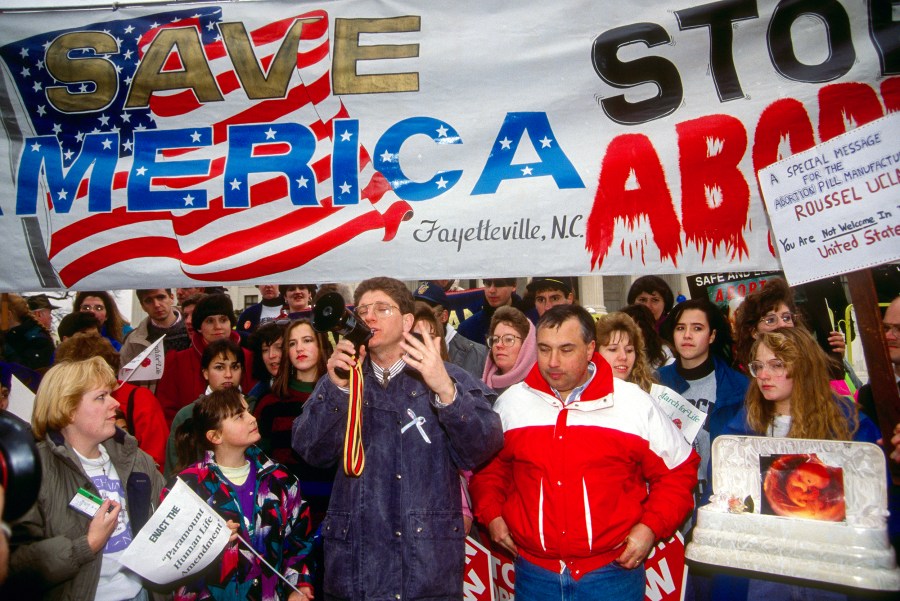
“They knew how to put on a show,” said Mary Ziegler, a historian at the University of California, Davis, who has written seven books about abortion history in America.
Bell was right there alongside Terry in his heyday. She told MS NOW that she learned of his exploits while serving a five-year prison sentence in Florida for invading a Pensacola clinic in 1986, two years after it had been bombed. After she got out of prison, Bell said she joined Terry’s cause and never looked back: “I did every rescue I could.”
Terry’s invitation to help plot out the future of the anti-abortion-rights movement was a no-brainer for Bell. But to relaunch his brand, 66-year-old Terry would need new followers — young, passionate, aggressive activists who were willing to lay their bodies on the line. In interviews with MS NOW, Terry made no secret of his frustration with the current state of the movement, now softening with age.
“There’s millions of dollars being squandered on inane, lukewarm, rehashed rhetoric” by today’s anti-abortion-rights groups, he said, though he declined to offer specifics.
Terry says he is “demanding that our people commit to nonviolence.” Yet he favors rhetoric — and methods — that some fear could give rise to the opposite.
“If we really believe that abortion is murder, if someone was going to kill you, what would you want me to do?” he asked. “You want me to write a letter to the editor? Would you want me to tweet? No, you want physical intervention, you want me to scream my lungs out, you want to have a response that is equal to the crime. That is one of the problems with the pro-life movement — we don’t have a response equal to the crime.”
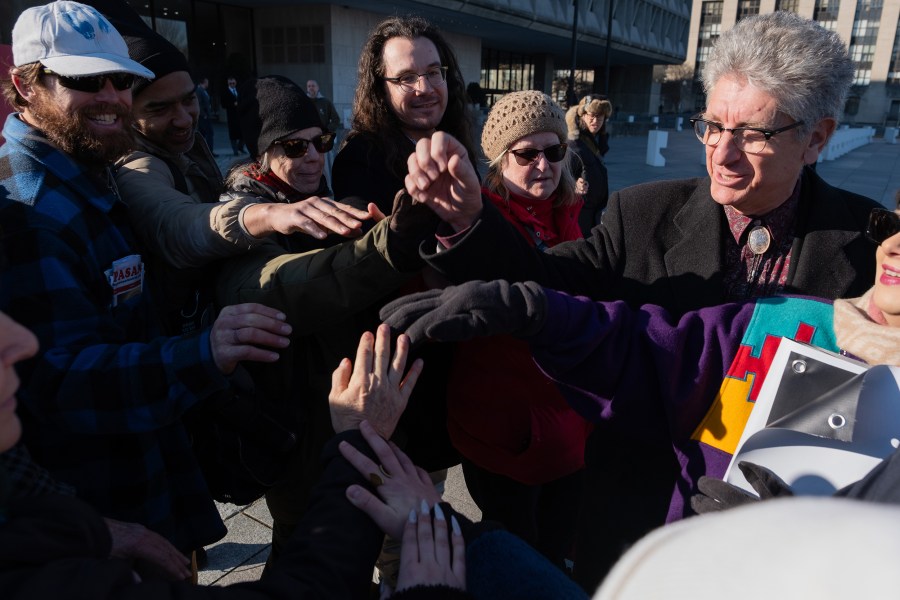
On Wednesday night, Terry gathered about 40 people at the church to hear his pitch for the launch of Rescue Resurrection. The audience was as eclectic as the man who stood before them. It included five of the activists pardoned by Trump, old hats like Bell and young political upstarts (almost a third of whom said they were under age 25), and a mix of political beliefs, including ample disdain for the MAGA movement.
Standing behind the lectern, Terry appeared tall and lanky, with a square face and close-cropped gray hair. He’s a charismatic speaker: For 90 minutes, he commanded the room with a series of lectures and training sessions for would-be protesters. He cracked jokes, broke into song — including an artificial intelligence-generated anthem called “Ban the Abortion Pill” — and role-played as a police officer arresting protesters, in a skit apparently meant to prepare first-timers for his group’s brand of civil disobedience.
He told his new followers he had grand plans for them — to include potential runs for office in November. Terry hopes to recruit 26 candidates to seek office in the midterms, in part so he can run television ads featuring graphic images of abortion targeting candidates who support it, he said. He said he also secured a campus in Memphis, Tenn., to use as a training ground for the next crop of activists.
“We want you to know how to lead protests, how to work with the police, how to frame an argument. We want you to learn how to run for office,” he told MS NOW in an interview after the training session. “We want you to learn how to write a book, do a meme, do a reel, do a 30-second commercial.”
Terry’s presentation, protest skits and all, was an eccentric sight to see at a Catholic church on a Wednesday evening. But Terry is an eccentric guy. He describes himself as a “theocentric progressive libertarian,” and he has run for office as a Republican, a Democrat, an independent and a member of the Constitution Party.
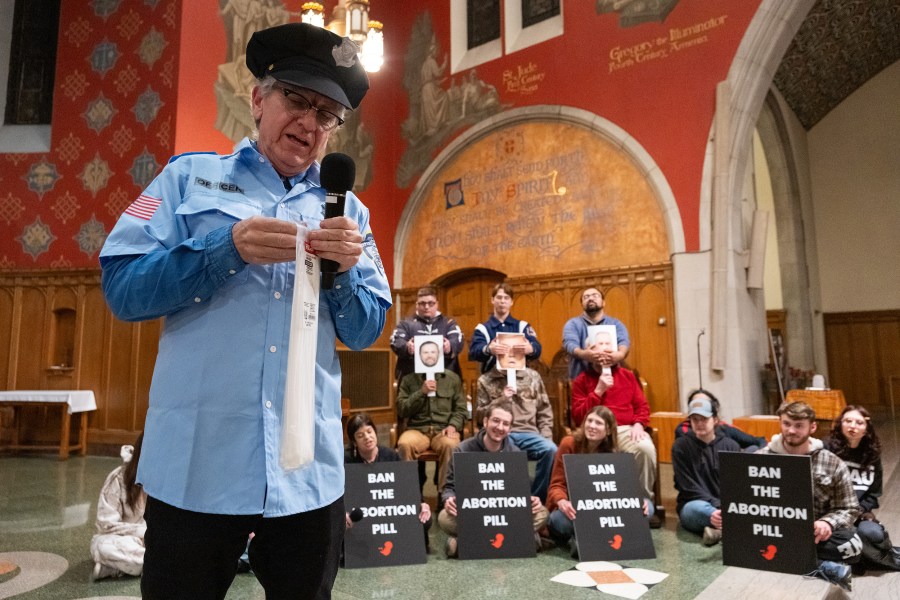
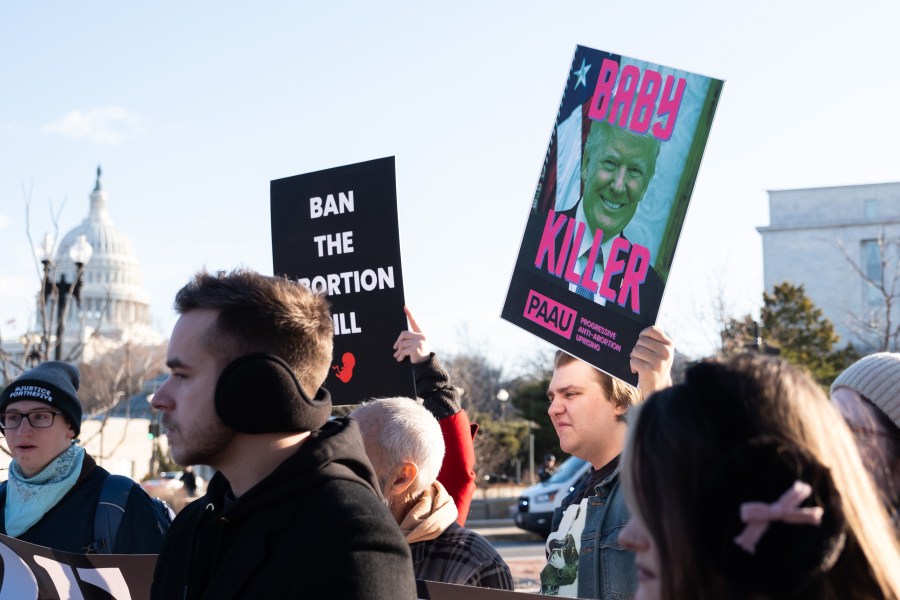
His girlfriend and co-host for the night, 44-year-old Terrisa Bukovinac, is the founder of a group called Progressive Anti-Abortion Uprising and describes herself as a progressive atheist. The group posts a steady stream of online content, featuring millennial and Gen Z activists, intended to reach a new generation of abortion rights opponents. There are 30-second TikToks featuring members at clinics shouting into bullhorns, urging patients to cancel their abortions, and direct-to-camera appeals to join their “rescues.”
Bukovinac said she had been asking Terry — whom she met at the Democratic National Convention in Milwaukee in 2020 — for “years” to bring back mass protests at clinics, which dwindled after the 1994 passage of the FACE Act. But he demurred because of threats of years in prison.
Trump’s pardons renewed their efforts. With Rescue Resurrection, Terry hopes to stage at least one protest at an abortion clinic per month across the country. He’ll look to host his next event in April, he said, and added that the group also plans to protest at pharmacies dispensing abortion pills, with the goal of “creating pandemonium.”
Despite the support many participants received from Trump, however, this isn’t a staunchly pro-Trump movement. It still has a list of demands for the administration that haven’t been met — including banning the abortion pill.
“If President Trump and RFK Jr. and [Vice President] JD Vance are going to move in the direction we want them to move,” Terry told the audience, “we have to motivate them. We have to light the fire.”
On Friday, Terry took his own advice: He heckled Vance during a speech at the annual March for Life in Washington, demanding he “ban the abortion pill.”
Vance seemingly acknowledged Terry’s remarks, replying at one point, “I must address an elephant in the room, and I’ve heard the guy over here talking about it,” he said, gesturing toward Terry.
“A fear that some of you have that not enough progress has been made,” he said.
“There will inevitably be debates within this movement,” Vance added later.
There are, indeed, growing divisions in the anti-abortion-rights movement. The president recently drew criticism when he advised congressional Republicans to be “flexible” on the Hyde Amendment, which prohibits federal funding for most abortions. Trump has also pledged to expand access to in vitro fertilization, which some ardent abortion opponents are against because it often involves the destruction of unused embryos.
Some are opposed to Terry’s vision too, given that it explicitly encourages breaking the law.
Kristan Hawkins, president of Students for Life of America, told MS NOW her organization’s job “is to build the talent pipeline of the pro-life movement on every college and high school campus across America.”
“I can’t do that from jail,” she said.
Others, like 71-year-old John Hinshaw — another activist pardoned by Trump — can’t wait to get back out there.
“We’re bringing rescue back,” Hinshaw, who worked with Terry back in the ’80s, told MS NOW. “We’re going to disrupt this country as much as we can.”
For Terry, the pardonees’ participation in this new effort is critical.
“They are icons and heroes in the movement right now,” he said of those activists. “We need to use their courage and their pardons and the momentum to help grow a protest movement.”
A history of violence and an unclear future
Violence is the elephant in the room for this movement. Terry and his followers rarely acknowledge it unprompted, but they have created an environment in which violence has thrived, Ziegler said.
Terry and Operation Rescue are tied inextricably to multiple acts of violence by onetime members of the movement: Before James Kopp was convicted of murdering an abortion provider in Buffalo, New York, in 1998, Terry reportedly recruited him to serve as a liaison between Operation Rescue and Catholic churches. Scott Roeder, who murdered an abortion provider in 2009, said he regularly participated in Operation Rescue events. Shelley Shannon shot the same doctor as Roeder more than a decade earlier, and she too reported participating in blockades with the group.
“The whole ethos of Operation Rescue was lawbreaking was OK, and that was attractive to people who wanted to perpetrate other kinds of lawbreaking,” Ziegler said.
Terry, for his part, insists “the guilt and the actions of people all fall to them.”
The crime that landed Bell in federal prison occurred in October 2020, when she and nine other activists plotted to infiltrate a Washington, D.C., clinic and block patients’ access to abortion care. The DOJ said the group used threats and subversive tactics to “execute an extensive blockade” at the clinic. Bell chained herself to other protesters and barricaded doorways, according to a DOJ release. Another defendant faked an appointment to get the group inside, which the DOJ said “unfortunately resulted in the physical injury of a nurse.” After the indictments, one of the group’s ringleaders was found with five fetuses in her home, which she said she obtained from a medical waste company outside a Washington abortion clinic.
Bell was sentenced to more than two years in prison and three years of supervised release for the crime, though she still rejects the DOJ’s characterization of her work.
“Remember, they consider a ‘blockade’ violent,” she said. “They’re using their own terms.”
In the other pardoned cases, prosecutors said the participants entered the clinics, blocked entrances, harassed and injured staff and livestreamed some of the proceedings, all with the goal of preventing abortions from taking place.
For abortion providers, the potential resurgence of mass clinic protests under Terry’s leadership is troubling, given the hundreds of incidents of obstruction, trespassing and death threats they have faced since Supreme Court’s 2022 overturning of Roe v. Wade.
One of Terry’s so-called rescues “might start with prayers and singing, but it can and does often escalate because of these connections with the broader right-wing movement,” said Brittany Fonteno, president and CEO of the National Abortion Federation, an organization that represents and supports abortion providers and collects data on violence they face.
In recent years, members of right-wing extremist groups like the Proud Boys have joined anti-abortion-rights protests as their own groups have fizzled out, acting as bodyguards for protesters — including Bevelyn Beatty, one of the people Trump pardoned. (Beatty, who is in her 30s, declined to speak with MS NOW.)
Fonteno said she considers the movement a form of “domestic terrorism.”
“They are using intimidation, harassment and keeping people from their basic human right of accessing essential health care when they need it and where they need it,” she said.
Three of the people Trump pardoned — Bell, Hinshaw and Will Goodman, 55 — were among the 16 people arrested at the HHS protest on Jan. 22. Hinshaw and Bell were also arrested in Memphis last month at an attempted blockade of a Planned Parenthood clinic, which officials said they prevented by hiring an outside security team and recruiting more than 40 volunteers to form a human chain by the clinic entrance.
Bell and Goodman were also arrested in Pennsylvania in July, after they and four others entered the Delaware County Women’s Center. According to court documents, Bell and Goodman were part of a group that entered the clinic, refused to leave and poured an “unknown liquid and salt like substance all over the floor.” Amanda Kifferly, the clinic’s director of security and vice president for abortion access, said the clinic hired armed security guards after the incident. A spokesperson for the Delaware County district attorney’s office told MS NOW the defendants pleaded no contest to defiant trespass charges, and as part of a plea deal, the charges were later dropped.
Five other pardonees who spoke to MS NOW said that while they have not yet been back to jail, they are willing to risk rearrest for the anti-abortion cause.
“I don’t have a plan right now,” said Herb Geraghty, 29, who was among those at Terry’s events in Washington, “but it’s likely that I will end up participating in a rescue.”
Trump’s pardons weren’t enough for ‘revival’
The anti-abortion-rights movement may be divided on strategy, but some of its key players — including eight people convicted under the FACE Act who were pardoned by Trump and who spoke to MS NOW — share the feeling that the Trump administration has not done enough to restrict abortion.
“Donald Trump pardoned me and I’m grateful,” said Hinshaw, “but I would’ve rather stayed in jail rather than have Trump [in office].”
Chief among their complaints is that the Food and Drug Administration has not reinstated in-person dispensing requirements for mifepristone. But more than 100 scientific studies have shown the pills are safe and effective in ending pregnancies, including when they are prescribed virtually and mailed to patients.
The activists also want the full repeal of the FACE Act, which Trump’s DOJ has used to charge protesters at houses of worship, including in Minneapolis recently — a move that multiple people who the president pardoned said they oppose.
“If Republicans think now they can use it,” Jonathan Darnel, 44, said, “the stupid thing will never get repealed.”
The pardonees want the recognition of fetal personhood, which would give embryos full rights from the moment of conception. Congressional Republicans have proposed legislation that would repeal FACE and enshrine fetal personhood, but both bills have failed to make it out of committee.
Kush Desai, a spokesperson for the White House, said in a statement to MS NOW that Trump “is the most pro-life and pro-family president in American history.” He pointed to the administration’s recent announcement of an investigation into pandemic-era loans provided to Planned Parenthood, and a new National Institutes of Health Policy that will bar fetal tissue from being used in federally funded research.
But those measures still fall far short for Terry and his flock.
“Ultimately,” Terry said, “we want it to be a criminal act to kill a human being from conception until birth.”
But the likelihood of Rescue Resurrection achieving that, or any of its aims, is dubious.
Polling shows the majority of Americans support abortion access, and the total number of abortions increased after the overturning of Roe. That’s in part because most abortions — more than 60%, according to the Guttmacher Institute, a research and policy organization that supports abortion rights — now occur through medication abortions, which people can order online and take at home.
Those factors, Ziegler pointed out, mean that “protesting outside of a clinic isn’t going to stop most abortions now.”
But that isn’t keeping the abortion-rights opponents from forging ahead.
“We want the nation to know,” Terry told the crowd at the church on Wednesday night, “that there is a revival of the rescue movement, that there is going to be a resurrection of civil disobedience [and] social tension.”

Julianne McShane is a breaking news reporter for MS NOW who also covers the politics of abortion and reproductive rights. You can send her tips from a non-work device on Signal at jmcshane.19 or follow her on X or Bluesky.